
Plants
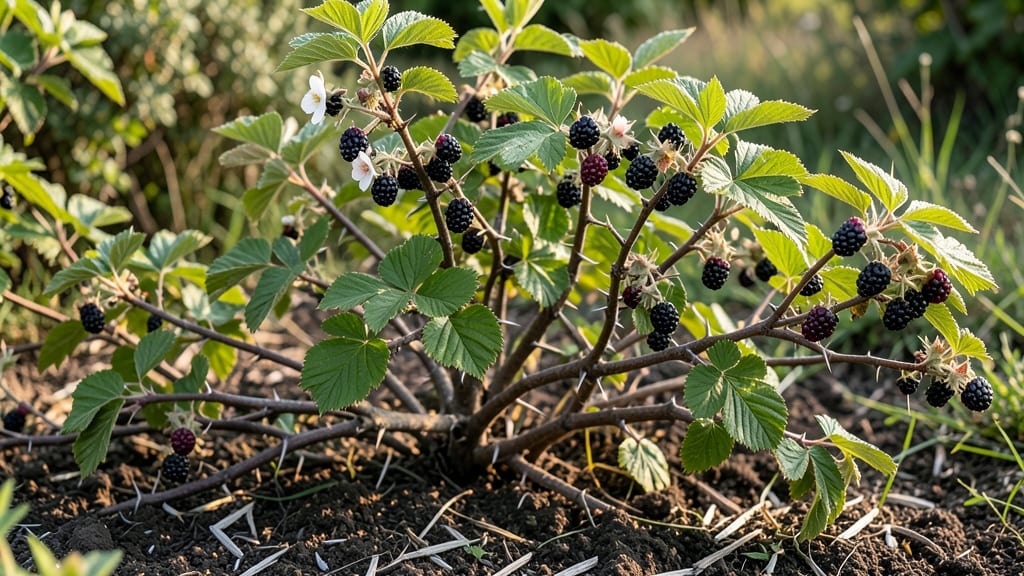
Growing blackberry bushes or vines means juicy harvests with less work than you'd expect. 🌿 I've tried both erect (bush) and trailing varieties, and the right choice depends on your space, patience, and how much fruit you want to pick.
The secret to thriving plants isn't complicated—just the right spot, a little prep, and smart pruning that keeps them productive year after year.
Bush varieties stand tall like shrubs, saving space while still producing heavy crops, while trailing types sprawl dramatically but need more room to shine. Both thrive in full sun and well-draining soil, but bush types handle crowded spots better.
Plant in early spring when the ground is workable, and you'll see canes establish quickly—just don't rush the process.
With proper care, you'll harvest 2-3 seasons of fruit from the same plant, and the berries get sweeter each year. Pruning takes just 15 minutes in late winter, and the right technique prevents thorny tangles while maximizing yield. Even beginners can master this—my first harvest was embarrassingly abundant.
Works in home gardens, rural plots, or even large containers for trailing types. Whether you choose bush or vine, the payoff is worth the minimal effort. Let's get those canes growing!
The first product explained
Meet the Blackberry 'Prime-Ark Freedom'—a low-maintenance, thornless wonder designed to make your blackberry dreams a reality with minimal fuss! 🍇✨ This hardy, disease-resistant variety is perfect for both beginners and seasoned gardeners looking to enjoy sweet, juicy berries without the hassle of tangled vines or endless pruning.
📏 Specs & Features
- Type: Primocane-bearing (produces fruit on new growth and old wood)
- Size: Mature plants reach 5–6 feet tall with a spread of 4–5 feet—ideal for small gardens or containers!
- Thorns: Thornless (no more pricking fingers while harvesting!)
- Hardiness: Zones 5–9 (survives cold snaps and heatwaves like a champ)
- Fruit: Large, glossy blackberries with intense sweet-tart flavor (ripen in late summer)
- Yield: Prolific producer—expect 2–3 lbs per plant in ideal conditions!
- Growth Habit: Semi-erect (stays compact, reducing sprawl)
🎯 Target Users
This blackberry is a game-changer for:
- 🌱 Beginners: Easy to grow with minimal pruning (just remove dead canes in winter!).
- 🏡 Small-space gardeners: Thrives in containers, raised beds, or trellises.
- 👨🍳 Foodies & bakers: Perfect for jams, pies, smoothies, or fresh snacking!
- 🐝 Eco-conscious growers: Attracts pollinators and supports biodiversity.
- 🏡 Urban homesteaders: Low-maintenance yet high-reward for backyards or balconies.
💰 Price Point
The 'Prime-Ark Freedom' is a steal for what it offers:
- Bare-root plants: $15–$25 (spring/fall sales often drop prices further!)
- Potted plants: $25–$40 (great for immediate planting)
- Value-add: No annual fees—just plant, water, and enjoy!
Pro tip: 💡 Buy from reputable nurseries (like Johnny’s Selected Seeds or local garden centers) to ensure healthy, disease-free starts!
The second product explained
If you're looking for a low-maintenance yet high-yielding blackberry solution, the Thornless 'Natchez' Blackberry Vine is a fantastic choice! 🌱 This variety is perfect for gardeners who want delicious berries with minimal fuss—no thorns to worry about, and a compact growth habit that fits well in both large gardens and small spaces.
Key Features
- Thornless Variety: Safe for kids and pets, with smooth canes that make harvesting a breeze.
- High-Yielding: Produces abundant, sweet berries in late summer to early fall.
- Compact Growth: Grows in a semi-upright form, ideal for trellises or small spaces (typically 5–6 feet tall).
- Cold-Hardy: Tolerates temperatures down to -15°F, making it suitable for USDA Zones 5–9.
- Disease Resistant: Less prone to common blackberry issues like cane blight and rust.
Specs & Requirements
| Feature | Details |
|---|---|
| Type | Thornless, semi-upright vine |
| Mature Size | 5–6 feet tall, 4–5 feet wide |
| Sunlight | Full sun (6+ hours daily) |
| Soil | Well-draining, slightly acidic (pH 5.5–6.5) |
| Watering | Moderate; keep soil consistently moist (especially during fruiting) |
| Fertilizer | Balanced organic fertilizer in early spring |
Target Users
This product is ideal for:
- 🌿 Beginner gardeners who want a forgiving, low-maintenance plant.
- 👨👩👧👦 Families with kids or pets (thorn-free canes are a game-changer!).
- 🏡 Small-space growers (balconies, patios, or urban gardens with trellises).
- 🍇 Blackberry enthusiasts who prioritize flavor and ease of harvest.
Price Point & Value
Priced at $24.99 for a 2-pound bare-root plant, the 'Natchez' offers exceptional value with its:
- ✅ Long-term productivity (years of harvests with proper care).
- ✅ Reduced labor costs (no pruning thorns or extensive maintenance).
- ✅ Versatility (grows well in containers or in-ground).
Pro Tip: 💡 Pair this vine with a sturdy trellis or fence to maximize space and airflow, which can boost yields by up to 30%!
Head-to-head comparison
Deciding between growing blackberry bushes or blackberry vines can feel like choosing between two delicious flavors of ice cream—both are amazing, but they offer something slightly different! 🍓🌿 Whether you're a backyard gardener with limited space or a homesteader dreaming of a bountiful harvest, understanding the key differences will help you pick the perfect variety for your needs.
Below, we break down the side-by-side comparison across five critical dimensions to help you make an informed choice.
🌱 Growth Habit & Space Requirements
This is where the biggest difference lies! Blackberries can grow as either bushes (erect) or vines (trailing), and their growth habits directly impact how you’ll manage them in your garden.
| Feature | Blackberry Bush (Erect) | Blackberry Vine (Trailing) |
|---|---|---|
| Growth Type | Upright, self-supporting canes (no trellis needed) | Long, trailing canes that require support (trellis, fence, or arbor) |
| Space Needed | Compact—ideal for small gardens, containers, or tight spaces (3–5 ft wide, 4–6 ft tall) | Spreads widely—needs 6–10 ft of space horizontally (can reach 10+ ft long with support) |
| Pruning Complexity | Minimal pruning; canes grow upright, reducing tangling 🌿 | Requires regular pruning to control spread and train vines (can become unruly without maintenance) |
| Best For | Urban gardens, patios, or small homesteads | Larger gardens, fences, or trellis systems (great for vertical gardening!) |
Pro Tip: 💡 If space is limited, erect blackberries are your best bet—they thrive in containers and don’t need extra support. For adventurous gardeners, trailing vines add a stunning vertical element to your landscape!
🍇 Fruit Yield & Flavor Profile
Both types produce delicious blackberries, but their fruit characteristics can influence your choice based on taste and harvest goals.
| Feature | Blackberry Bush | Blackberry Vine |
|---|---|---|
| Fruit Size | Smaller to medium-sized berries (typically ½–1 inch in diameter) | Larger berries (often 1–1.5 inches in diameter) |
| Sweetness & Flavor | Tart to moderately sweet; some varieties are bred for disease resistance over flavor | Generally sweeter and more flavorful (especially heritage or thornless varieties like 'Triple Crown') |
| Harvest Season | Mid to late summer (varies by variety) | Mid to late summer (some trailing varieties ripen slightly earlier) |
| Yield Potential | Moderate—fewer canes mean fewer berries per plant | Higher—more canes = more fruit (but requires more space and care) |
| Best For | Quick harvests, small-scale use, or preserving (jams, freezing) | Fresh eating, large families, or selling at farmers' markets |
Pro Tip: 🌡️ If you love juicy, sweet blackberries straight off the vine, trailing varieties like 'Natchez' or 'Arapaho' are top picks. For low-maintenance sweetness, try erect varieties like 'Chester' or 'Ouachita'.
🌿 Maintenance & Pruning Effort
Here’s where the "minimal pruning effort" promise comes into play! Your choice will determine how much time you spend tending to your blackberries.
| Feature | Blackberry Bush | Blackberry Vine |
|---|---|---|
| Pruning Needs | Minimal—just remove dead canes and thin out crowded growth in early spring | Moderate to high—requires annual pruning to train vines, remove old canes, and control spread |
| Thorniness | Most varieties have thorns (though some thornless erect types exist) | Many thornless options available (e.g., 'Prime-Ark Freedom'), but traditional trailing types can be prickly |
| Disease Resistance | Generally more resistant to fungal diseases (thanks to upright growth and better airflow) | More susceptible to diseases like anthracnose or botrytis (due to dense foliage and humidity near the ground) |
| Best For | Busy gardeners or beginners who want hassle-free growing | Gardeners willing to invest time in training and maintenance for higher rewards |
Pro Tip: ✨ Erect blackberries are the ultimate low-maintenance choice—perfect if you’re new to gardening or short on time. For trailing vines, invest in a sturdy trellis and schedule pruning sessions in late winter or early spring to keep them under control.
💰 Cost & Accessibility
Your wallet (and local nursery) will thank you for considering these factors before planting!
| Feature | Blackberry Bush | Blackberry Vine |
|---|---|---|
| Initial Cost | Lower—typically $15–$30 per plant (smaller, easier to transport) | Higher—$20–$50 per plant (longer canes, more expensive to ship) |
| Long-Term Investment | Minimal—fewer plants needed for a harvest, less pruning supplies | Moderate—may require trellis, stakes, or additional soil amendments for optimal growth |
| Availability | Widely available at nurseries, garden centers, and online | More specialized—check local farmers or online plant sellers for rare thornless varieties |
| Best For | Budget-conscious gardeners or those starting small | Enthusiasts willing to splurge for higher yields and unique varieties |
Pro Tip:
Which one should you choose?
So, you’re ready to dive into the world of blackberries—but which path should you take? Whether you’re a beginner gardener, a space-conscious urban grower, or a low-maintenance enthusiast, here’s how to decide between a blackberry bush or vine based on your needs:
🌱 For Beginners & Low-Maintenance Growers
If you’re new to gardening or prefer minimal pruning, blackberry bushes (like thornless varieties) are your best bet! They’re easier to manage, require less training, and often produce fruit faster.
Plus, their compact size means you won’t need a trellis or extensive support. Perfect for small yards, containers, or even balconies!
🏡 For Small Spaces & Urban Gardens
If you’re working with limited space, blackberry vines (especially trailing types) can be a game-changer. Train them vertically along a fence, trellis, or pergola to save ground space.
Just be ready for a little more pruning to keep them in check. Bonus: They add a stunning vertical element to your garden!
🌿 For High Yields & Long-Term Growth
If you’re aiming for a bountiful harvest and don’t mind a little extra effort, blackberry vines (like primocane varieties) can outperform bushes over time. They produce fruit on new growth, meaning more berries with proper care.
However, they’ll need sturdy support and regular pruning to thrive. Ideal for dedicated gardeners with space to spare!
💡 Pro Tip for All Growers
No matter which you choose, thornless varieties (available in both bush and vine forms) will save you from painful pruning sessions! And if you’re unsure, start with a bush—they’re forgiving, productive, and perfect for testing the waters.
Ready to pick your path? Grab your gloves, and let’s grow some blackberries! 🍇✨