
Pruning
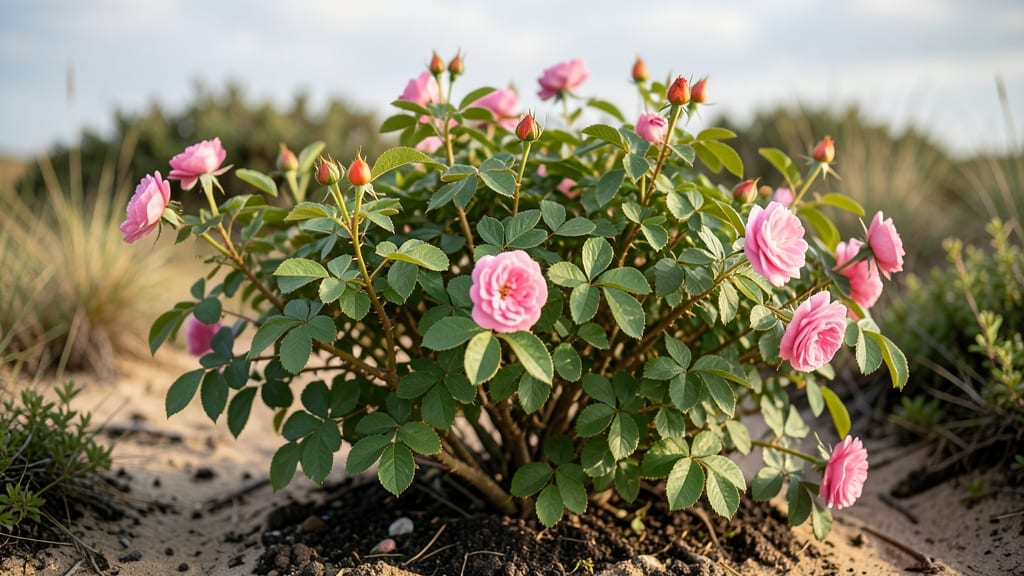
Your beach rose bush (Rosa rugosa) could be the most fragrant corner of your coastal garden—if you prune it right. 🌿 The key to long-lasting blooms and lush growth lies in understanding when and how to trim, especially in sandy, salty conditions where most roses struggle.
I’ve learned the hard way that beach roses need three seasonal cuts—not just one. First, a light cleanup in early spring removes dead wood before new growth starts.
Then, a midseason trim after flowering encourages more blooms, and a final light prune in late fall keeps the shape tidy for winter. Each cut keeps the bush compact, healthy, and bursting with those iconic pink roses.
By the end of summer, you’ll have a bush so full of fragrant blooms that passersby will stop to smell them. The hips stay on the branches longer too, feeding birds and adding winter interest. Pruning isn’t just about looks—it’s about keeping your rose thriving in tough conditions.
Works for sandy soils, windy coasts, or even urban gardens with salt exposure. Let’s get those shears sharp and start trimming!
📚 In This Guide
- What you need
- Instructions
- Tips and common mistakes
- Wrapping up and next steps
What you need
- ● Pruning shears: Sharp, bypass pruners (for clean cuts on smaller stems). Quantity: 1 pair.
- ● Loppers: For thicker branches (½" to 1½" diameter). Quantity: 1 pair.
- ○ Hand pruners: For delicate trimming (optional but handy for fine-tuning). Quantity: 1 pair.
- ● Disinfectant: 70% isopropyl alcohol or bleach solution (1 part bleach to 9 parts water) to sterilize tools between cuts. Quantity: Small spray bottle or cloth.
- ● Garden gloves: Heavy-duty, cut-resistant (to protect from thorns). Quantity: 1 pair.
- ○ Pruning saw: For stubborn, thick branches (if needed). Quantity: 1 (optional for mature bushes).
- ● Rake or broom: To clear debris after pruning. Quantity: 1.
- ● Trash bag: For disposing of pruned branches. Quantity: 1-2.
- ● Pruning sealant: For larger cuts (prevents disease). Quantity: Small bottle.
- ● Hose with nozzle: For rinsing tools and cleaning up sap.
- ● Marking spray: (e.g., white paint) to tag branches for removal (if planning a major overhaul).
- ● Knee pads: For comfort during long pruning sessions.
- ● Notebook & pen: To jot down pruning notes or track seasonal changes.
Instructions for pruning your beach rose bush
Here's the straightforward method I use to keep my beach rose blooming abundantly for years.
✂️ Step 1: Prune After Blooming Season
Wait until your beach rose finishes blooming in late summer or early fall before cutting back. This timing ensures you don't remove next year's flower buds hidden in the branches. Look for spent blooms that have turned brown or dried up—these are your pruning targets.
Start by removing any dead, damaged, or crossing branches first. Use clean, sharp pruning shears to make cuts at a 45-degree angle just above a leaf node or outward-facing bud. This encourages new growth in the right direction. I like to thin out crowded branches to improve air circulation, which prevents fungal diseases that thrive in damp coastal conditions.
✂️ Step 2: Shape the Bush for Balance
Give your beach rose its natural rounded shape by cutting back the longest branches by about one-third of their length. Focus on branches that are growing inward or rubbing against others—they'll compete for nutrients and potentially damage each other. Always cut back to a healthy leaf node or branch junction.
Step back frequently to check your progress. The goal is an open, airy shape that lets sunlight reach the center of the bush. Beach roses grow best when they get plenty of light, and this shaping ensures even blooming throughout the plant. If a branch looks particularly leggy, you can shorten it more aggressively, but never remove more than one-third in a single pruning session.
⏰ Step 3: Light Pruning in Early Spring
In late winter or early spring, before new growth begins, do a light pruning to remove any remaining dead wood or weak growth from the previous season. This is also when you can trim back any branches that grew too long during the fall. Look for branches that are thinner than a pencil or growing in odd directions—they won't contribute much to the bush's structure.
This early spring pruning stimulates fresh growth and sets the stage for strong blooms later in the season. I usually do this in February or March, depending on my local climate. Avoid heavy pruning in spring, as beach roses bloom on old wood, and you want to preserve as many potential flower buds as possible.
🌿 Step 4: Maintain Through the Growing Season
During the growing season, keep an eye out for suckers—those vigorous shoots that grow from the base of the plant or along the trunk. Remove these as soon as you see them, as they divert energy away from your main beach rose bush. Pinch back new growth on young plants to encourage bushier growth.
Deadhead spent blooms throughout the season to encourage more flowers. However, leave some seed pods on the plant if you want to collect seeds for propagation. Just don't let them take over—remove them once they've dried up. Regular maintenance like this keeps your beach rose looking its best and smelling amazing all season long.
Tips & tricks for pruning your beach rose bush
Here's what I've learned after years of keeping my beach rose bushes thriving along the coast.
Timing is Everything: I can't stress enough how critical the late summer/early fall timing is for Step 1. Beach roses bloom on old wood, so pruning too early removes next year's flower buds. I mark my calendar for when the last blooms fade—usually August to September in my coastal zone. If you're unsure, wait until you see at least 50% of blooms dried up before cutting.
The 45-Degree Cut Technique: When making cuts in Step 1, that 45-degree angle isn't just for looks—it creates a larger wound surface that heals faster. I like to visualize a small smiley face on the branch: cut just above the bud where the smile's mouth would be. This encourages new growth to shoot out in the right direction, away from the center of the bush. Use sharp shears to avoid crushing the bud.
Visual Pruning Cues: For Step 2's one-third reduction, here's my trick: hold your pruners at arm's length and look for branches that block sunlight from reaching the center. You'll notice the bush naturally forms a dome shape—work with that. I also check for branches thinner than a pencil; these rarely produce flowers and can be removed entirely. The goal is to create an open structure that lets air circulate freely.
Seasonal Maintenance Shortcuts: During Step 4's growing season care, I keep a small pair of pruning shears in my gardening apron for quick suckers removal. For deadheading, I use my fingers to pinch off spent blooms—no need for tools. And here's a pro move: when collecting seeds, let just 2-3 seed pods mature per branch. Too many will sap energy from your bush's fragrance production.
Pro Tips for Beach Rose Bush
- Here's what I've learned after years of keeping my beach rose bushes thriving along the coast.
- Timing is Everything: I can't stress enough how critical the late summer/early fall timing is for Step 1.
- The 45-Degree Cut Technique: When making cuts in Step 1, that 45-degree angle isn't just for looks—it creates a larger wound surface that heals faster.
Frequently asked questions
Got questions about keeping your beach rose bush thriving with the perfect prune? You’re in the right place! Here are answers to the most common queries—from timing to troubleshooting—to help you master seasonal trimming like a pro.
When is the best time to prune a beach rose bush?
The ideal time is late winter or early spring, just before new growth begins. This helps shape the bush and encourages vibrant blooms. Avoid pruning in fall or winter, as cold stress can harm the plant. If you must trim lightly, do so after flowering to maintain shape without sacrificing next year’s blooms.
How much can I trim back my beach rose bush?
For healthy growth, trim back 1/3 of the plant’s height to encourage bushier, fuller growth. Avoid over-pruning—never cut more than 30-40% of the bush at once. Focus on removing dead, diseased, or crossing branches first, then shape the rest. Pro tip: Use clean, sharp shears to prevent tearing!
Can I prune a beach rose bush after it flowers?
Yes! Light pruning after flowering (summer to early fall) helps maintain shape and removes spent blooms. However, avoid heavy pruning—it may reduce next year’s flowers. If you prune too late, the bush might not have enough time to harden off before winter. Best practice: Stick to light shaping post-bloom.
Why are my beach rose bush leaves yellowing after pruning?
Yellowing leaves can signal over-pruning, stress, or disease. If it happened right after trimming, you may have cut too aggressively. Check for powdery mildew or pests (like aphids) and treat with neem oil if needed. Ensure the bush gets full sun and well-draining soil—beach roses hate soggy roots!
What if my beach rose bush isn’t blooming after pruning?
Lack of blooms often stems from pruning at the wrong time (like mid-summer) or not enough sunlight. Beach roses need 6+ hours of sun daily. Also, fertilize with a low-nitrogen, high-phosphorus blend in early spring to encourage flowers. If the issue persists, check for root rot or nutrient deficiencies.
Wrapping up and next steps
Pruning your beach rose bush isn’t just about keeping it tidy—it’s the secret to unlocking its full potential!
With the right seasonal trimming, you’ll enjoy long-lasting fragrance, lush blooms, and a bush that thrives year after year. 🌸 Whether you’re a seasoned gardener or just starting, these techniques make the process simple and rewarding.
Now that you’re armed with the know-how, grab those shears and give your beach rose bush the care it deserves! Start by scheduling your next trim based on the season—your fragrant oasis will thank you with vibrant blooms and a healthier structure. Happy pruning! ✂️🌿