
Pruning
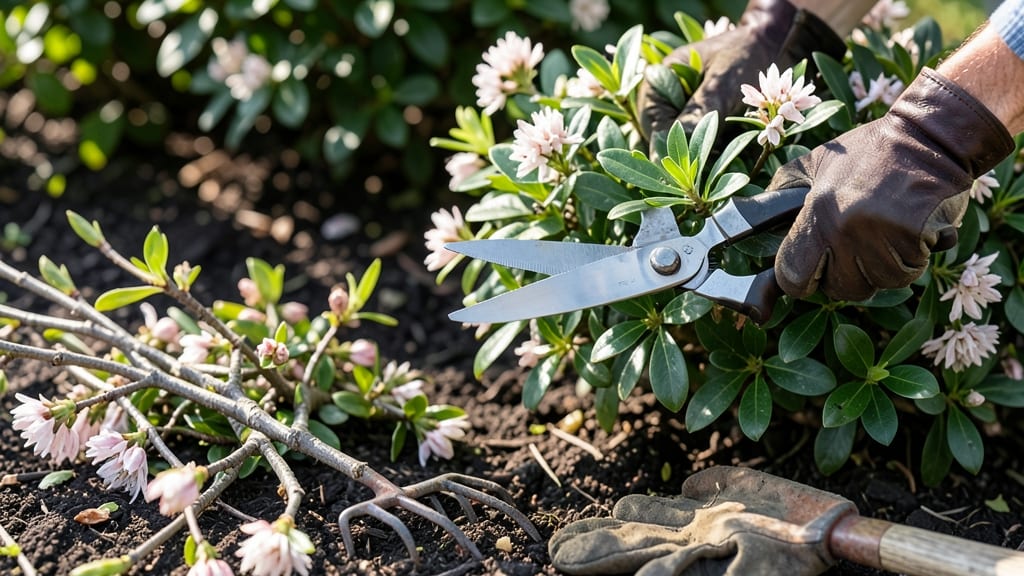
To prune daphne bushes, wait until immediately after flowering, generally between late spring and early summer, to preserve next year's blooms and maintain healthy growth without causing plant stress.
Daphne bushes bloom on old wood, meaning their flowers form on stems from the previous year.
Pruning too early cuts off next season's blooms, while waiting too long stresses the plant. 🌿 The ideal window is just after flowers fade—typically May to June in most climates—when new growth begins but before the plant enters dormancy.
This timing ensures you shape the bush without sacrificing next year's fragrant display.
After the initial pruning, light shaping in late summer helps maintain the bush's form, but avoid heavy cuts during this period. Winter is strictly for cleanup—removing dead or crossing branches—never for major pruning.
Daphne's delicate nature means precision matters: always use sharp, sterilized tools and never trim more than one-third of the plant at once.
💡 In This Article
- Why Pruning Timing Matters for Daphne Bushes
- Step-by-Step Daphne Bush Pruning Guide by Season
Why pruning timing matters for daphne bushes
Daphne bushes produce their stunning, fragrant flowers on old wood—meaning the blooms form on stems that grew during the previous season. This biological quirk explains why pruning at the wrong time can be catastrophic.
When you cut back too early (before flowering), you remove next year's flower buds, leaving your bush barren. The plant's energy shifts from blooming to healing wounds, reducing both flower production and overall vigor.
The ideal pruning window—late spring to early summer—aligns with the plant's natural cycle. After flowering (typically April to May in most regions), the bush begins producing new growth.
Pruning then allows you to shape the plant while preserving next year's flower buds, which are already forming on the current season's stems. 🌸 What most gardeners miss is that daphne enters a semi-dormant state after flowering, making it less resilient to stress from heavy pruning during this period.
Improper timing also affects the plant's health. Pruning during dormancy (winter) or late summer stresses the bush by disrupting its energy storage mechanisms. Daphne stores nutrients in its roots and stems, and cutting during these periods forces the plant to divert resources to wound healing instead of growth.
This can lead to stunted growth, weaker flowering, or even dieback in extreme cases. The key is to prune when the plant is actively growing but before it enters its next dormant phase.
Consider the climate zone: in warmer regions (USDA zones 7-9), pruning may extend into early summer, while cooler zones (5-6) should aim for late spring. The goal is always to finish pruning before the plant's natural growth slows in late summer.
This timing ensures you're working with fresh, healthy growth rather than struggling with woody, overmature stems.
Here's what happens if you prune at the wrong times:
- Too early (before flowering): Removes next year's flower buds, resulting in no blooms
- After mid-summer: Encourages tender new growth that may not harden before winter
- During dormancy (winter): Forces the plant to heal in cold conditions, increasing disease risk
The perfect moment arrives when you see 50-70% of flowers have faded but new green growth is visible. This balance ensures you're shaping the plant while preserving its flowering potential for next season. 🌿