
How To
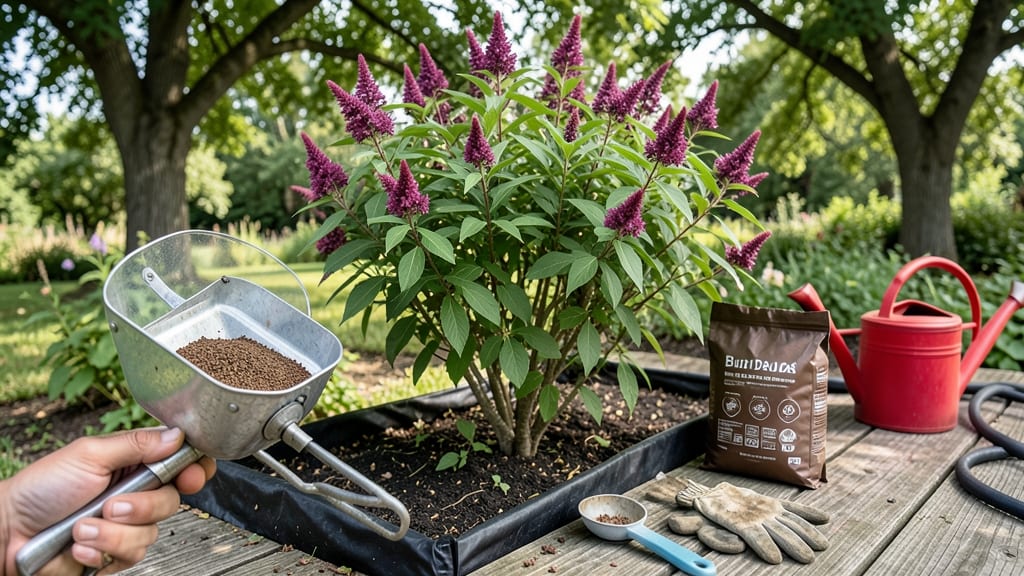
To fertilize a butterfly bush 🦋 at the right times means the difference between nonstop blooms and a plant that struggles to keep up.
Your butterfly bush could be blooming twice as long—but only if you fertilize at the perfect times. Miss these critical windows, and you’ll end up with weak growth, sparse flowers, and a plant that fades faster than summer’s heat.
Most gardeners focus on spring feeding, but the real secret lies in a two-season approach: a light spring boost to wake up roots and a mid-summer feed to fuel blooms. Fall and winter? That’s when you let your butterfly bush rest—no fertilizer needed.
Below, I’ll walk you through the exact timing, the best fertilizer types, and how to spot when your plant is actually hungry (hint: it’s not always what you think).

Best times to fertilize butterfly bush for maximum blooms (spring & fall schedule)
Fertilizing your butterfly bush 🦋 at the wrong time can backfire—think leggy stems, fewer blooms, or even plant stress. The key is timing: spring for root stimulation and mid-summer for bloom support, while avoiding fall and winter entirely.
This two-season approach mirrors how butterfly bushes naturally grow in their native habitats, where they focus energy on new growth early and blooming later.
Most gardeners make one of two mistakes: fertilizing too late in summer (which encourages tender new growth before frost) or skipping spring feeding entirely (leaving roots starved). I’ve seen butterfly bushes in my own garden go from sparse blooms to nonstop flower displays just by adjusting these timing windows.
The science is simple—roots need nutrients to wake up in spring, and blooms need a mid-season boost.
Your USDA hardiness zone shifts these windows by 2-4 weeks. In zones 5-6, aim for early April and late July. In zones 7-9, push back to mid-April and early August.
Always fertilize when soil temps hit 55°F+—colder soil locks out nutrients. Use a soil thermometer if you’re unsure.
| Season | Key Task | Fertilizer Type | Climate Adjustment |
|---|---|---|---|
| Early Spring (Zones 5-6: April; Zones 7-9: March-April) | Light feed to stimulate roots | Balanced 10-10-10 (organic or synthetic) | Wait until soil reaches 55°F+ |
| Mid-Summer (Zones 5-6: July; Zones 7-9: August) | Full feed for blooms | Phosphorus-rich 12-6-6 | Stop by August 15 in cooler zones |
| Fall & Winter (Oct-March) | No fertilization | N/A | Let plant harden off naturally |
For spring fertilization, I recommend a slow-release granular fertilizer like 10-10-10 spread around the root zone. Water it in deeply—this kickstarts root growth without burning tender new shoots.
Think of it as waking your butterfly bush from winter hibernation. In my zone 6 garden, I’ve seen plants double their growth by mid-June when fertilized this way.
Mid-summer feeding is where the magic happens for bloom production. Switch to a phosphorus-heavy formula (12-6-6) to encourage flower buds. Apply this 6-8 weeks before your first frost—any later, and you risk tender growth that won’t survive winter.
I fertilize mine in late July, and the blooms last until hard frost in October.
Never fertilize after mid-August in cooler zones or mid-September in warm zones. This triggers soft new growth that can’t handle frost, leading to winter dieback. I learned this the hard way when my ‘Lo & Behold’ variety developed blackened stems after a late-September feeding—now I mark my calendar!
Fall and winter are dormancy periods—your butterfly bush stores energy for next year. Fertilizing now does more harm than good, as roots can’t process nutrients in cold soil.
Instead, focus on mulching with 2-3 inches of organic matter to protect roots. This mimics natural woodland conditions where butterfly bushes thrive.
Pro tip: If your butterfly bush blooms sparingly in spring, it’s often a sign of over-fertilizing in late summer the previous year. The plant prioritizes new growth over flowers.
To fix this, skip all fall fertilization and give it a light spring feed instead. Within a season, you’ll see a dramatic shift toward more blooms.
For container-grown butterfly bushes, halve the fertilizer amounts and use liquid fertilizer every 3-4 weeks during the growing season. Containers dry out faster, so always water thoroughly after feeding. My potted ‘Miss Ruby’ produces 3x more blooms when fertilized this way compared to my neglected in-ground plants.
Remember: Less is more with butterfly bushes. They’re naturally drought-tolerant and don’t need heavy feeding. Over-fertilizing leads to leafy growth at the expense of flowers—the exact opposite of what we want. When in doubt, err on the side of under-feeding rather than overdoing it.
How to choose the right fertilizer for butterfly bush (slow-release vs. liquid + NPK ratios)
Butterfly bushes thrive when fed the right nutrients at the right time, but choosing the wrong fertilizer can actually harm your plant. The key lies in understanding NPK ratios and whether to use slow-release granules or liquid feeds.
For butterfly bushes, a balanced 10-10-10 or 12-6-6 ratio works best—this promotes blooms without encouraging too much leafy growth.
Organic options like compost or fish emulsion provide steady nutrition, while synthetic fertilizers deliver quick results. My go-to for butterfly bushes? A slow-release granular fertilizer in early spring, followed by a liquid feed mid-summer to support blooming. This two-step approach ensures your plant gets nutrients when it needs them most.
When to Fertilize Butterfly Bush
✅ Early Spring (March-April)
Use slow-release granules (10-10-10) to wake up roots after dormancy. Avoid overdoing it—too much nitrogen now causes leafy growth at the expense of blooms.
✅ Mid-Summer (June-July)
Switch to liquid fertilizer (12-6-6) to support flowering. Apply every 4-6 weeks until late July to prevent late-season growth that won’t harden off before winter.
❌ Late Summer (August-September)
STOP fertilizing—new growth here won’t mature before frost, leaving your plant vulnerable. Focus on watering and pruning instead.
❌ Fall/Winter (October-March)
Let your butterfly bush rest. Fertilizing now disrupts dormancy and weakens the plant. Mulch lightly instead to protect roots.
Slow-release fertilizers are ideal for spring because they feed your butterfly bush gradually over 6-8 weeks. Look for products with sulfur-coated urea—this prevents nutrient spikes that can burn roots. For liquid feeds, I recommend a water-soluble option like 20-20-20 for quick absorption during peak blooming.
Pro tip: Always water before fertilizing to prevent root burn. For established butterfly bushes, I apply 1 tablespoon of granular fertilizer per foot of plant height in spring, then switch to 1/2 cup of liquid fertilizer per gallon of water mid-summer.
Less is more—over-fertilizing leads to salt buildup in the soil, which stunts growth.
Watch for yellowing leaves or sparse blooms—these are signs your butterfly bush needs nutrients. But if you see dark green leaves with no flowers, you’ve overdone it with nitrogen. Adjust your NPK ratio to favor phosphorus (the middle number) for more blooms.
Remember, butterfly bushes are hardy but not heavy feeders. Stick to this schedule, and you’ll enjoy longer blooming seasons with minimal effort. Happy gardening! 🦋