
Pruning
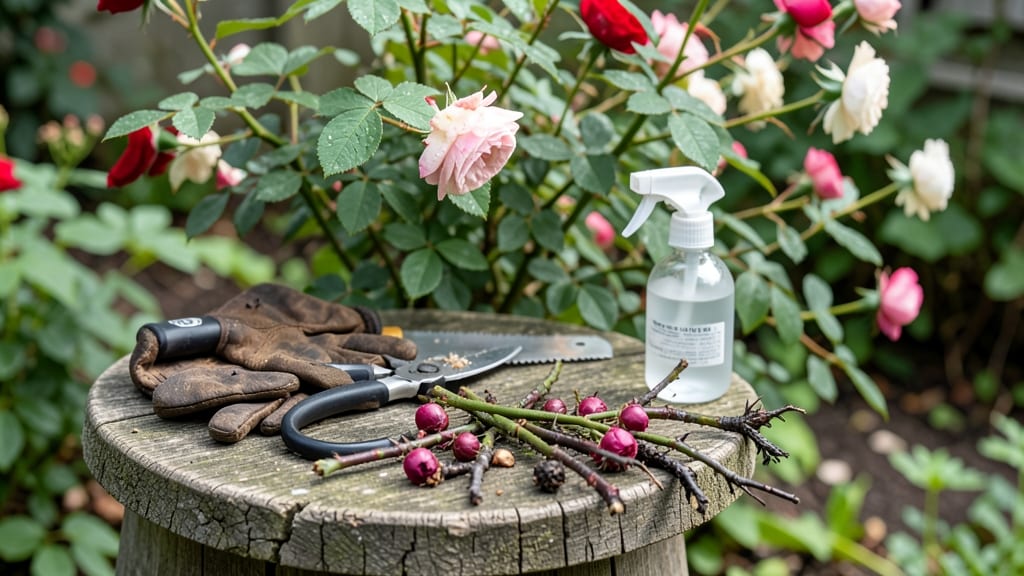
When should rose bushes be trimmed back? Late winter—between late February and early March—stimulates fresh spring growth and maintains plant health by removing dead wood and crowded canes.
Late winter is the perfect time because roses enter dormancy, making them less vulnerable to disease and stress from pruning. 🌸 When you cut back canes before buds swell, you redirect energy into producing stronger stems and more abundant blooms.
This timing also prevents early pruning from exposing tender new growth to late-season frost.
For best results, prune on a dry day when temperatures hover above freezing—ideally between 40°F and 60°F. This balance ensures clean cuts without shocking the plant. I always check for swollen buds as my cue to stop, since pruning too late can delay spring blooms.
Use sharp bypass pruners to make 45-degree cuts just above an outward-facing bud, about ¼ inch above it. This angle helps water run off and encourages upward growth. Removing ⅓ to ⅓ of the plant's height is a good rule of thumb, though older bushes may need more aggressive trimming.
💡 In This Article
- Understanding Late Winter Pruning for Rose Bushes
- Step-by-Step Late Winter Rose Pruning Guide
Understanding late winter pruning for rose bushes
The late winter pruning window works because roses enter a natural dormancy phase when temperatures drop. During this period, the plant's energy shifts from foliage production to root development and bud formation.
When you prune in late winter—typically between late February and early March—you're essentially "waking up" the plant at the perfect moment to stimulate new growth. The key is timing it just before buds begin to swell, which usually happens when daytime temperatures consistently stay above 40°F.
This timing also minimizes stress on the plant. Roses are most resilient to pruning when they're dormant because their energy isn't focused on maintaining leaves or flowers. Pruning at this stage removes dead or diseased canes that would otherwise compete for nutrients, while also improving airflow through the bush.
Better airflow reduces humidity in the center of the plant, which is crucial for preventing fungal diseases like black spot that thrive in damp conditions. The science behind this involves the plant's hormonal balance—pruning stimulates the production of growth hormones like auxins in the remaining buds.
What most gardeners don't realize is how critical the 45-degree cutting angle is for proper healing. When you make clean cuts at this angle, you create a natural shield that prevents water from pooling on the wound, which could lead to rot.
The angle also helps direct new growth outward rather than inward, which improves the plant's overall structure. Additionally, removing 1/3 to 1/2 of the plant's height during late winter pruning encourages the plant to produce more branches, each with multiple bloom points rather than fewer, larger blooms.
Climate plays a surprisingly large role in determining the exact timing. In warmer southern regions, roses may start budding as early as January, while northern climates might need to wait until April.
The rule of thumb is to prune when you can see the first signs of new growth but before buds have swollen beyond pea-sized. This ensures you're not removing potential blooms or stimulating growth too early when late frosts could still occur.
For hybrid teas and grandifloras, which bloom on new wood, late winter pruning is especially beneficial as it promotes more flowering stems.
Here's what happens if you prune at the wrong time: Pruning too early in winter leaves the plant vulnerable to cold damage, while pruning too late in spring can delay blooming by several weeks.
The ideal late winter timing also allows you to assess the plant's overall health after winter dormancy. You'll often find canes that died back during winter freeze—these should be completely removed to make room for new, healthy growth.
The combination of removing old wood and stimulating new growth creates that perfect balance for a spectacular spring display.
For visual learners, imagine your rose bush as a tree with multiple branches. Each cut you make is like pruning a small branch to encourage two stronger branches to grow in its place.
This is exactly what happens with roses—each pruning cut at the right angle and location can potentially double your number of blooms. The result is a bush that's not only healthier but also more productive, with flowers appearing earlier and lasting longer throughout the season. 🌿