
Pruning
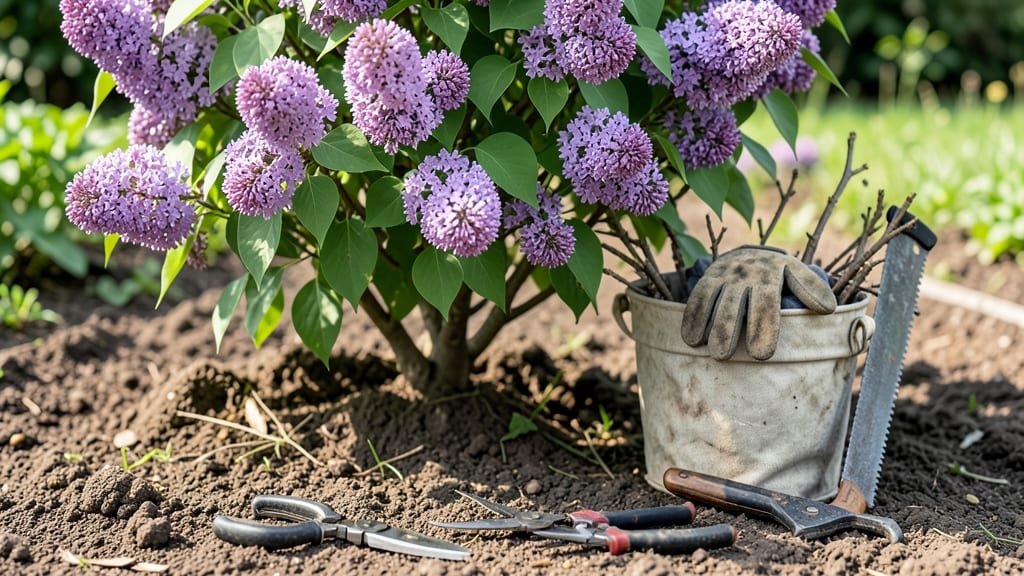
Trimming lilac bushes in spring before buds swell is the secret to longer, fuller blooms every year. ✂️ I’ve learned the hard way that waiting until after flowering means sacrificing next season’s flowers—lilacs bloom on old wood, so early cuts are everything.
The right timing turns a bush from a tangled mess into a fragrant, show-stopping centerpiece.
You only need three basic tools: sharp bypass pruners for clean cuts, loppers for thicker branches, and a bucket for clippings. Start when the buds are still tight but visible—usually 2-3 weeks before your last frost.
The goal is to shape the bush, not just hack away: remove 10-20% of the oldest wood by cutting back to healthy buds, and thin out crowded stems to improve airflow.
What you’ll end up with is a bush that blooms 2-3 weeks longer than unpruned neighbors, with thicker stems and fewer bare spots. The flowers stay vibrant, the fragrance fills the air, and you avoid the heartbreak of sparse blooms.
It’s not about perfection—just intentional cuts that encourage growth where you want it.
For older bushes, take it slow—prune over 2-3 years to avoid shock. In warmer climates, delay until late winter when buds haven’t started swelling yet. The key is patience: lilacs reward careful trimming with decades of reliable blooms.
📚 In This Guide
- What you need
- Instructions
- Tips and common mistakes
- Wrapping up and next steps
What you need
- ● Pruning shears: Bypass pruners (for clean cuts) or anvil pruners (for thicker stems). Choose sharp, high-quality shears (e.g., Felco or Fiskars) with 4- to 6-inch blades.
- ● Loppers: 18- to 24-inch bypass loppers for thicker branches (up to 2 inches in diameter). Look for ratcheting or bypass models for precision.
- ● Garden gloves: Heavy-duty, cut-resistant gloves (e.g., Mechanix or Wolverine) to protect hands from thorns and sharp stems.
- ● Disinfectant: Rubbing alcohol (70% isopropyl) or a garden disinfectant spray to sterilize tools between cuts and prevent disease spread.
- ○ Pruning saw: (Optional) A curved-tooth pruning saw for branches thicker than 2 inches.
- ○ Garden twine or ties: (Optional) For bundling pruned branches for disposal.
- ● Safety glasses: To shield eyes from debris.
- ● Long sleeves/pants: Protect against scratches and thorns.
- ● Trash bags or compost bin: For collecting pruned branches (lilac wood can be composted if disease-free).
- ● Ladder or step stool: (If needed) For reaching higher branches safely.
- ○ Notebook & pen: (Optional) To jot down notes on bush shape or blooming patterns for future reference.
Step-by-step guide to trimming lilac bushes in spring
Here's how I transform my lilacs from tangled messes into lush, flowering powerhouses every spring.
✂️ Step 1: Time Your Trim Precisely After Blooming
Lilacs bloom on old wood, so timing matters. Wait until 4-6 weeks after flowering—when you see spent blooms but before new buds form. This ensures next year's flowers develop properly. I mark my calendar because cutting too early removes next season's buds, while waiting too long risks overgrowth.
Look for brown seed pods on the branches—this confirms blooming is complete. If you see green buds forming, you've waited too long. The ideal window is typically late May to early June in most climates, but adjust based on your local frost dates.
✂️ Step 2: Gather Tools and Prepare the Work Area
You'll need sharp bypass pruners (dull blades crush stems), loppers for thicker branches, and clean rubbing alcohol to disinfect tools between cuts. I also lay down cardboard or fabric to collect debris—lilac leaves can stain lawns.
Wear gloves because lilac leaves contain mild irritants. Work on a dry day when branches are firm—wet wood snaps unpredictably. Clear the area around the bush to create a 3-foot radius workspace. This prevents accidental cuts to nearby plants or yourself.
✂️ Step 3: Remove Dead, Crossing, and Weak Growth
Start by locating dead branches—they're gray-brown, brittle, and snap easily when bent. Cut these back to the main trunk at a 45-degree angle, about 1/4 inch above a bud. Next, remove any branches growing toward the center of the bush or crossing others—they compete for energy and create dense, disease-prone centers.
Look for thin, spindly growth with few leaves. These rarely flower well and waste plant resources. Cut these back to a stronger lateral branch. I make these cuts first because they're the easiest to spot and remove without disturbing the bush's structure.
✂️ Step 4: Thin Out for Better Air Circulation
Lilacs need airflow to prevent fungal diseases. Step back and visualize the bush's shape—aim for an open vase form with branches spaced 6-12 inches apart. Remove the thickest branches first, then thin out until light can penetrate to the center.
Cut branches back to a bud facing outward—this encourages growth in the direction you want. Never leave stubs; always cut just above a bud. I count my cuts: for a mature bush, I rarely remove more than 20-30% of the total growth in one season. Over-pruning stresses the plant.
🌿 Step 5: Shape and Clean Up
Now refine the shape by trimming the outer branches to maintain the natural vase form. Cut just above a bud that faces outward. Avoid creating flat tops—this encourages weak growth. For very old bushes, you can rejuvenate by cutting 1/3 of the oldest stems back to the ground, but only do this every 3-5 years.
After pruning, rake up all debris and dispose of it—don't compost lilac clippings, as they can harbor pests. Water the base thoroughly to help the plant recover. I apply a 2-inch layer of mulch around the base (but not touching the trunk) to retain moisture and suppress weeds.
Tips & tricks for perfect lilac trimming in spring
These simple yet game-changing tips will help you avoid common pruning mistakes and keep your lilacs thriving for years.
Timing is Everything: The 4-6 week window after flowering is absolutely critical—this is when lilacs have finished blooming but haven't yet started forming next year's buds. I've learned the hard way that cutting too early removes potential flowers, while waiting too long risks overgrowth. Mark your calendar for late May to early June in most climates, but always check for brown seed pods (not green buds) to confirm the perfect moment.
Tool Selection Matters: Invest in quality bypass pruners—they make clean cuts that heal faster than jagged ones from dull blades. For thicker branches, loppers are essential, but make sure they're sharp too. I sterilize my tools between cuts with rubbing alcohol to prevent spreading disease. Pro tip: Test your tools on a small branch first to ensure they're sharp enough for clean cuts.
Visualize Your Cuts: Before making any cuts, step back and visualize the open vase form you're aiming for. The goal is branches spaced 6-12 inches apart with good airflow. I like to sketch a rough outline on paper first—this helps me see where branches need to go. Always cut just above an outward-facing bud to encourage growth in the direction you want, never leaving stubs that can rot.
Rejuvenation Strategy: For very old bushes that need a refresh, you can cut back 1/3 of the oldest stems to the ground every 3-5 years. This is a drastic measure but works wonders for revitalizing neglected lilacs. I time this rejuvenation cut in early spring before new growth begins. Remember, lilacs are resilient—they'll bounce back stronger after proper pruning.
Pro Tips for Trim Lilac Bushes In Spring
- These simple yet game-changing tips will help you avoid common pruning mistakes and keep your lilacs thriving for years.
- Timing is Everything: The 4-6 week window after flowering is absolutely critical—this is when lilacs have finished blooming but haven't yet started forming next year's buds.
- Tool Selection Matters: Invest in quality bypass pruners—they make clean cuts that heal faster than jagged ones from dull blades.
Frequently asked questions
Got questions about trimming your lilacs this spring?
You’re not alone! Here are answers to the most common concerns—so you can prune with confidence and enjoy those fragrant blooms all season.
When is the absolute latest I can trim lilacs in spring without hurting them?
Trim lilacs right after flowering—typically between late May and early June—once the blooms fade. Waiting too long risks cutting off next year’s flower buds, which form on old wood. If you miss this window, hold off until summer (but avoid heavy pruning).
What if I didn’t trim last year? Can I still fix it?
Yes! If your lilac was neglected, focus on rejuvenation pruning in late winter or early spring. Cut back one-third of the oldest stems to the ground each year for 3 years. This encourages new growth and future blooms. Patience is key—lilacs are resilient!
My lilac leaves look yellow or brown after trimming. Is this normal?
Yellowing or browning can happen if you pruned too late (after buds formed) or cut into old wood. If leaves are only on new growth, it’s likely just adjusting. For widespread damage, check for pests (like aphids) or fungal issues (like powdery mildew) and treat accordingly.
Do I need to sterilize my pruners between cuts?
Lilacs are prone to bacterial blight and fungal diseases. Wipe blades with rubbing alcohol or a 10% bleach solution between cuts, especially if your bush has brown spots or oozing sap. Clean tools also prevent spreading issues to other plants.
What’s the difference between “light trimming” and “rejuvenation pruning”?
| Light Trimming | Rejuvenation Pruning |
|---|---|
| Removes dead, diseased, or crossing branches and shapes the bush. Cuts made after flowering. | Cuts back 1/3 to 1/2 of the oldest stems to the ground in late winter/early spring to revive overgrown bushes. |
| Best for healthy, established lilacs. | For neglected or overgrown bushes needing a reset. |
Pro tip: If your lilac is <10 years old, stick to light trimming unless it’s severely overgrown. Older bushes handle rejuvenation better!
Wrapping up and next steps
Trimming your lilac bushes in early spring isn’t just about tidying up—it’s your secret to vibrant blooms and healthier growth all season long! By following the right steps—like cutting back just after flowering and avoiding over-pruning—you’ll encourage stronger stems and lush foliage.
With the right tools and a little patience, your lilacs will reward you with show-stopping fragrance and color year after year.
Ready to give your bushes the care they deserve? Grab your pruners and start shaping! 🌸 For extra confidence, bookmark this guide or share it with fellow gardening friends. Happy pruning!