
Shrubs
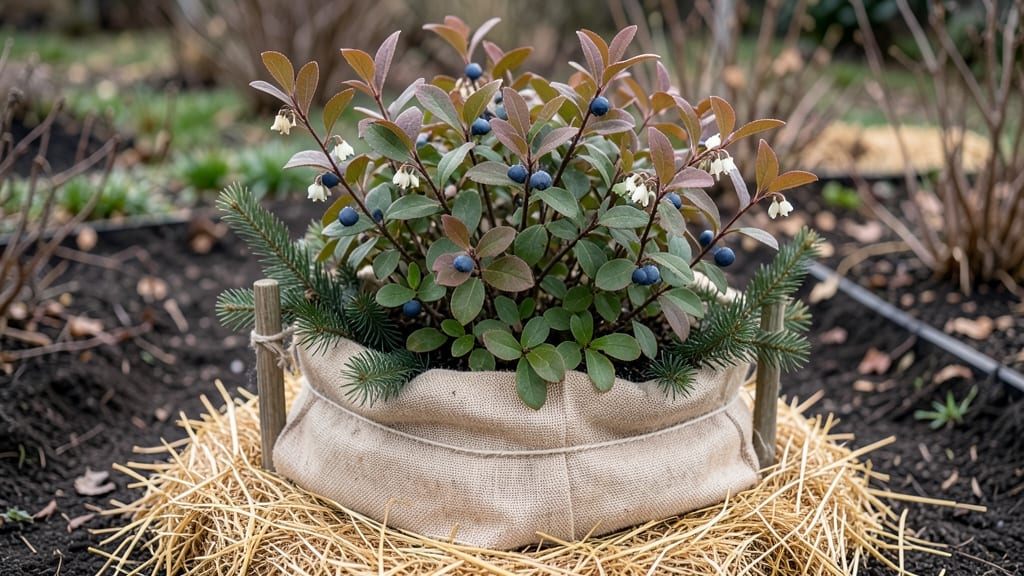
You should cover blueberry bushes in winter to shield them from extreme cold, frost heave, and hungry wildlife—especially in USDA zones 5-7 or colder. Use breathable materials like burlap or frost blankets, securing them loosely to prevent suffocation or rot. Always remove covers in early spring before buds begin to swell.
Winter protection isn't just about keeping blueberries alive—it's about preserving next year's harvest. 🌿 Without proper shielding, cold snaps below 0°F (-18°C) can damage the plant's structure, while frost heave (soil freezing and expanding) can uproot young bushes.
I've seen firsthand how a simple burlap wrap can mean the difference between a thriving bush and one struggling to recover. The key is timing: apply covers after the ground freezes but before heavy snowfall, and remove them as soon as daytime temperatures consistently stay above 40°F (4°C).
For northern varieties, focus on insulating the crown and roots with 4-6 inches of mulch first, then adding a lightweight cover. Southern varieties, which are less cold-hardy, need extra protection since they're often planted in colder climates than their native range.
Remember, too-tight covers trap moisture, creating ideal conditions for fungal diseases—so always allow airflow while keeping out the cold.
💡 In This Article
- When and Why Blueberry Bushes Need Winter Protection
- Best Materials and Techniques for Winterizing Blueberry Bushes
When and why blueberry bushes need winter protection
Blueberry bushes face two primary winter threats: freezing injury and desiccation. When temperatures drop below 0°F (-18°C), ice crystals form inside plant cells, rupturing their membranes—a process called cytoplasmic freezing.
Northern varieties (like 'Bluecrop' or 'Patriot') can tolerate these temps, but southern types (such as 'Southern Highbush') often need protection since they're less cold-hardy. The critical threshold is -10°F (-23°C) for most varieties, where damage becomes irreversible without intervention. 🌡️
Desiccation occurs when cold, dry winds strip moisture from exposed foliage and stems. This is why evergreen blueberry bushes (which retain leaves year-round) suffer more than deciduous ones. The waxy cuticle on leaves helps, but it's no match for prolonged 30 mph winds at 10°F (-12°C).
Mulch helps by insulating roots, but it doesn't protect the canopy. That's where covers come in—they create a microclimate that maintains humidity and reduces temperature swings by 10-15°F compared to exposed plants.
Frost heave is another silent killer. When soil freezes and expands, it can uproot young bushes or crack root systems. This happens most in USDA zones 5-7, where freeze-thaw cycles are common.
I've seen 2-year-old bushes completely lifted from the ground after a hard freeze—something you can prevent with a 4-inch mulch layer of straw or wood chips. The mulch acts like a thermal blanket, keeping roots at a stable 32-35°F (0-2°C), just above freezing. 🌱
Wildlife also plays a role. Rabbits, deer, and voles gnaw on tender bark and buds, especially when snow covers their usual food sources. A loose cover creates a barrier while allowing air circulation—critical because blueberries suffocate in stagnant air.
The key is using breathable materials like burlap or frost cloth (rated for -20°F/-29°C protection) rather than plastic, which traps moisture and promotes rot.
Timing matters too. Apply covers after the ground freezes (when soil temps hit 28°F/-2°C) but before heavy snowfall. Remove them in early spring when daytime temps consistently stay above 40°F (4°C)—this prevents bud burst (when buds start growing but then get fried by late frosts).
I've lost entire harvests because I waited too long to uncover bushes in zone 6, only to get hit by a -5°F (-21°C) snap in April. 🌸
Here's what actually happens without protection: The plant's vascular system gets damaged, leading to poor nutrient uptake in spring. You'll see yellowing leaves, stunted growth, and fewer berries—sometimes taking 2 years to recover. The good news?
Proper winter care can extend a bush's life by 10-15 years and maintain yield consistency. That's why I treat winterizing like a spring planting—both require careful planning to set up success.