
Shrubs
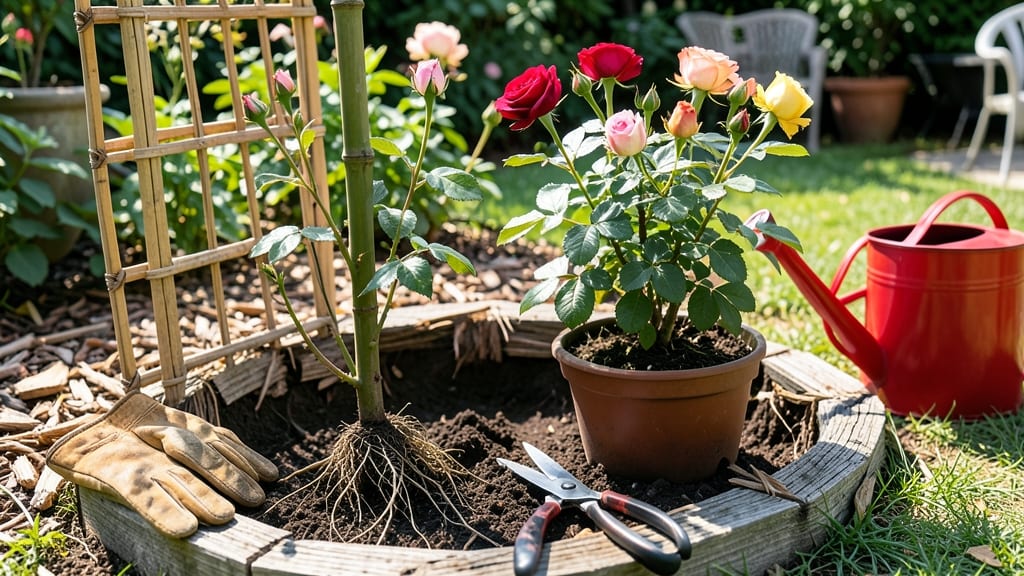
Mastering rose bush planting tips means growing 6-foot-tall bushes that bloom like crazy instead of leggy, sparse plants. 🌹 I learned this the hard way—my first roses flopped because I ignored the basics: sunlight, soil, and spacing. The good news?
These three factors alone determine whether your roses thrive or struggle. Start with 6 hours of direct sun daily and well-draining soil mixed with compost. Dig a hole twice as wide as the root ball but only as deep—planting too deep suffocates the roots.
Space bushes 3-4 feet apart (closer for climbers, farther for shrubs) to prevent crowding and disease. After planting, water deeply to settle the soil, then mulch to retain moisture. The first year is about roots, not blooms—focus on consistent watering (1-2 inches per week) and avoid heavy fertilizing.
By next spring, you’ll see strong canes ready for pruning and a bush that actually lives up to its potential. This method works for hybrid teas, floribundas, and even old garden roses. Skip the guesswork—follow these steps, and your roses will reward you with vibrant blooms from summer through fall.
📚 In This Guide
- What you need
- Instructions
- Tips and common mistakes
- Wrapping up and next steps
What you need
- ● Rose bushes: Choose bare-root (dormant) or container-grown varieties. For bare-root, aim for 2–5 plants (depending on your garden size). Container-grown roses can be planted year-round.
- ● High-quality potting soil or garden soil: 5–10 gallons, amended with compost (20–30% by volume) for nutrients.
- ● Organic fertilizer: A balanced 10-10-10 or rose-specific fertilizer (follow package instructions for dosage).
- ● Mulch: 2–3 inches of wood chips, pine straw, or shredded bark to retain moisture and suppress weeds.
- ● Pruning shears: Sharp, sterilized shears (or loppers for thicker stems).
- ● Garden hose or watering can: With a gentle spray nozzle for even watering.
- ● Stakes or rose supports: 5–6 ft bamboo stakes or metal cages (1 per plant).
- ● Planting hole tools: Shovel (round-point for bare-root, flat for container-grown) and a trowel for fine adjustments.
- ● Root stimulator: A mycorrhizal fungus or seaweed extract to boost root growth.
- ● Epsom salt: 1 tablespoon per plant (mixed with water) for magnesium boost.
- ● Soil pH tester: Roses prefer 6.0–6.5; adjust with lime (to raise pH) or sulfur (to lower).
- ● Drip irrigation system: For automated, deep watering.
- ● Garden gloves: To protect your hands from thorns and soil.
Step-by-step guide to planting rose bushes for long-term success
Here's how I plant roses for blooms that last all season—no guesswork, just proven techniques.
🪴 Step 1: Choose the Perfect Planting Spot
Roses thrive in full sun—at least 6 hours of direct sunlight daily. I look for locations where the bush will get morning sun and afternoon shade if temperatures exceed 90°F. Avoid spots where water pools after rain, as soggy roots lead to disease.
Test the soil by digging a 12-inch hole—the top 6 inches should drain well within 2 hours after watering. If it stays wet, amend with 2-3 inches of compost mixed into the native soil. I always plant roses where they’ll have 3-4 feet of clearance on all sides for airflow and future growth.
☀️ Step 2: Prepare the Soil for Healthy Roots
Loosen the soil in the planting hole to 2-3 times the width of the root ball. Mix in 1 cup of bone meal (for phosphorus) and 1 cup of balanced 10-10-10 fertilizer into the bottom 6 inches of soil. This jumpstarts root growth before the bush even goes in.
I avoid adding fresh manure—it burns roots. Instead, I blend 2 inches of compost into the sides of the hole. The goal is soil that’s loose, crumbly, and slightly acidic (pH 6.0-6.5). Test your soil’s pH before planting; if it’s off, adjust with sulfur (to lower pH) or lime (to raise pH) 2-3 months ahead of time.
🌱 Step 3: Plant at the Right Depth and Stake for Support
Remove the rose from its container and loosen any circling roots with your fingers. The bud union (the swollen bump near the base) should sit 2 inches below soil level. Planting too deep suffocates the graft; too shallow exposes it to rot.
Backfill with native soil mixed with compost, tamping gently as you go. Install a 5-6 foot stake at a 45-degree angle behind the bush, tying the main stem loosely with soft plant ties. Water deeply to settle the soil and remove air pockets—you’ll see water bead up on the surface when it’s done.
💧 Step 4: Water and Mulch for Strong Establishment
Water deeply 2-3 times weekly for the first month, soaking the soil to 12 inches down. You’ll know it’s enough when water runs out the drainage holes of the pot you’re planting in. After that, water when the top 2 inches of soil feel dry—roses hate soggy feet but need consistent moisture.
Spread 2-3 inches of mulch (wood chips or shredded bark) around the base, keeping it 3 inches away from the stem. This conserves moisture, regulates soil temperature, and blocks weeds. I reapply mulch annually in late winter to protect roots from freezing.
✂️ Step 5: Prune and Feed for First-Year Growth
After planting, trim back any damaged or crossing branches to encourage a strong structure. Cut just above an outward-facing bud, making the cut at a 45-degree angle. Avoid heavy pruning in the first year—let the bush focus on root development.
Apply a slow-release rose fertilizer (like 10-10-10) 4-6 weeks after planting, then again in early spring and mid-summer. I skip fall fertilizing—roses need to harden off for winter. Watch for new growth in 4-6 weeks; that’s your sign the roots have taken hold.
Tips & tricks for perfect rose bush planting
Between us, these small details make the difference between a rose that thrives and one that struggles. Here's what I've learned from years of planting—some hard way.
Sunlight Strategy: That 6 hours of direct sunlight is non-negotiable, but here's the thing: morning sun with afternoon shade in hot climates (above 90°F) prevents leaf scorch. I've seen roses wilt dramatically when planted in full afternoon sun during summer heatwaves. If you're in a hot zone, consider planting near a north-facing wall or under light shade from trees.
Soil Test Timing: The 2-3 months ahead pH adjustment window is crucial. I always test soil in early spring—this gives you enough time to amend with lime or sulfur before planting season. Pro tip: Use a simple home test kit (they're cheap and accurate) rather than sending samples to a lab. The 6.0-6.5 pH range is your sweet spot—any lower and nutrients become unavailable, any higher and roots struggle to absorb them.
Planting Depth Check: That 2 inches below soil level for the bud union isn't just a number—it's a lifeline for grafted roses. I use a small ruler to verify depth after planting. Too deep and the graft suffocates; too shallow and it's vulnerable to rot. If your soil settles after watering, add a little more soil around the base to maintain this critical depth.
Watering Visual Cue: For that 12 inches deep watering, I use a long screwdriver to check soil moisture after watering. Push it in—if it comes out clean, you've watered enough. If it comes out with soil clinging, water longer. This method is far more reliable than guessing by time or volume, especially in heavy clay soils that hold water differently than sandy soils.
Pro Tips for Rose Bush Planting Tips
- Between us, these small details make the difference between a rose that thrives and one that struggles.
- Sunlight Strategy: That 6 hours of direct sunlight is non-negotiable, but here's the thing: morning sun with afternoon shade in hot climates (above 90°F) prevents leaf scorch.
- Soil Test Timing: The 2-3 months ahead pH adjustment window is crucial.
Frequently asked questions
Got questions about planting your rose bushes like a pro?
Here are some of the most common concerns—and their answers—to help you grow stunning roses with confidence!
When is the best time of year to plant rose bushes?
Plant your roses in early spring (after the last frost) or fall (4-6 weeks before the first frost). Avoid extreme heat or cold, as young roots struggle to establish. Bare-root roses can even be planted in late winter if soil isn’t frozen!
How often should I water newly planted rose bushes?
Water deeply 2-3 times per week for the first month, keeping soil consistently moist (not soggy). After root establishment, water 1-2 inches per week, focusing on the base. Mulch helps retain moisture—just keep it 2-3 inches away from the stem to prevent rot.
Can I plant roses in containers, or do they need a garden bed?
Dwarf or miniature roses thrive in large containers (at least 15-gallon) with drainage holes. Use a well-draining potting mix and repot every 2-3 years. Just ensure the container gets 6+ hours of sunlight daily.
Why are my rose leaves turning yellow, and how do I fix it?
Yellow leaves often signal overwatering, nutrient deficiency, or pests. Check for aphids or spider mites (spray with neem oil if found). If soil is waterlogged, improve drainage. For nutrients, feed with a balanced rose fertilizer in spring and summer.
How far apart should I space rose bushes for optimal growth?
Spacing depends on the type:
- Climbing roses: 3-6 feet apart
- Floribunda/grandiflora: 2-4 feet apart
- Shrub roses: 2-3 feet apart
Wrapping up and next steps
Planting a rose bush is a rewarding journey that blends patience, care, and a little bit of magic—because nothing beats watching those delicate blooms unfold in your own garden! 🌹 With the right sunlight, soil, and spacing, your rose bush will thrive and reward you with stunning flowers year after year.
Now that you’re armed with expert tips, it’s time to roll up your sleeves, dig in, and create a space where your roses can flourish.
Your next step? Mark your calendar for the best planting season in your climate, gather your tools, and get ready to nurture your new green friend. Happy planting—your garden (and future butterflies!) will thank you. 🌱