
Diseases
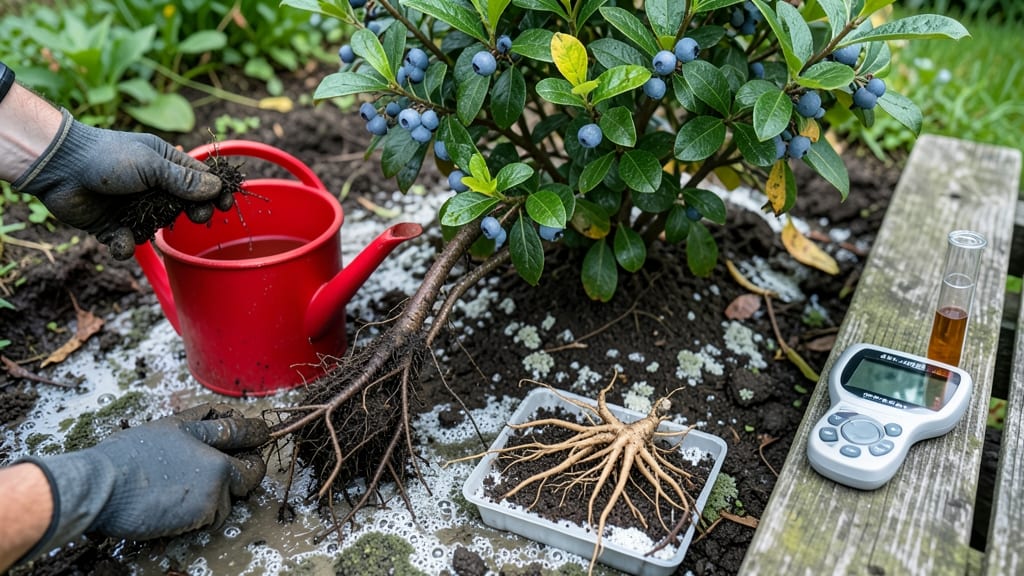
Your overwatered blueberry bush might still be salvageable—root rot from overwatering doesn’t mean instant goodbye. 🌱 I’ve nursed back multiple bushes with the right drainage fix, and the key is acting fast before the roots turn to mush.
The first sign? Yellowing leaves that stay limp even when watered, or that foul, sour smell when you dig near the base.
The good news is blueberries hate soggy roots, so improving drainage is simpler than you think. Start by pruning back any mushy, black roots (they’ll look slimy, not firm), then mix in coarse sand or perlite to break up compacted soil.
Space plants 5-6 feet apart to improve airflow, and consider a raised bed if your yard stays wet.
Within 2-3 weeks, you’ll see new green growth if the roots are still alive. Water only when the top 2 inches of soil feel dry—blueberries need moisture but not swampy conditions.
Mulch with wood chips to keep roots cool and even out watering, and avoid heavy fertilizers until the plant recovers.
If the bush stays yellow and weak after 4 weeks, it’s time to replace it—but most cases turn around with these fixes. The secret to long-term success? Well-draining soil and consistent watering (not drowning). Your next harvest could be sweeter than ever.
Root Rot Overwatered Blueberry Bush
Blueberry bushes thrive in moist but well-drained soil, but when water lingers around their roots, a silent disaster unfolds—root rot. This fungal-driven condition chokes your plant by suffocating roots, cutting off oxygen, and inviting harmful microbes.
For blueberries, which are particularly sensitive to soggy conditions, overwatering is the #1 trigger. Let’s break down the real culprits behind this destructive cycle.
Blueberries demand acidic, sandy, or peaty soil that drains freely—think of it like a sponge that wrings out excess water instead of holding it. When soil is too dense (clay-heavy) or compacted, water pools around roots, creating an anaerobic (oxygen-free) zone. Without oxygen, roots can’t respire, leading to:
- Fungal overgrowth: Pathogens like Phytophthora and Pythium thrive in waterlogged soil, attacking root tissues.
- Root suffocation: Roots rely on oxygen to metabolize nutrients. Drown them, and they rot from the inside out.
- Nutrient lockout: Waterlogged soil binds essential nutrients (like nitrogen and phosphorus), starving the plant even as it sits in "wet" conditions.
💡 Pro Tip: Test your soil’s drainage by digging a 6-inch hole, filling it with water, and timing how long it takes to drain. If it’s still soggy after 6 hours, your soil is too compacted. Amend with perlite, sand, or organic matter (like pine bark fines) to improve airflow.
Even with perfect soil, watering habits can drown your blueberry bush. These mistakes turn your garden hose into a death sentence:
- Ignoring the soil’s moisture level: Stick your finger 1–2 inches into the soil. If it’s damp, wait. Blueberries hate "wet feet"—their roots need a balance of moisture, not a swamp.
- Watering on a schedule: Rain or drought, some gardeners water every Tuesday at 9 AM. Wrong. Use a moisture meter or your finger as a guide.
- Poor watering technique: A slow, deep drink (via drip irrigation or soaker hoses) is ideal. Top-watering (especially with a sprinkler) saturates the surface and encourages surface-level rot.
- No winter adjustments: Blueberries enter dormancy in winter. Overwatering during this time delays hardening and invites rot when roots are least resistant.
✨ Quick Fix: If your bush is already waterlogged, pause watering until the top 2–3 inches of soil dry out. Then, switch to a drip system on a timer (set for 1–2 times per week) to avoid guesswork.
Not all root rot comes from gardener error—sometimes, Mother Nature throws a wrench into the works:
- Heavy rainfall or poor site selection: Planting in a low-lying area or a spot where water collects after storms creates a permanent soggy zone. Blueberries hate "wet feet"—even temporarily.
- Clogged or buried drainage systems: If your garden has French drains, tiles, or even a buried pipe, debris or shifting soil can block water flow, redirecting it toward your bush’s roots.
- Mulch that’s too thick: Mulch is great—but a 4-inch layer is the max. More than that can smother roots and trap moisture, turning your mulch into a rot incubator.
🔥 Action Step: If your blueberry bush is in a naturally wet spot, consider raising the bed with a mound of amended soil (sand + peat moss) or installing a French drain nearby to divert excess water.
Root rot isn’t just about water—it’s a party for fungi and bacteria that love damp conditions. Once water stress weakens roots, these pathogens move in:
- Phytophthora spp.: The "water mold" that thrives in saturated soil and gums up root cells, cutting off nutrient flow.
- Pythium: A microscopic fungus that digests living root tissue, turning healthy roots into mush.
- Bacterial soft rot: Erwinia and Pseudomonas bacteria multiply in waterlogged zones, causing roots to smell foul and collapse.
🎯 Prevention Tip: If you’ve had root rot before, sterilize tools with a 10% bleach solution (1 part bleach to 9 parts water) between uses. Avoid reusing contaminated soil—replace it with fresh, amended mix.
Root rot from overwatering is a chain reaction: poor drainage + too much water + fungal friends = a blueberry bush in distress. But here’s the good news: you can break the cycle by fixing drainage, adjusting watering, and giving your bush the right conditions to bounce back.
Next up, we’ll cover how to diagnose root rot in your blueberry bush—and what to do about it now.
Revive Your Blueberry Bush Now
Root rot from overwatering is a serious threat, but with the right steps, you can nurse your blueberry bush back to health—even if it feels like a lost cause. The key is acting fast, diagnosing the root issue (literally), and adjusting your care routine.
Below, we break down cause-specific fixes and prevention tips to ensure your bush thrives again.
Overwatering is the root cause (pun intended), so the first order of business is cutting off the excess moisture.
- 🚰 Reduce Watering Frequency: If you’ve been watering daily or every other day, switch to once every 5–7 days (adjust based on rainfall and soil type).
Stick your finger 2 inches into the soil—if it’s damp, wait. - 🌧️ Check for Leaks or Poor Drainage: If your bush is in a pot, ensure drainage holes aren’t clogged.
For in-ground plants, test drainage by digging a small hole near the roots and filling it with water. If it doesn’t drain within 30 minutes, amend the soil (see Step 3). - 💧 Use a Moisture Meter: These $10 tools take the guesswork out of watering.
Aim for 40–60% moisture—any higher risks rot.
> 💡 Pro Tip: Water in the early morning so excess moisture evaporates during the day, reducing fungal growth.
Root rot thrives in compacted, waterlogged soil. Loosen the soil and add amendments to create an aerated, well-draining environment.
For Potted Blueberry Bushes:
- 🔪 Remove the Plant Gently: Tip the pot and slide the bush out, loosening roots with your fingers if they’re matted.
- 🧹 Rinse Roots (If Necessary): If roots are mushy or black, rinse them gently under lukewarm water to remove excess soil and debris.
- 🪴 Repot with Fresh Mix: Use a well-draining blend like:
- 50% peat moss or coconut coir
- 30% perlite or pumice
- 20% sand (coarse, not fine)
- 🌱 Plant at the Same Depth: Fill the pot with the new mix, pressing lightly to secure the plant.
For In-Ground Blueberry Bushes:
- 🕳️ Dig a 6-Inch Wide Trench: Around the base of the bush, dig down to the root zone.
- 💥 Add Organic Matter: Mix in compost, pine bark fines, or perlite to break up clay soil.
Aim for a 1:1 ratio of soil to amendment. - 🌿 Mulch Properly: Apply 2–3 inches of mulch (pine straw, wood chips) 3 inches away from the stem to retain moisture without suffocating roots.
If your bush shows signs of black, mushy roots or white fungal growth, you’ll need to treat the infection.
- 🍄 Apply Fungicide: Use a copper-based fungicide (like copper sulfate) or hydrogen peroxide (3%) to kill pathogens. Spray the soil and roots, then water lightly. - 🌡️ Boost Soil pH (If Needed): Blueberries love acidic soil (pH 4.5–5.5).
Test your soil with a kit, and if it’s too alkaline, amend with sulfur or peat moss. - 💊 Prune Damaged Foliage: Trim yellowing or wilted leaves with sterilized pruners (wipe with rubbing alcohol) to prevent spread.
> ✨ Prevention Tip: After treatment, avoid wetting leaves when watering—direct soil moisture only.
Recovery takes time, but with consistent care, your blueberry bush can bounce back.
- 📅 Weekly Check-Ins: Inspect roots every 7–10 days.
Healthy roots should be firm and white; rotten roots are dark and slimy. - 🌱 Gradually Resume Watering: Once the soil is well-draining, water deeply but infrequently (1–2 times per week, depending on weather). - ☀️ Provide Sun & Airflow: Ensure your bush gets 6+ hours of sunlight daily and good airflow (prune nearby plants if needed).
- ✅ Choose the Right Pot: If repotting, use terracotta or fabric pots (they dry faster than plastic). - ✅ Test Soil Before Planting: Avoid soggy spots by checking drainage before committing to a location. - ✅ Water at the Base: Use a soaker hose or drip irrigation to deliver water directly to roots. - ✅ Avoid Over-Fertilizing: Too much nitrogen encourages leafy growth but weakens roots.
Use a balanced fertilizer (10-10-10) sparingly.
By following these steps, you’ll revive your blueberry bush and prevent future rot. Patience is key—some bushes take 4–6 weeks to show signs of recovery, but with the right care, you’ll be enjoying juicy berries in no time! 🫐💚
Frequently asked questions
How can I tell if my blueberry bush has root rot from overwatering?
Look for yellowing leaves that stay limp even when soil is dry, and check the roots—healthy ones are firm and white, while rotten roots are black, mushy, and smell foul. If the bush pulls easily from the soil or the stem feels hollow when tapped, root rot is likely the culprit.
Can I save a blueberry bush with severe root rot?
It depends! If more than 50% of the roots are healthy and white, prune the bad ones, repot in fresh soil, and adjust watering. If the bush is completely mushy or has no healthy roots, it’s best to replace it. Start fresh with a new plant in well-draining soil to avoid repeating the mistake.
What’s the best way to fix waterlogged soil around my blueberry bush?
Dig a 6-inch trench around the base, then mix in coarse sand, perlite, or pine bark fines to break up compacted soil. For potted bushes, repot with a 50% peat moss/perlite mix. Always ensure the pot has drainage holes or the ground slopes away from the plant.
How often should I water a blueberry bush after recovering from root rot?
Water deeply but infrequently—only when the top 2 inches of soil feel dry. Aim for 1–2 times per week, adjusting for rain or heat. Use a soaker hose to deliver water directly to roots, avoiding leaf wetting. A moisture meter helps track soil dampness accurately.
Will fungicide help my overwatered blueberry bush?
Yes! Use a copper-based fungicide or 3% hydrogen peroxide to kill fungal pathogens. Spray the soil and roots, then water lightly. For severe cases, repeat every 7–10 days until new growth appears. Always pair this with improved drainage to prevent recurrence.