
Pruning
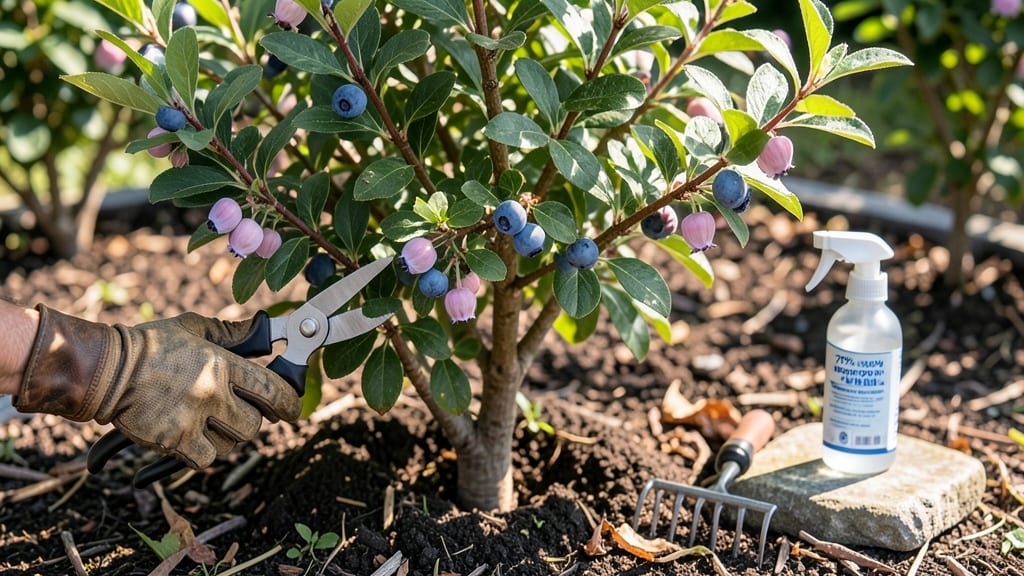
Pruning blueberry bushes in spring isn't just about shaping—it’s how you guarantee next year’s harvest. 🌿 The right cuts now mean bushels of berries by summer, while wrong moves can leave you with sparse fruit.
I’ve pruned my bushes for five seasons, and these three cuts make all the difference between a decent crop and a jaw-dropping one.
The best time to prune is late winter to early spring, right before buds swell but before new growth starts. Cold climates? Wait until after the last frost when the soil can be worked.
Grab your sharp pruners and gloves—you’ll remove dead wood first, then thin crowded branches to improve airflow, and finally shape the bush to encourage fruit-bearing canes. Each cut should target a specific goal: health, sunlight access, or future production.
After pruning, feed your bushes with an acid-loving fertilizer and keep the soil moist but not soggy. Watch for pests like aphids or signs of fungal spots—spring is when problems start.
By summer, you’ll see thick, vibrant canes loaded with flowers that’ll turn into berries. The payoff? A bush that keeps producing for decades with minimal effort.
This method works for highbush and rabbiteye varieties, whether you’re growing in containers or full sun. The key is consistency—do this every spring, and your bushes will reward you with years of effortless harvests. Ready to transform those scraggly branches into a berry-producing powerhouse?
📚 In This Guide
- What you need
- Instructions
- Tips and common mistakes
- Wrapping up and next steps
What you need
- ● Pruning shears: Bypass pruners (sharp, 5-8" blades) – 1 pair (for small branches).
- ● Loppers: Bypass or anvil type (long handles, 18-24" reach) – 1 pair (for thicker branches up to 1.5").
- ● Pruning saw: Curved-tooth or folding saw (for branches >1.5") – 1.
- ● Gloves: Heavy-duty, cut-resistant (to protect from thorns and sap) – 1 pair.
- ● Disinfectant: 70% isopropyl alcohol or bleach solution (1 part bleach to 9 parts water) – for cleaning tools between cuts.
- ● Rubbing alcohol or hand sanitizer – to clean hands after pruning.
- ● Trash bags or bucket – for collecting pruned branches (avoid composting diseased wood).
- ● Garden hose or spray bottle – to rinse tools and clean sap off hands.
- ● Permanent marker – for labeling branches if you’re practicing a specific pruning method.
- ● Knee pads or stool – for comfort if your bushes are tall or dense.
- ○ Pruning sealant – (optional) for large cuts (>0.5" diameter) to prevent disease entry.
- ● Know your blueberry variety: Rabbiteye, Southern Highbush, or Northern Highbush – pruning techniques vary slightly!
- ● Check the weather: Prune on a dry, cool day (avoid extreme heat or frost).
- ● Review last year’s growth: Identify last year’s fruit-bearing wood (often purple-tinged) and new growth.
- ● Safety first: Wear long sleeves and closed-toe shoes to avoid scratches.
Step-by-Step guide to pruning blueberry bushes in spring
Three strategic cuts now will keep your bushes productive for years—let's get started.
✂️ Step 1: Remove Last Year's Fruit Wood
Look for stems that bore fruit last season—they're the ones with clusters of small, dried berries still clinging to the branches. These stems are now called "fruit wood," and they've done their job. Snip them off at the base with clean, sharp pruners, cutting just above a outward-facing bud or lateral branch.
Here's the thing—blueberries produce fruit on second-year wood, so last year's fruiting stems won't bear again. Removing them now opens the center of the bush to sunlight and air, preventing fungal diseases that thrive in tight, shaded spaces. I always start with these cuts first because they're the most obvious and make the rest of the pruning easier.
✂️ Step 2: Thin Out Overcrowded Branches
Next, focus on the bush's structure. You want to maintain an open center with branches spaced about 6-12 inches apart. Remove any branches growing inward toward the center—these create a dense, dark interior where air can't circulate. Cut these back to the main stem or to an outward-facing bud.
Watch for branches that cross each other. When two stems rub together, it creates wounds that invite disease. Choose the weaker of the two branches and remove it completely. You'll know you're doing this right when the bush starts looking more like an open vase shape rather than a tight ball. This step prevents future problems while improving fruit quality.
✂️ Step 3: Prune for Size and Shape
Now it's time to shape the bush. Blueberries respond well to light pruning for size control—never remove more than 25% of the plant's total growth in one season. Focus on the outer edges, cutting back any branches that are longer than 12-18 inches to about 6-12 inches from the main stem.
Look for branches that are weak, thin, or growing straight up. These rarely produce good fruit and compete with stronger growth. Cut them back to a strong lateral branch or outward-facing bud. This final shaping step ensures your bush stays manageable while maximizing next year's fruit production. Real talk: I used to over-prune, and my bushes took years to recover—don't make that mistake.
💧 Step 4: Clean Up and Monitor
After pruning, rake up all the debris from the base of the bush. This removes hiding spots for pests and reduces disease risk. Now's also the time to apply a 2-3 inch layer of mulch around the base (but keep it 6 inches away from the stem to prevent rot). Water deeply to help the bush recover from the pruning stress.
Keep an eye on the bush over the next few weeks. You'll see new growth emerging from the buds you left behind—that's your signal everything is working. If you notice any branches with signs of disease (like blackened tips or odd growths), prune those out immediately and sterilize your tools with rubbing alcohol between cuts.
Tips & tricks for pruning blueberry bushes like a pro
Between us, I've spent years learning what works—and what doesn't—when pruning blueberry bushes. These small tweaks make all the difference between a healthy, productive bush and one that struggles to bear fruit.
Tool Prep is Non-Negotiable: Before you even touch a branch, sterilize your pruners with rubbing alcohol. I learned this the hard way after my bushes developed a mysterious disease—turns out, old pruners can transfer pathogens. Also, keep your tools sharp; dull blades tear stems instead of making clean cuts, which invites infection. A quick wipe-down between cuts with a disinfectant cloth works too.
Step 1: The Fruit Wood Tells All: In Step 1, when you're removing last year's fruit wood, look for stems with those telltale clusters of dried berries. These are your visual cues—they're the ones that won't produce again. Here's what nobody tells you: if you see any stems with blackened or mushy areas, those need to go too, even if they're not last year's fruit wood. That's often a sign of disease, and removing them early prevents spread.
Shape Matters More Than You Think: During Step 3, when shaping the bush, imagine you're creating an open vase shape. The goal is sunlight reaching the center—this isn't just about looks, it's about fruit quality. I used to think more cuts meant better results, but after over-pruning and watching my bushes struggle, I realized the key is strategic cuts. Never remove more than 25% of the plant's growth in one season, and always cut back to an outward-facing bud. This simple rule keeps your bush thriving.
Mulch Like a Pro: That 2-3 inch layer of mulch in Step 4 isn't just decoration—it's protection. Apply it after pruning while the bush is still recovering. Keep it 6 inches away from the stem to prevent rot, and use organic mulch like wood chips or straw. This helps retain moisture, regulates soil temperature, and slowly releases nutrients as it breaks down. Pro tip: Refresh the mulch layer every spring to maintain its effectiveness.
Pro Tips for Pruning Blueberry Bushes In Spring
- Between us, I've spent years learning what works—and what doesn't—when pruning blueberry bushes.
- Tool Prep is Non-Negotiable: Before you even touch a branch, sterilize your pruners with rubbing alcohol.
- Step 1: The Fruit Wood Tells All: In Step 1, when you're removing last year's fruit wood, look for stems with those telltale clusters of dried berries.
Frequently asked questions
Got questions about pruning blueberry bushes in spring?
You’re not alone! Here are answers to the most common concerns to help you prune like a pro and keep your bushes thriving.
When is the exact best time to prune blueberry bushes in spring?
Prune your blueberry bushes right after the last frost but before new growth begins—typically late March to early April in most regions. This timing balances frost protection with fresh growth stimulation. Avoid pruning too early (risking frost damage) or too late (stressing the plant).
What if I missed the spring pruning window? Can I still prune later?
Yes, but with caution! If you miss spring, wait until late summer or early fall (after harvest) to do light pruning. Avoid heavy cuts in late summer, as it can stress the bush and reduce next year’s fruit. Focus on removing only dead or diseased wood if you’re late to the game.
Will pruning my blueberry bushes reduce my harvest next year?
Not if done correctly! Pruning opens the canopy to sunlight and air, which actually boosts fruit production in the long run. Just avoid cutting more than 25% of the bush at once, and prioritize removing old, unproductive wood. Think of it as giving your bush a spa day—better fruit ahead!
What if my blueberry bush looks overgrown or leggy after pruning?
Leggy growth is normal after pruning—it’s your bush’s way of reaching for sunlight! To fix it, reduce watering slightly and apply a balanced fertilizer (like 10-10-10) in early spring. Prune again lightly in late summer to encourage bushier, more compact growth. Over time, your bush will regain its shape!
Do I need special tools for pruning blueberry bushes?
Not necessarily! You’ll need clean, sharp pruners (bypass pruners work best) and gloves (blueberry bushes have thorns!). Sterilize tools with rubbing alcohol between cuts to prevent disease spread. A small saw may help for thicker branches, but most pruning can be done with hand tools.
Wrapping up and next steps
Pruning your blueberry bushes in spring isn’t just about tidying up—it’s the secret to bigger harvests, healthier plants, and years of delicious berries! 🌱 By mastering the three key cuts (removing dead wood, shaping for airflow, and thinning crowded canes), you’ll set your bushes up for success.
Now that you’re armed with the right tools and techniques, there’s no time like the present to grab those pruners and give your blueberries the care they deserve.
Ready to take the next step? Mark your calendar for early spring (just before buds swell) and roll up your sleeves—your future blueberry bounty starts with one simple cut at a time! 🍇