
Pruning
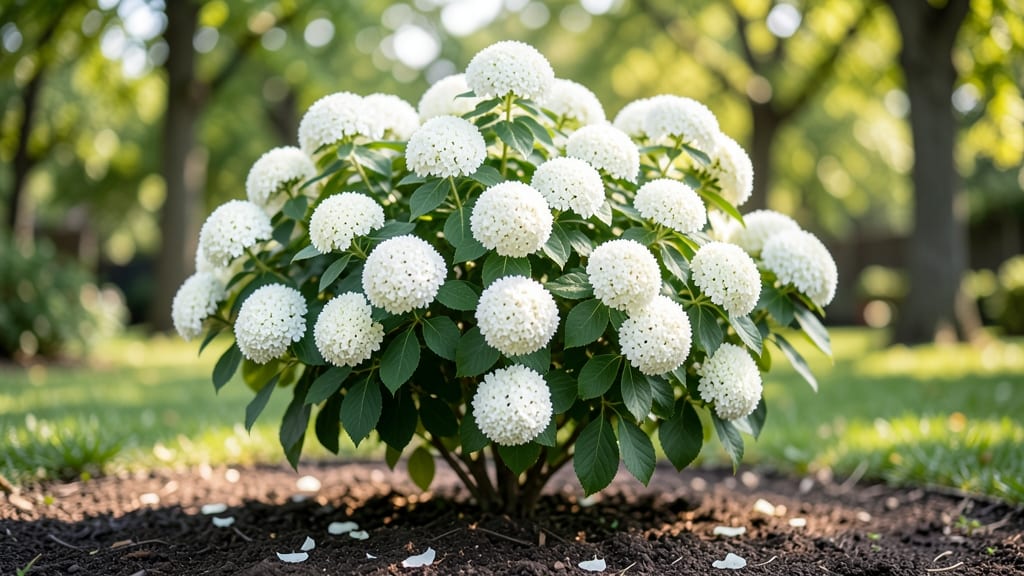
Your miniature snowball bush could be the star of your small garden borders—if you prune it right. 🌿 These compact bushes pack big floral impact, but without proper shaping, they can look messy instead of magical. The secret lies in understanding when to trim for both shape and continuous blooms.
Start with clean cuts after the first flush of blooms fades, then repeat lightly in midsummer to encourage fresh flowers. I’ve used this method in my front yard to create a 3-foot-tall living accent that stays lush year-round, even in tight spaces.
The key is never removing more than 1/3 of the plant at once—this keeps it healthy and encourages bushier growth.
You’ll end up with a neat, rounded bush that stays proportional to its surroundings, whether planted along a walkway or as a container centerpiece. The white blooms create stunning contrast against dark foliage or vibrant perennials, and with proper pruning, they’ll keep flowering until frost.
Works perfectly for small gardens, container arrangements, or as a low-maintenance hedge. The same techniques apply whether you’re shaping a single bush or creating a uniform row along a property line. Let’s get that bush looking its best!
📚 In This Guide
- What you need
- Instructions
- Tips and common mistakes
- Wrapping up and next steps
What you need
- ● Pruning shears – Bypass-style (for clean cuts) or anvil-style (for thicker branches). Sharpness is key!
- ● Loppers – For branches ½ to 1½ inches thick (extend your reach for higher limbs).
- ● Pruning saw – If you have thick, woody stems (rare in miniatures but good to have).
- ● Disinfectant (70% isopropyl alcohol or pruning sealant) – To sterilize tools and prevent disease.
- ● Garden gloves – Cut-resistant (thorns on some Viburnum varieties!).
- ● Trash bag or bucket – For clippings (compost or dispose of diseased branches separately!).
- ● Measuring tape or ruler – To track branch length and maintain proportions.
- ● Hand pruners with a bypass blade – For precision work on delicate stems.
- ● Pruning paint or wound dressing – To seal larger cuts (though miniature snowball bushes heal quickly!).
- ● Step stool or ladder – If your bush is taller than 5 feet.
- ● Notebook & pen – To sketch a pruning plan before you start.
- ● Hose or water spray bottle – To clean tools mid-pruning and rinse off sap.
Step-by-step guide for pruning miniature snowball bushes
Here's my foolproof approach to keeping your compact viburnum looking lush year-round while maximizing those iconic snowball blooms.
✂️ Step 1: Clean Up Winter Damage in Early Spring
Wait until new growth appears (usually mid-to-late March in most climates) before touching your bushes. Grab your pruners and scan the entire plant for dead, broken, or crossing branches—these are your first targets. I always start with the lowest branches first, working my way up to create an open center that encourages airflow and light penetration.
Cut back any branch that looks brown and brittle to the nearest healthy bud or outward-facing growth point. For larger stems, make your cut at a 45-degree angle about ¼ inch above the bud to prevent water from pooling. If you see any mushroom-shaped growths (a sign of viburnum borer), remove those branches entirely and sterilize your pruners with rubbing alcohol.
✂️ Step 2: Shape After Initial Bloom Fades
Once your snowball clusters have finished blooming (usually 4-6 weeks after first flowers appear), it's time for the main shaping cut. Step back and visualize your ideal rounded form—miniature snowball bushes naturally grow in a compact, multi-stemmed mound. I like to maintain a slightly taller center to draw the eye upward while keeping the sides even.
Remove any branches growing inward or crossing others, cutting all the way back to the main stem or outward bud. For branches that are too long, cut back by ⅓ to ½ their length to encourage bushier growth. Always cut just above a leaf bud that faces outward—this ensures new growth fills in gaps rather than creating bare spots. Never remove more than ⅓ of the plant's total foliage in one session.
✂️ Step 3: Light Maintenance Pruning Mid-Season
About 6-8 weeks after your initial spring pruning, do a quick check for any suckers or overly leggy growth. These are new shoots growing from the base or long, thin branches that spoil your compact shape. Pinch back any suckers to ½ inch above ground level—they'll either die back or produce stronger growth next season.
For leggy branches, cut them back to a side bud rather than the main stem. This forces the plant to put energy into lateral growth rather than vertical stretching. I also remove any yellowing or diseased leaves at this stage to prevent fungal spread. After pruning, give your bush a deep watering to help it recover from the stress of cutting.
✂️ Step 4: Prepare for Winter Dormancy
In late fall, after your bush has dropped its leaves (usually October-November depending on your climate), do one final cleanup. Remove any dead or weak branches that didn't get trimmed earlier, and thin out any overly dense growth to improve airflow. The goal here is to create a balanced framework that will support next year's blooms.
I never cut back more than 10-15% of the plant in fall—this gives the bush time to harden off before winter. For particularly vigorous bushes, you can do a light shearing of the outer edges to maintain that perfect rounded shape, but avoid heavy cuts that could stimulate new growth too late in the season. After pruning, apply a 2-3 inch layer of mulch around the base to protect roots from freeze-thaw cycles.
Tips & tricks for perfect miniature snowball bush pruning
These game-changing strategies will help you maintain your compact viburnum's health and maximize those stunning blooms year after year.
Timing is Everything: The 4-6 week window after initial bloom fade is critical for shaping—this is when your bush is most responsive to pruning. I've learned the hard way that cutting too early can remove next year's flower buds, while waiting too long risks overgrown branches. Mark your calendar based on when your first snowball clusters appear, then count forward to plan your pruning day. This timing ensures you're always working with fresh, vigorous growth that will reward you with abundant blooms next season.
Precision Cutting Technique: When making those 45-degree cuts in Step 1, visualize the angle as a smile—this prevents water from pooling at the cut site. I've seen too many pruning wounds develop fungal infections because of improper angles. For larger stems, use your pruners to make the cut, then sterilize them with rubbing alcohol immediately after removing any branches showing signs of viburnum borer. This simple step prevents cross-contamination that could spread disease throughout your garden.
Visual Growth Assessment: After your mid-season pruning (6-8 weeks post-spring), step back and look at your bush from all angles. You should see an open center with branches radiating outward like spokes on a wheel. If you notice leggy growth reaching upward, cut back to a side bud rather than the main stem—this forces energy into horizontal growth that creates a fuller, more compact shape. The goal is to maintain that perfect rounded mound that makes miniature snowball bushes so appealing in landscapes.
Seasonal Pruning Calendar: Create a simple seasonal checklist: Spring (cleanup), Summer (maintenance), Fall (preparation). In fall, when you're limited to just 10-15% of the plant, focus on removing only the most problematic branches. The 2-3 inch mulch layer isn't just for insulation—it also helps regulate soil temperature and moisture, which are crucial for root health during winter dormancy. I've found that bushes with proper mulching recover more quickly in spring and produce even more robust blooms.
Pro Tips for Miniature Snowball Bush
- These game-changing strategies will help you maintain your compact viburnum's health and maximize those stunning blooms year after year.
- Timing is Everything: The 4-6 week window after initial bloom fade is critical for shaping—this is when your bush is most responsive to pruning.
- Precision Cutting Technique: When making those 45-degree cuts in Step 1, visualize the angle as a smile—this prevents water from pooling at the cut site.
Frequently asked questions
Got questions about keeping your miniature snowball bush (Viburnum bodnantense or Viburnum opulus 'Nanum') looking its best year-round? Here are some of the most common ones—and their easy answers!
When is the best time to prune a miniature snowball bush?
Prune your miniature snowball bush right after flowering (late spring to early summer) to encourage fresh blooms for next season. Light shaping can happen in late winter or early spring, but avoid heavy cuts—this plant blooms on old wood, so over-pruning can reduce flowers. Skip fall pruning unless removing dead or diseased branches!
How much can I trim back my miniature snowball bush?
Stick to 10–20% of the plant’s total volume per year. For shaping, trim back no more than 1/3 of any branch at a time. Over-pruning stresses the bush and may lead to fewer flowers. If your bush looks leggy, focus on selective thinning of older, dense stems to improve airflow and light penetration.
Will pruning affect next year’s flowers?
Yes! Since miniature snowball bushes bloom on old wood, pruning too late (after summer) or too aggressively can reduce next year’s flowers. Always prune after blooms fade and avoid cutting back into last year’s growth. If you accidentally prune too much, don’t worry—healthy bushes bounce back, but expect fewer blooms that season.
Can I grow a miniature snowball bush in a container?
These compact shrubs thrive in 5–10-gallon containers with well-draining soil. Just ensure the pot has drainage holes and repot every 2–3 years to refresh the soil. Prune container-grown bushes more lightly since they have limited root space. Place them in partial shade for best results.
Why aren’t my miniature snowball bush blooms as big as they used to be?
Smaller blooms often mean over-pruning, poor nutrition, or too much shade. Check for:
- Pruning timing: Did you cut back after summer?
- Fertilizer: Use a balanced, slow-release fertilizer in early spring.
- Sunlight: Ensure it gets 4–6 hours of sun daily.
- Watering: Drought stress can reduce bloom size—keep soil consistently moist.
Wrapping up and next steps
Mastering the art of miniature snowball bush pruning is your ticket to a lush, blooming landscape year-round! 🌸 With the right tools, timing, and techniques—like deadheading spent blooms and shaping in late winter—you’ll keep your bush thriving and compact.
Remember, patience and consistency are key, so don’t hesitate to experiment and adjust as you go.
Now that you’re armed with expert tips, grab those pruners and give your miniature snowball bush the TLC it deserves! Start small—maybe tackle one section at a time—and soon, you’ll be the proud gardener of a showstopping, well-manicured shrub. Happy pruning! ✂️🌿