
Pests and Diseases
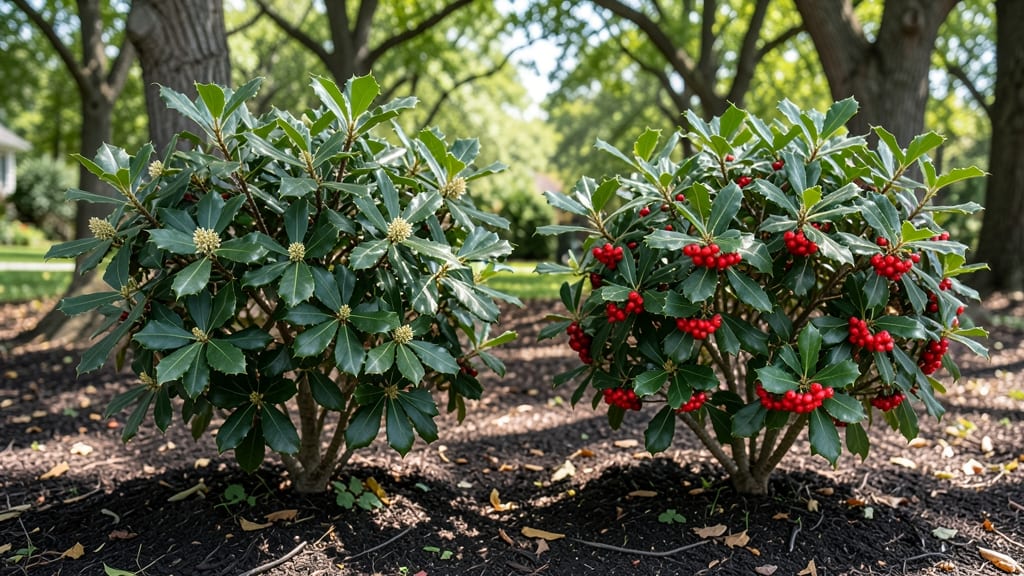
Growing male and female holly bushes together is the secret to a privacy screen that bursts with berries year-round 🌿 — and the difference between a forgettable hedge and a showstopper.
Picture this: glossy green leaves framing your property all winter, then a sudden splash of bright red berries in late fall. That’s what happens when you pair male and female holly bushes correctly.
Without both, you’ll end up with a lush but berry-free hedge that lacks the dramatic flair holly lovers adore.
But here’s the catch: not all holly bushes produce berries, and spacing matters just as much as pairing. A male plant 15-20 feet away from a female ensures cross-pollination, while the wrong combination leaves you staring at empty branches.
Below, I’ll show you how to identify each type, which varieties pair best, and the simple landscaping tricks that turn a good hedge into a perfect one.
Ready to transform your yard into a winter wonderland of color? Let’s break down the key steps to planting holly bushes that wow — and keep producing berries for decades.
How to identify male vs female holly bushes before planting
Holly bushes are stunning year-round, but their iconic bright red berries only appear when you pair male and female plants correctly. Without both, your hedge will remain berry-free, leaving you with just glossy leaves.
The challenge? Identifying sex before planting can be tricky, but I’ll break down the key visual clues and verification methods to help you make the right choice.
Most nurseries label plants, but labels can fall off or be misplaced. Learning to identify holly sexes yourself ensures you get the berry-producing combo you want. Start by examining flower structures, leaf shapes, and growth habits—these are your best tools for accurate identification before planting.
| Feature | Male Holly | Female Holly |
|---|---|---|
| Flower Structure | Small, greenish-yellow clusters with no petals (staminate flowers) | Small, greenish-yellow clusters with tiny petals (pistillate flowers) |
| Leaf Shape | Slightly narrower leaves (1-2 inches long) | Broader, spiny-edged leaves (1.5-3 inches long) |
| Growth Habit | Faster vertical growth (taller, less dense) | Denser, bushier (slower upward growth) |
| Berries | No berries (male plants pollinate females) | Red berries (only with male nearby) |
| Rootstock Inspection | Often grafted onto male rootstock (check labels) | May be grafted onto female rootstock (rare) |
The first clue to spot is the flower structure. Male holly bushes produce small, petal-less clusters of stamens, while females have tiny petals and pistils. If you’re examining plants in early spring, look closely—male flowers are more abundant and visible than female flowers, which are often hidden.
Next, check the leaf shape and growth habit. Female holly bushes tend to have broader, spiny leaves and grow more densely and bushy. Males, on the other hand, often have narrower leaves and grow taller with a less dense canopy.
This difference becomes more noticeable as the plant matures.
If you’re still unsure, inspect the rootstock. Many holly bushes are grafted, and the rootstock can reveal the plant’s sex. Ask your nursery to check the graft union—if it’s labeled or marked, this is the most reliable method.
Some nurseries even sell pre-labeled male and female pairs, making your job easier.
For berry production, you’ll need at least one male plant for every 5-6 female plants. This ratio ensures adequate pollination. If you’re planting a privacy screen, place male and female bushes 15-20 feet apart for optimal cross-pollination.
Pro tip: Plant a single male bush in the center of a row of females for even distribution.
If you’re buying holly bushes online or from a catalog, always verify the sex with the seller. Reputable nurseries will specify whether a plant is male or female.
When in doubt, ask for a photo of the flowers or rootstock before purchasing. This small step can save you from a berry-less hedge!
Remember, even if you miss the flower clues, berry production is your ultimate test. If your female holly bushes produce berries, you’ve successfully paired them with a male. If not, it’s time to add a male plant or swap out a misidentified female for a proven berry-producer.
With these tips, you’ll confidently identify and pair holly bushes for a stunning, berry-filled privacy screen that stays beautiful year-round. Happy planting! 🌿
Best holly bush pairings for berries and privacy screens
Creating a stunning holly hedge with vibrant berries requires pairing the right male and female holly bushes. Without both, your privacy screen will stay berry-free. The best combinations focus on pollination efficiency and visual harmony, ensuring lush greenery year-round with seasonal berry bursts.
For maximum berry production, I recommend starting with 'Blue Prince' (male) + 'Blue Princess' (female). This classic pairing produces glossy, dark green leaves and bright red berries that persist through winter. Their upright growth habits make them ideal for tall privacy screens, reaching 15-25 feet at maturity.
Holly Bush Pairing Pros & Cons
Blue Prince + Blue Princess
- Pros: Fast growth, dense foliage, classic berries
- Cons: Needs 15-20 ft spacing for pollination
Densei (Male) + Sky Pencil (Female)
- Pros: Compact size (6-10 ft), great for small yards
- Cons: Slower berry production in shady conditions
Burfordii (Male) + Golden King (Female)
- Pros: Golden foliage, drought-tolerant
- Cons: Requires full sun for best berry color
Another excellent option is 'Densei' (male) + 'Sky Pencil' (female). These varieties grow in a narrow, columnar shape, perfect for tight spaces or modern landscapes. Their 6-10 foot mature height makes them ideal for narrow hedges or border plantings.
For a golden foliage twist, pair 'Burfordii' (male) + 'Golden King' (female). The golden-yellow leaves create a striking contrast, especially in sunny locations. These varieties thrive in USDA Zone 6-9 and offer excellent drought tolerance once established.
When planting, maintain 15-20 feet spacing between male and female bushes to ensure proper cross-pollination. For dense hedges, plant 3-4 female bushes per male to maximize berry production. Prune in late winter to maintain shape and encourage new growth.
With the right pairing, your holly hedge will become a year-round showstopper, offering privacy, color, and wildlife benefits. Start with these proven combinations for guaranteed success! 🌿✂️🌱