
How To
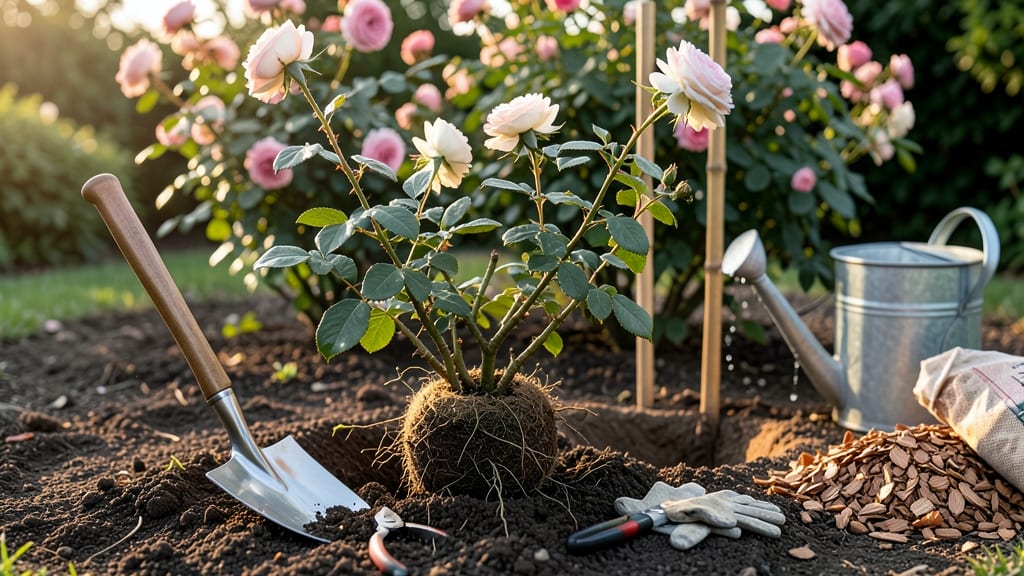
Transplanting rose bushes in August can save your struggling plants—or turn a crowded garden into a showstopper. ✨ The key is timing: late August gives roots time to establish before winter, but the heat makes it tricky.
I’ve moved roses in August for years, and the secret isn’t brute force—it’s prep work that keeps stress low and recovery fast.
Start by watering deeply for 3 days before moving, then dig a hole twice as wide as the root ball and amend the soil with compost. Prune back any wilted blooms and damaged stems, then transplant on a cloudy day or in the evening to avoid scorching.
After planting, mulch heavily and water every other day for the first month—deep soaks, not light sprinkles.
📚 In This Guide
- What you need
- Instructions
- Tips and common mistakes
- Wrapping up and next steps
What you need
- ● Garden fork or spade – A sturdy heavy-duty garden fork (12–18 inches long) or a sharp shovel with a rounded tip for digging without damaging roots.
- ● Pruning shears or loppers – Bypass pruners (for clean cuts) or loppers (for thicker stems) to trim dead or damaged growth.
- ● Garden hose with nozzle – For thorough watering before and after transplanting (aim for 1–2 gallons per bush).
- ● Compost or well-aged manure – 2–3 gallons per bush to enrich the soil and support recovery.
- ● Mulch (organic preferred) – 2–3 inches of shredded bark, straw, or pine needles to retain moisture and regulate soil temperature.
- ○ Root stimulator (optional but helpful) – A natural rooting hormone (like willow water or mycorrhizal fungi) to encourage faster root growth.
- ● Garden gloves – Heavy-duty, cut-resistant to protect your hands from thorns and rough soil.
- ● Wheelbarrow or bucket – For transporting soil, compost, or tools (5–10 gallon capacity recommended).
- ● Choose the right day – Select a cool, overcast day or transplant in the early morning/late afternoon to avoid heat stress.
- ● Prepare the new location – Ensure the spot has 6+ hours of sunlight, well-draining soil, and space for the bush to grow (check your rose’s mature size!).
- ● Water deeply 1–2 days before transplanting – This helps reduce shock by keeping roots hydrated.
- ● Check local regulations – Some areas restrict digging near sidewalks or property lines (call 811 to check for underground utilities if needed).
Step-by-step instructions for transplanting rose bushes in August
August is tricky for roses, but with the right timing and care, you can move them without sacrificing next year's blooms.
🌿 Step 1: Choose the Right Day and Prepare the New Location
Pick a cool, overcast day within the first two weeks of August to minimize stress on the roots. Avoid transplanting during heatwaves or after heavy rain—roses hate soggy roots when adjusting to a new home. Test the new spot by digging a hole twice as wide as the root ball and 12 inches deep to accommodate the roots without bending them.
Amend the soil with 2-3 inches of compost mixed into the bottom of the hole. Roses thrive in well-draining soil with a slightly acidic pH (6.0-6.5). If your soil is heavy clay, add a handful of perlite to improve drainage. Water the hole thoroughly before planting—this helps settle the soil and prevents air pockets around the roots.
✂️ Step 2: Prune and Dig Up the Rose Bush Carefully
Use clean, sharp pruners to trim back the rose bush by one-third before digging. This reduces the plant’s need for water and energy while it recovers. Cut back to just above an outward-facing bud to encourage new growth. Water the bush deeply 24 hours before transplanting—this ensures the roots are hydrated but not waterlogged.
Dig around the base of the rose in a wide circle, working slowly to avoid damaging the roots. Lift the bush gently, keeping as much of the root ball intact as possible. If the roots are tangled, tease them apart carefully with your hands. Place the bush in a bucket of water immediately after digging to keep the roots moist during the move.
🪴 Step 3: Plant the Rose Bush in Its New Home
Position the rose in the center of the hole, ensuring the graft union (the bump near the base where the rose was grafted onto the rootstock) is 2 inches below soil level. This prevents the graft from being buried too deep or exposed, which can weaken the plant. Fill the hole with soil, tamping it down gently to remove air pockets.
Water the rose deeply right after planting to help the soil settle around the roots. Add a 2-inch layer of mulch (like wood chips or shredded bark) around the base, keeping it 3 inches away from the stem to prevent rot. Mulch helps retain moisture and regulate soil temperature, which is critical in August’s heat.
💧 Step 4: Water and Support the Rose for Recovery
Water the transplanted rose every other day for the first two weeks, then taper to once a week once new growth appears. Use a drip irrigation system or soaker hose to deliver water slowly at the base—this prevents leaf burn from overhead watering. Avoid wetting the foliage, especially in the evening, to reduce disease risk.
Stake the rose if needed, especially if it’s tall or top-heavy. Use soft ties (like garden twine or fabric strips) to secure the canes to the stake without cutting into the bark. This gives the plant stability as it recovers from the transplant shock. In 4-6 weeks, you should see new leaves forming—a sign the rose is settling in.
☀️ Step 5: Monitor and Maintain Through Fall
Keep an eye on the rose for signs of stress, like yellowing leaves or wilting. If you notice these, water more frequently but avoid overwatering—roses in August need balance, not excess moisture. Fertilize lightly with a balanced rose fertilizer (like 10-10-10) in early September to encourage root growth without promoting late-season blooms.
As temperatures drop in late September, reduce watering to once a week unless the soil is extremely dry. This helps the roots harden off for winter. By October, the rose should look revived, with new canes and a strong base for next year’s blooms. With patience, your August transplant will reward you with vibrant flowers come spring.
Tips & tricks for transplanting rose bushes in August
Took me a while to learn these—here's how to avoid the rookie mistakes that can stress your roses.
Timing is Everything: That 24-hour deep watering before transplanting is non-negotiable. I learned this the hard way after watching roses wilt from dehydration during the move. Water again immediately after planting to give those roots a hydration boost while they adjust to their new home. The soil should feel damp but not soggy when you check with your finger.
Root Ball Rescue: When lifting the rose, resist the urge to rush—gentle is better. I've seen gardeners yank roses out too quickly, tearing roots that take months to regrow. Keep the root ball intact by digging a wide circle and using a shovel to loosen soil gradually. If roots are tangled, tease them apart with your hands rather than cutting them.
Graft Union Awareness: The graft union (that little bump near the base) must stay exactly 2 inches below soil level—no deeper, no shallower. I once buried one too deep, and the rose struggled for years. Mark the depth with a pencil on the shovel handle if you're unsure, then double-check before backfilling.
Mulch Matters: That 2-inch layer of mulch isn't just decoration—it's insulation. In August's heat, mulch keeps roots cool and retains moisture. I always keep it 3 inches away from the stem to prevent rot, and I use wood chips because they break down slowly. Avoid fresh grass clippings—they can mat down and suffocate roots.
Pro Tips for Transplant Rose Bushes In August
- Took me a while to learn these—here's how to avoid the rookie mistakes that can stress your roses.
- Timing is Everything: That 24-hour deep watering before transplanting is non-negotiable.
- Root Ball Rescue: When lifting the rose, resist the urge to rush—gentle is better.
Frequently asked questions
Got questions about transplanting roses in August?
You’re not alone—this late-summer task comes with unique challenges. Below, we tackle the most common concerns to help you relocate your roses with confidence.
Can I transplant roses in August, or is it too hot?
August can work, but timing is key! Aim for early August (before 15°F/9°C nights) or late August when temps drop. Avoid peak heat—transplanting in midday sun stresses roots. Choose overcast days or water deeply before/after to reduce shock. Roses are tough, but they’ll thank you for patience!
How long after transplanting should I wait to fertilize?
Hold off on fertilizer for 4–6 weeks post-transplant. New roots need energy to establish, not blooms. Instead, focus on watering deeply (1–2 inches weekly) and mulching to retain moisture. Once roots stabilize, use a balanced rose fertilizer (like 10-10-10) to support recovery.
What if my roses wilt after transplanting?
Wilting is normal—roots need time to adjust! Don’t panic: Water thoroughly at the base (not leaves) and shade the bush for 3–5 days. If soil stays soggy, improve drainage by adding compost. Most roses bounce back in 1–2 weeks. Prune dead foliage only if necessary to avoid stressing the plant further.
Can I transplant bare-root roses in August?
Bare-root roses are not ideal for August transplanting—they’re best planted in early spring or fall. If you must, soak roots overnight, trim wilted stems, and plant deeper than the original root flare. Container-grown roses (with soil intact) are your better bet—they handle heat stress more easily.
What’s the best way to move roses with minimal damage?
Dig a wide trench around the bush (12–18 inches out) to preserve roots, then lift gently with a tarp or burlap. Keep the root ball intact—shake off old soil and trim any broken roots. For large bushes, consider dividing them first to reduce stress. Replant immediately in the new hole with amended soil!
Wrapping up and next steps
Transplanting rose bushes in August can feel daunting, but with the right preparation and care, your roses will thrive in their new home! 🌹 The key is to act quickly, keep roots moist, and provide shade and water during recovery.
Remember, patience and attention to detail are your best tools—your hard work will pay off with vibrant blooms next season.
Now that you’re armed with the know-how, take the next step: schedule your transplant on a cool, overcast day and gather your tools. Your roses will thank you with lush, healthy growth! 🌱