
Pruning
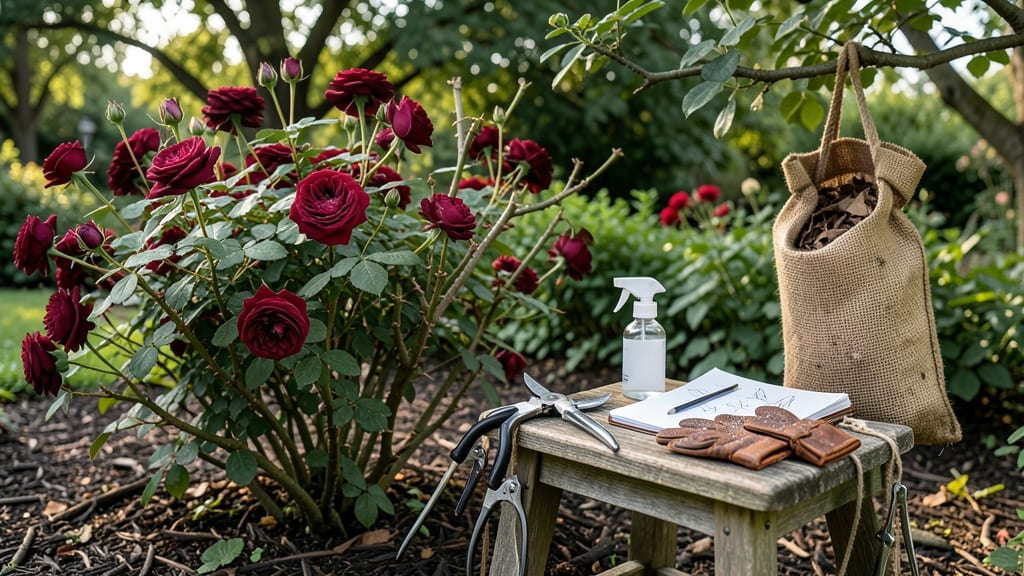
Pruning overgrown rose bushes transforms them from tangled messes into lush, blooming showstoppers. ✂️ I’ve rescued more than a few bushes that looked hopeless—now they produce hundreds of blooms by late spring. The key is timing, technique, and a sharp pair of shears.
Start in late winter or early spring while the plant is still dormant but before new growth begins. This gives you a clear view of the structure and lets you shape the bush without stressing it.
For hybrid teas and floribundas, aim to cut back one-third to one-half of last year’s growth to encourage fresh, vigorous stems. After pruning, your roses will reward you with thicker canes, more buds, and fewer diseases.
Just avoid cutting into old wood (gray or brittle stems) or leaving stubs longer than ¼ inch—both invite rot and pests. The first flush of blooms arrives 4-6 weeks after pruning, and the plant stays healthier all season. Works for climbers, shrub roses, and old garden varieties too.
Grab your tools and let’s get started—your roses will thank you!
📚 In This Guide
- What you need
- Instructions
- Tips and common mistakes
- Wrapping up and next steps
What you need
- ● Bypass pruners: Sharp, high-quality pruners (e.g., Felco or Fiskars) for clean cuts on smaller stems.
- ● Loppers: For thicker branches (1-2 inches in diameter), opt for long-handled loppers (e.g., Corona or Bahco).
- ● Pruning saw: A curved-bladed saw for branches thicker than 2 inches (e.g., Fiskars or Bahco).
- ● Garden gloves: Heavy-duty, cut-resistant gloves (e.g., Mechanix or Dr. McGill’s) to protect your hands.
- ● Disinfectant: Rubbing alcohol or a 10% bleach solution to clean tools between cuts (prevents disease spread).
- ● Pruning sealant: (e.g., Tanglefoot Tree Wound Pruning Seal) for large cuts to prevent pests/disease.
- ● Extension pole: For hard-to-reach branches (e.g., telescoping pruners or a pole saw).
- ● Bucket or tarp: To collect pruned branches for composting or disposal.
- ● Safety glasses: Protect your eyes from debris, especially when using a pruning saw.
- ● Check the weather: Prune on a dry, cloudy day (avoid pruning when roses are wet or frost is present).
- ● Gather a sharpener (e.g., pruner file) to maintain tool sharpness mid-session.
- ● Have a first-aid kit handy for minor cuts or scrapes.
Step-by-Step instructions for pruning overgrown rose bushes
Here’s the method I’ve used for years to revive even the most tangled roses—no guesswork, just clear cuts for stronger growth.
✂️ Step 1: Gather Tools and Clean Your Workspace
Start with sharp, sterilized pruners and a hose—dull tools tear stems and spread disease. I wipe blades with rubbing alcohol between cuts to prevent bacteria transfer. Lay down a tarp or old sheet to catch debris; roses shed like crazy when you begin. Work on a dry day—wet branches stick to tools and make cuts messy.
If your bush is truly wild, grab a loppers for thicker stems over ½ inch in diameter. Never use hedge trimmers—they crush stems instead of making clean cuts. I also keep a small bucket nearby to collect clippings for compost or mulch later. This keeps your workspace tidy and puts those stems to good use.
✂️ Step 2: Remove Dead, Diseased, or Crossing Branches First
Scan the bush for blackened, mushy, or hollow stems—these are dead and must go. Cut them back to healthy green wood or the nearest outward-facing bud. You’ll see a swollen bump where leaves meet the stem; that’s your bud. Angle your cut ¼ inch above it at a 45-degree angle to let rainwater run off, not pool.
Next, tackle crossing branches—where two stems rub together. The one growing inward or downward gets removed. Look for thorns pointing inward too; these create wounds where pests love to hide. I always step back after each cut to visualize the shape—this prevents over-pruning and keeps the bush open for airflow.
✂️ Step 3: Thin Out Overcrowded Growth for Better Airflow
Your goal now is to reduce density by removing every 3rd or 4th branch starting from the center. Focus on weak, spindly stems—they’ll never bloom well. Make cuts just above a strong outward-facing bud using your pruners. You’ll know you’re doing it right when you can see light penetrating the center of the bush after thinning.
For hybrid teas or floribundas, aim to leave 3-5 main canes per bush. If you’re pruning a climbing rose, keep the structure open by removing branches that grow straight up or inward. I mark my cuts with a piece of chalk to double-check spacing—this ensures even light distribution for future blooms.
☀️ Step 4: Shape the Bush and Encourage New Growth
Step back again and visualize the ideal shape—usually a rounded, vase-like form for shrub roses. Cut back long, leggy branches by ⅓ to ½ their length, always to an outward bud. Avoid leaving stubs; they invite disease. For old wood roses (like Knock Outs), prune lightly—just remove dead wood and shape gently to avoid shocking the plant.
If your rose hasn’t bloomed in years, look for thick, woody canes with no buds. These are spent and should be cut to the ground. New growth will emerge from the base or younger canes. I water deeply after pruning to help the plant recover—1-2 gallons per bush—and apply a balanced fertilizer (10-10-10) to support regrowth.
⏰ Step 5: Clean Up and Monitor for Recovery
Rake up all clippings and dispose of diseased stems in the trash—not compost. Burn them if possible to kill pathogens. Wipe down tools with rubbing alcohol again, then store them in a dry place. Your rose will look shocked at first—leaves may wilt, and new shoots might take 2-3 weeks to appear. That’s normal.
Watch for new buds forming along the canes within 4-6 weeks. If you see yellowing leaves or black spots, it’s a sign of stress or disease—reduce watering slightly and avoid fertilizing until the bush stabilizes. I check my pruned roses weekly for the first month, adjusting water as needed. Patience pays off—by next season, you’ll have fuller blooms and fewer pests.
Tips & tricks for pruning overgrown rose bushes
Real talk: Pruning roses can feel intimidating, but these simple tricks will help you transform tangled bushes into thriving plants with confidence.
Tool Prep is Everything: Before you even touch a branch, sterilize your pruners with rubbing alcohol—this prevents spreading disease between cuts. I also keep a small spray bottle of diluted bleach (1 part bleach to 9 parts water) nearby to wipe blades between bushes if I'm working on multiple plants. Sharp tools make clean cuts that heal faster, so take 5 minutes to hone your blades with a sharpening stone if they feel dull.
Bud Identification is Key: In Step 2, when you're cutting back dead or crossing branches, focus on the outward-facing buds—they're those little swollen bumps where leaves meet the stem. Always make your cut just above these buds at a 45-degree angle. This simple technique ensures new growth will emerge in the right direction, creating a naturally open bush shape. Pro tip: If you're unsure which way a bud faces, imagine the branch growing outward from the center of the plant.
Don't Over-Thin: In Step 3, when reducing density, resist the urge to remove too many branches at once. Aim to leave 3-5 main canes for shrub roses—this provides enough structure for strong blooms while maintaining airflow. I've seen beginners panic and cut back entire sections, only to end up with sparse, weak growth. Step back frequently to visualize the bush's shape and ensure you're maintaining that open, vase-like form we're shooting for.
Post-Pruning Care Matters: After you've finished shaping, give your roses a deep drink of water—1-2 gallons per bush—and apply a balanced fertilizer (10-10-10) to support regrowth. The first month is critical for recovery, so monitor your plants weekly. If you notice yellowing leaves or black spots within 4-6 weeks, it's a sign of stress—reduce watering slightly and hold off on fertilizing until the bush stabilizes. Patience during this period leads to stronger blooms next season.
Pro Tips for Prune Overgrown Rose Bushes
- Real talk: Pruning roses can feel intimidating, but these simple tricks will help you transform tangled bushes into thriving plants with confidence.
- Tool Prep is Everything: Before you even touch a branch, sterilize your pruners with rubbing alcohol—this prevents spreading disease between cuts.
- Bud Identification is Key: In Step 2, when you're cutting back dead or crossing branches, focus on the outward-facing buds—they're those little swollen bumps where leaves meet the stem.
Frequently asked questions
Got questions about pruning overgrown rose bushes? You’re not alone! Here are some common concerns—and straightforward answers—to help you tackle the task with confidence.
When is the worst time to prune my rose bushes?
While late winter or early spring is ideal, never prune during extreme cold (below 40°F) or when roses are actively blooming. Pruning in late summer or fall can stimulate tender new growth that won’t survive winter. If you must prune outside the ideal window, do it on a mild day and avoid heavy cuts.
How do I know if I’ve pruned too much?
You’ve over-pruned if you’ve cut back more than ⅓ of the bush’s total height or removed stems down to bare wood (no buds left). Signs include sparse foliage, weak stems, or no new growth after 4–6 weeks. If this happens, reduce future cuts and fertilize lightly to encourage recovery.
Can I prune roses in the fall for winter prep?
Light pruning in late fall (after the first frost) is fine for cleanup, but avoid heavy cuts. Focus on removing dead, diseased, or crossing branches. For hybrid teas and grandifloras, wait until spring. Everblooming roses (like floribundas) can tolerate minor fall pruning, but hold off on major reshaping until dormancy breaks.
What if my roses bleed after pruning? Is that bad?
Bleeding (sap oozing from cuts) is normal and harmless—it’s the plant’s way of healing. To minimize it, prune on a dry day and seal cuts with pruning sealant (optional). This won’t prevent regrowth; it’s just a sign your roses are healthy and storing energy for spring. Water deeply after pruning to help recovery.
Should I sterilize my pruners between cuts?
Absolutely!
Sterilizing pruners with rubbing alcohol or a 10% bleach solution between cuts prevents spreading fungal diseases (like black spot) or bacterial infections. Wipe blades after each snip, especially when pruning diseased branches. A quick rinse with water and a dry towel keeps tools ready for the next cut.
Still unsure? Snap a photo of your rose bush and compare it to pruning guides—visual cues (like bud placement or stem thickness) often clarify the best approach. Happy pruning!
Wrapping up and next steps
Pruning overgrown rose bushes might seem daunting, but with the right tools, timing, and technique, you’ll transform tangled chaos into a vibrant, blooming masterpiece. 🌸 Remember: patience and precision are your best friends—focus on removing dead wood, thinning crowded canes, and shaping for airflow.
Your roses will reward you with healthier growth and stunning flowers all season long!
Ready to take the next step? Grab your shears and schedule your first pruning session—whether it’s a light trim in early spring or a full reset in late winter. And don’t forget: consistent care keeps those bushes thriving year after year!