
Container Gardens
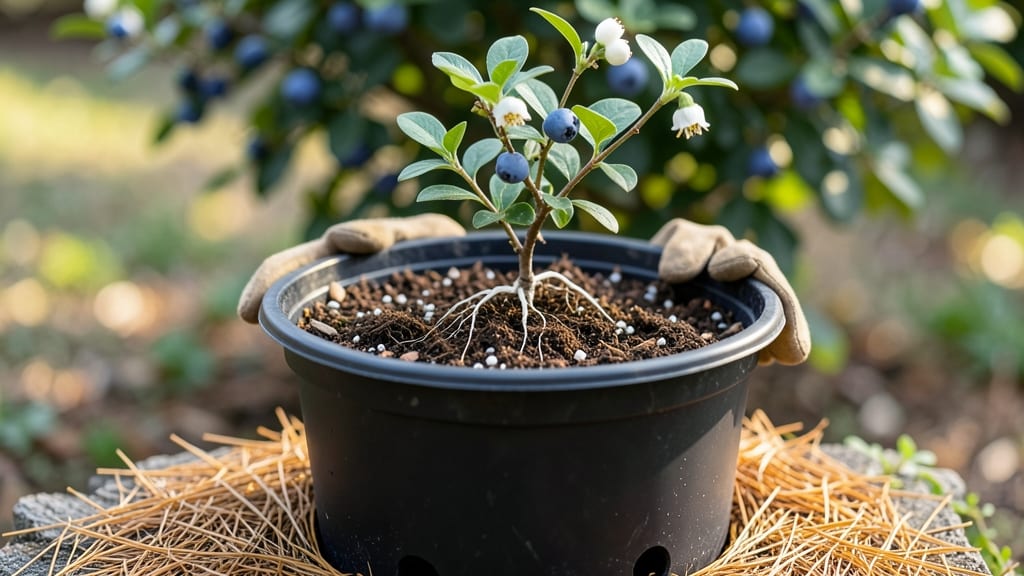
Growing blueberry bushes in containers means sweet, homegrown berries without needing a yard. 🌱 The key is choosing the right compact varieties—like 'Top Hat' or 'Peach Sorbet'—that thrive in pots while delivering the same juicy harvests as their in-ground cousins.
I’ve grown them on my balcony for three years now, and the secret lies in replicating their natural acidic soil environment in a controlled space.
You’ll need a pot at least 12 inches deep (larger for multiple bushes) with drainage holes, a well-draining soil mix that’s highly acidic (think peat moss or pine bark), and a spot that gets 6-8 hours of sunlight daily.
Forget the generic potting soil—blueberries demand pH 4.5-5.5, or they’ll starve for nutrients. I use a pre-mixed blueberry soil blend and add sulfur pellets every few months to keep the acidity just right.
By summer, you’ll be harvesting plump berries that taste like nothing from the store. The plants stay compact, so they won’t outgrow your space, and with proper care, they’ll produce for decades.
Prune in late winter to shape the bush and remove dead wood, and watch as new growth bursts forth come spring. The only challenge? Keeping up with watering—containers dry out fast, so check soil moisture daily during heatwaves.
This method works for patios, fire escapes, or even sunny windowsills (with grow lights). Start with one bush to test your setup, then expand as you master the balance of acidity, water, and sunlight.
Trust me, the first taste of a homegrown blueberry—still warm from the sun—is worth every bit of effort.
📚 In This Guide
- What you need
- Instructions
- Tips and common mistakes
- Wrapping up and next steps
What you need
- ● Container: At least 15–25 gallons (18–24" diameter/wide) with drainage holes. Pro tip: 💡 Use a fabric grow bag for better aeration or a ceramic pot for aesthetics.
- ● Blueberry plants: Dwarf or compact varieties (e.g., 'Top Hat,' 'Peach Sorbet,' or 'Pink Lemonade'). Buy 2–3 plants for cross-pollination (if not self-fruitful).
- ○ Soil: Acidic, well-draining mix (pH 4.5–5.5). Pre-mix 50% peat moss or coconut coir + 50% perlite/pine bark. Optional: Add 1 tbsp sulfur per gallon to adjust pH.
- ● Fertilizer: Slow-release acid-loving plant fertilizer (e.g., Osmocote or Miracle-Gro Azalea/Camellia).
- ● Organic options: Fish emulsion or cottonseed meal (high in nitrogen).
- ● Mulch: Pine needles or wood chips (2–3 inches) to retain moisture and acidify soil.
- ● Tools: Trowel or hand shovel for planting.
- ● Garden gloves (to protect from thorns and soil acidity).
- ● pH testing kit (to monitor soil acidity).
- ● Sunlight: 6–8 hours of full sun daily (south- or west-facing balcony ideal).
- ● Water: Consistent moisture (containers dry out fast!). Water when top 1–2 inches of soil feel dry.
- ● Temperature: Hardy to USDA Zones 3–7, but containers need winter protection in colder climates (use bubble wrap or move indoors).
- ● Self-watering system (e.g., wicking bed or drip irrigation) for busy gardeners.
- ● Epsom salt (1 tbsp/month) for magnesium boost.
- ● Blueberry cage or trellis (if variety grows tall, like 'Jelly Bean').
- ● Compost tea for organic nutrient boosts.
Step-by-step instructions for growing blueberry bushes in containers
Here's my foolproof method for container-grown blueberries—small bushes, big harvests, no fuss.
🪴 Step 1: Choose the Right Containers and Drainage
Blueberries need acidic soil and excellent drainage, so pick containers at least 18-24 inches deep with multiple drainage holes. I use 5-gallon fabric grow bags because they breathe better than plastic and let roots expand without circling. If using pots, ensure they're at least 12 inches wide to accommodate root systems.
Line the bottom with 2-3 inches of gravel or broken pottery shards—this prevents soil from clogging drainage holes while keeping roots aerated. Place a layer of sphagnum peat moss over the gravel to filter out fine particles. Here's the thing—blueberries hate soggy roots, so drainage is non-negotiable.
🌱 Step 2: Prepare Acidic Soil Mix
Fill your container with a blend of 50% peat moss, 30% pine bark fines, and 20% perlite or coarse sand. This mix stays acidic (pH 4.5-5.5) and drains fast. I add 1 cup of sulfur per 5 gallons of mix to boost acidity further—sprinkle it in before adding the peat moss. Mix everything thoroughly until it looks uniformly dark and fluffy.
Test your soil pH with a meter or strips before planting. If it reads above 5.5, add more sulfur and remix. Blueberries refuse to thrive in alkaline soil, and you won't see that first harvest if you skip this step. I like to pre-moisten the mix until it feels like a damp sponge—just damp enough to hold shape but not dripping.
☀️ Step 3: Plant Compact Varieties and Position Correctly
Choose dwarf or semi-dwarf varieties like 'Top Hat', 'Peach Sorbet', or 'Pink Lemonade'—they stay under 3-4 feet tall and produce well in containers. Dig a hole twice as wide as the root ball but only as deep. Gently remove the plant from its nursery pot and loosen any circling roots with your fingers. Place it in the hole so the top of the root ball sits 1 inch below the container rim.
Backfill with your acidic mix, pressing lightly to eliminate air pockets. Water deeply until it runs out the drainage holes—this settles the soil and removes any air gaps around roots. Position your container in full sun (6+ hours daily). Blueberries need bright light to set fruit, but if you're in a hot climate, afternoon shade prevents leaf scorch.
💧 Step 4: Water and Fertilize for Acid-Loving Success
Keep the soil consistently moist but never soggy—water when the top 1-2 inches feel dry. I use a moisture meter to check, but if you don't have one, stick your finger in: it should feel damp but not wet. Blueberries are shallow-rooted, so I water at the base rather than overhead to prevent fungal diseases. Mulch with 2 inches of pine bark to retain moisture and acidify the soil slowly over time.
Fertilize in early spring with an acid-loving plant fertilizer (look for one labeled for blueberries or azaleas). I use a slow-release pellet every 4-6 weeks during growing season. Avoid high-nitrogen fertilizers—they promote leafy growth at the expense of fruit. You'll know you're on track when your bush produces white flower buds in early spring—that's your sign everything's balanced.
✂️ Step 5: Prune and Protect for Long-Term Harvests
Prune in late winter or early spring before new growth starts. Remove any dead, diseased, or crossing branches, then cut back any remaining stems by one-third to encourage bushier growth. I use clean, sharp shears to make cuts just above a bud or branch junction. This keeps the plant open to sunlight and air circulation, which prevents mold and pests.
Watch for blueberry maggots or spider mites—they love container-grown bushes. I spray with neem oil at the first sign of trouble, but prevention is easier: keep your plants healthy with proper watering and feeding. Harvest when berries are deep blue and plump, usually in mid-to-late summer. Don't wait too long—they ripen fast and get messy!
Tips & tricks for growing blueberry bushes in containers
Small spaces shouldn't limit your harvest—these tricks ensure your container-grown blueberries thrive like in-ground plants.
Container Size Matters: Don't skimp on depth! The 18-24 inch minimum ensures roots have room to grow without becoming root-bound. I've seen gardeners use shallow pots and wonder why their bushes struggle—blueberries need that vertical space. If you're working with limited height, consider stacking containers or using grow bags that can be hung vertically. The wider the container (minimum 12 inches), the more stable your bush will be, especially in windy conditions.
Soil pH is Non-Negotiable: That 4.5-5.5 pH range isn't just a suggestion—it's the difference between a thriving bush and one that barely produces. I've tested my soil mix multiple times and found that even small deviations can reduce fruit set. If you're unsure about your local soil's acidity, add an extra ½ cup of sulfur per 5 gallons as a buffer. You can also mix in cottonseed meal (available at garden centers) for a slow-release acidity boost over time.
Watering Wisdom: Those top 1-2 inches of soil dry out faster in containers than in ground. I've ruined bushes by letting them dry completely between waterings—once the roots start pulling away from the sides, recovery is difficult. For consistent moisture, try the "finger test" method: stick your finger in the soil daily. If it feels like a wrung-out sponge, it's time to water. In hot climates, you might need to water twice daily, especially in 5-gallon fabric grow bags that dry out quickly.
Winter Protection Strategy: Container-grown blueberries need extra care when temperatures drop. Move your containers to a sheltered location (like against a south-facing wall) before the first frost. Wrap the container and plant in burlap or frost cloth to protect roots. I've seen bushes survive winter just fine when properly insulated, but uncovered containers can freeze solid. If you're in a zone with hard freezes, consider moving the entire container to an unheated garage or cold frame for the winter months.
Pro Tips for Grow Blueberry Bushes In Containers
- Small spaces shouldn't limit your harvest—these tricks ensure your container-grown blueberries thrive like in-ground plants.
- Container Size Matters: Don't skimp on depth!
- Soil pH is Non-Negotiable: That 4.5-5.5 pH range isn't just a suggestion—it's the difference between a thriving bush and one that barely produces.
Frequently asked questions
Got questions about growing blueberries in containers?
You’re not alone—here are the most common ones we hear, plus straightforward answers to help you crush your balcony harvest!
What’s the best temperature range for container-grown blueberries?
Blueberries thrive in cool to moderate climates, ideally between 50–80°F (10–27°C). They’re sensitive to heat—if temps hit 90°F+ (32°C+), provide afternoon shade and keep soil moist. In winter, protect pots from freezing with mulch or move them to a sheltered spot if possible.
How often should I water container blueberries?
Containers dry out fast! Water daily in hot weather and every 2–3 days when cooler. Check soil moisture—top 1–2 inches should be slightly damp (not soggy). Use a saucer to catch runoff, and avoid wetting leaves to prevent fungal issues. Pro tip: Mulch with pine needles to retain moisture!
Can I grow blueberries in a pot without acidic soil?
Blueberries need acidic soil (pH 4.5–5.5), but you can achieve this in containers. Use a peat-free, acidic potting mix (like a blueberry-specific blend) and amend with sulfur or cottonseed meal annually. Test pH every 6 months—adjust with vinegar (for high pH) or lime (for low pH).
Why aren’t my blueberry bushes fruiting in containers?
Common culprits:
- Insufficient sunlight: Needs 6–8 hours of sun daily—move pots to a sunnier spot.
- Improper pruning: Prune in late winter to remove dead wood and open the center for airflow.
- Lack of nutrients: Fertilize with an acid-loving plant food (like Miracle-Gro Azalea/Camellia) in spring and summer.
- Young plants: Bushes may take 2–3 years to bear fruit—patience is key!
What’s the largest container size I should use for blueberries?
Start with a 5-gallon pot for dwarf varieties (like ‘Top Hat’ or ‘Peach Sorbet’) and 10–15 gallons for standard bushes. Larger pots (up to 20 gallons) support bigger varieties but ensure they have drainage holes and depth for root growth. Avoid shallow planters—they dry out too quickly!
Wrapping up and next steps
Growing blueberry bushes in containers is a rewarding way to enjoy fresh, homegrown berries—even in small spaces! 🌱 With the right compact varieties, proper soil, and a little care, you’ll be harvesting sweet, juicy blueberries in no time.
Whether you’re a beginner or a seasoned gardener, this method makes berry-growing accessible and fun.
Now that you’re equipped with the knowledge, pick your favorite variety and get planting! Start small, experiment with container sizes, and watch your balcony bloom with delicious harvests. Happy gardening! 🍇✨