
Shrubs
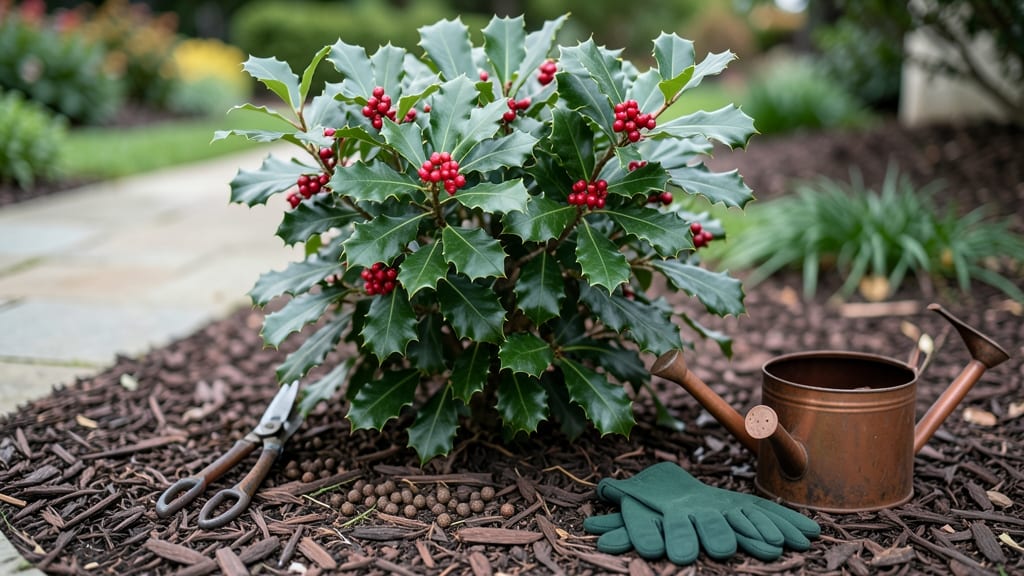
Caring for holly bushes means bold, glossy leaves and bright red berries all winter long—with almost no fuss. 🌿 I’ve grown hollies for years, and the secret to their effortless beauty is simple: they thrive on neglect almost as much as they do on attention.
These evergreens handle shade, drought, and even urban pollution better than most shrubs, making them the perfect low-maintenance privacy screen.
The real magic happens in the first year when you set them up right: partial sun, well-draining soil, and occasional watering until established. Most people overthink pruning—hollies handle it surprisingly well, even if you wait until spring.
The key is shaping them gradually rather than hacking them back after they’ve already grown wild. And yes, those berries? They’re a reward for patience, not a guarantee every year.
By summer, you’ll have a lush, dense screen that blocks wind and noise while adding color to your yard.
The berries (if you have female plants) will attract birds, and the leaves stay vibrant even in deep shade. Minimal pruning keeps them tidy without stressing the plant—just a few strategic cuts in late winter or early spring. It’s the kind of plant that makes gardening feel easy.
Works just as well in containers as in the ground, so whether you’ve got a small patio or a full yard, hollies adapt. The only real rule? Don’t over-fertilize—these shrubs prefer to grow slowly and stay sturdy. Once they’re happy, they’ll reward you for years with that classic holly charm.
📚 In This Guide
- What you need
- Instructions
- Tips and common mistakes
- Wrapping up and next steps
What you need
- ● Holly bushes: Choose between Ilex opaca (American holly) or Ilex × ‘Nellie R. Stevens’ (hybrid holly) for year-round greenery.
- ● Well-draining soil: Mix 1 part peat moss or compost with 2 parts native soil (holly prefers slightly acidic soil, pH 5.0–6.0).
- ● Organic mulch: 2–3 inches of pine bark, wood chips, or shredded leaves (keeps roots cool and retains moisture).
- ● Fertilizer: Balanced fertilizer (10-10-10) or acid-loving plant fertilizer (apply in early spring).
- ○ Slow-release granules (optional, for long-term nutrition).
- ● Watering supplies: Hose with a soaker nozzle or drip irrigation system (holly hates soggy roots!).
- ● Watering can (for potted holly or seedlings).
- ● Pruning tools: Bypass pruners (for clean cuts) and loppers (for thicker branches).
- ● Garden gloves (holly berries and spines can be prickly!).
- ● Epsom salt (1 tbsp per gallon of water, monthly in spring/summer for magnesium boost).
- ● Pest control: Neem oil or insecticidal soap (for aphids or scale insects).
- ● Stakes & twine (if planting young holly in windy areas).
Step-by-step guide to maintaining healthy holly bushes
Holly bushes thrive with just a few key practices—focus on these basics for lush, berry-laden screens.
🌿 Step 1: Plant in the Right Location for Year-Round Success
Holly bushes love full sun to partial shade—at least 6 hours of sunlight daily. I always plant mine where they’ll get morning sun and afternoon shade, especially in hot climates. The soil should be well-draining but moist, so amend heavy clay with compost before planting.
Dig a hole twice as wide as the root ball but no deeper. Place the bush so the top of the root ball sits 1 inch above ground level—this prevents rot. Water deeply right after planting to settle the soil around roots. Mulch with 2-3 inches of organic mulch (like shredded bark) to keep roots cool and retain moisture.
☀️ Step 2: Water Deeply but Infrequently
Holly bushes are drought-tolerant once established, but young plants need consistent moisture. Water 1-2 times per week during the first year, aiming for 1 inch of water per week. Let the top 2 inches of soil dry out between waterings—you’ll know it’s time when the surface feels slightly dry to the touch.
After the first year, reduce watering to once every 2-3 weeks unless there’s a prolonged dry spell. Overwatering is the biggest mistake—holly hates soggy roots. You’ll see yellowing leaves if the soil stays too wet, but healthy bushes have deep green, glossy foliage year-round.
✂️ Step 3: Prune for Shape and Health—Only When Necessary
Holly bushes need minimal pruning. The best time is late winter or early spring, just before new growth begins. Remove dead, diseased, or crossing branches first—cut back to the nearest healthy bud or branch collar. Never prune into old wood, as holly doesn’t regrow well from severe cuts.
For shaping, prune lightly to encourage bushier growth. I trim just the tips of branches to promote branching lower on the plant. Avoid heavy pruning—holly responds poorly to drastic cuts. If you see leggy growth, it’s a sign of too little light, not a pruning issue.
🌱 Step 4: Feed and Protect for Long-Term Growth
Apply a balanced, slow-release fertilizer (10-10-10) in early spring to encourage new growth. Sprinkle it around the drip line, not directly on the trunk, and water it in well. Holly doesn’t need heavy feeding—too much fertilizer leads to weak growth and fewer berries.
Watch for pests like spider mites or scale, which love stressed holly. Spray with neem oil if you spot webbing or sticky residue on leaves. Birds adore the berries, but they’ll keep coming back—just enjoy the winter color while it lasts!
Tips & tricks for perfect holly bush maintenance
These simple strategies will help your holly bushes thrive with minimal effort and maximum impact.
Location is Everything: Pay attention to the 6 hours of sunlight requirement—morning sun and afternoon shade is ideal, especially in hotter climates. If your holly starts looking leggy or sparse, it's likely not getting enough light. I've found that planting near a north-facing wall can help extend the shade period naturally, giving your bushes that perfect balance of sun exposure.
Watering Wisdom: The key to watering holly bushes is consistency, not frequency. During the first year, aim for 1 inch of water per week, but let the top 2 inches of soil dry out between waterings. I use a rain gauge to track this—it's a game-changer for understanding how much water your bushes actually need. For established bushes, you'll be surprised how little water they need once they're settled in.
Pruning Precision: When pruning in late winter or early spring, focus on removing only what's necessary—dead, diseased, or crossing branches. I always use clean, sharp pruners to make clean cuts just above a healthy bud. This minimal approach prevents stressing the plant. For shaping, I recommend light trims to encourage bushier growth rather than heavy cuts that can harm the holly's natural structure.
Fertilizer Finesse: The 10-10-10 balanced fertilizer in early spring is perfect for holly bushes, but timing matters. Apply it when you see new growth beginning, not before. I've learned the hard way that too much fertilizer can actually reduce berry production, so always follow the recommended amounts. Sprinkle it around the drip line and water it in well to help the roots absorb the nutrients properly.
Pro Tips for Care For Holly Bushes
- These simple strategies will help your holly bushes thrive with minimal effort and maximum impact.
- Location is Everything: Pay attention to the 6 hours of sunlight requirement—morning sun and afternoon shade is ideal, especially in hotter climates.
- Watering Wisdom: The key to watering holly bushes is consistency, not frequency.
Frequently asked questions
Got questions about keeping your holly bushes lush and vibrant? You’re not alone! Here are some of the most common queries—plus quick, practical answers to help you care for your evergreen privacy screen like a pro.
When is the best time to plant holly bushes?
Plant holly bushes in early spring or fall when the soil is cool and moist but not frozen. Avoid extreme heat or winter planting, as young roots are sensitive. Choose a cloudy day or plant in the late afternoon to reduce transplant shock. Mulch well after planting to retain moisture!
How often should I water holly bushes?
Water deeply 1-2 times per week during the first growing season to establish roots, then taper to weekly watering once established (unless drought occurs). Holly bushes are drought-tolerant but thrive with consistent moisture. Pro tip: Water at the base, not the leaves, to prevent fungal diseases like leaf spot.
Can I prune holly bushes at any time of year?
Prune holly bushes in late winter or early spring (before new growth starts) to shape them without harming berry production. Avoid heavy pruning in summer or fall, as it can stress the plant. Remove dead or crossing branches anytime, but save major shaping for dormant seasons for best results.
Why aren’t my holly bushes producing berries?
Holly bushes need both male and female plants to produce berries—female plants rely on pollen from males! If you only have one bush, add a male variety (like Ilex ‘Nellie R. Stevens’) within 30 feet. Poor nutrition, drought, or over-pruning can also reduce berries. Test soil pH (ideal: 5.0–6.0) and fertilize lightly in spring.
Are there low-maintenance holly alternatives for privacy screens?
Yes! If holly bushes feel high-maintenance, consider ‘Emerald Green’ arborvitae (fast-growing, deer-resistant) or ‘Sky Pencil’ holly (narrow, columnar, and berry-free). For year-round color, ‘Dwarf Burford’ holly is a compact, slow-growing option that needs minimal pruning.
Wrapping up and next steps
Caring for holly bushes is simpler than you think—just a little patience, proper placement, and occasional TLC will reward you with stunning evergreen beauty year-round! 🌿 With the right soil, sunlight, and minimal pruning, your holly will thrive as a lush, low-maintenance privacy screen.
Now that you’re armed with these tips, why not take the next step? Grab your gloves, pick a sunny spot, and give your holly the love it deserves—your future festive (and fragrant!) landscape is waiting!