
Container Gardens
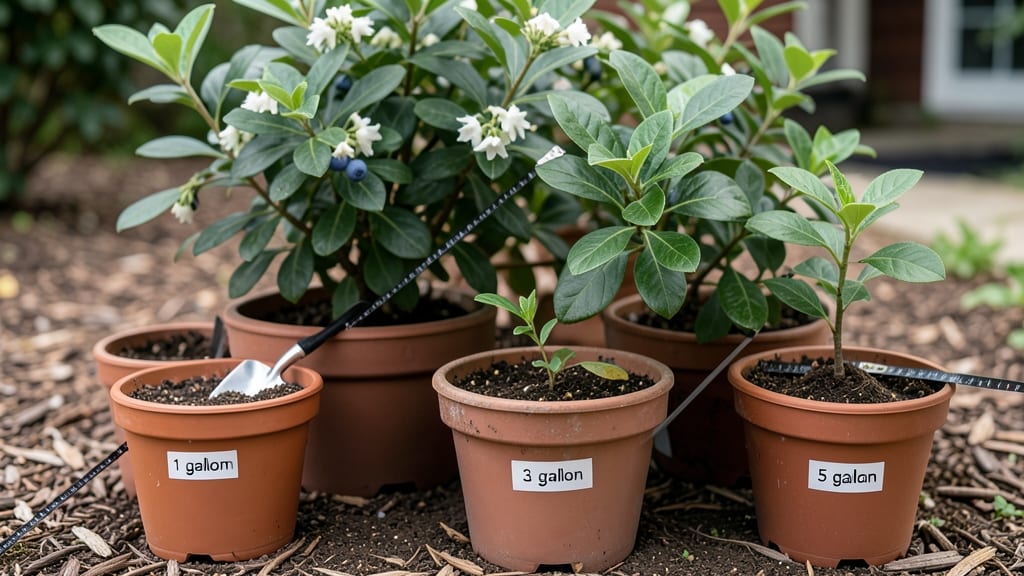
A blueberry bush pot size matters more than you might think—getting it wrong can stunt growth or waste space.
Picture this: you’ve just planted your 🫐 blueberry bush in a pot that’s too small, and by summer, the roots are circling like a frustrated snake in a cage. Or worse, you’ve splurged on a massive container that stays soggy and invites root rot.
The right pot size isn’t just about fitting the plant—it’s about setting it up for years of juicy harvests.
For dwarf varieties, a 5-gallon container is often enough, while standard bushes need 15+ gallons to thrive. But here’s the catch: depth matters just as much as width. Shallow pots won’t support deep roots, and poor drainage can turn your berry bonanza into a soggy disaster.
Below, I’ll break down the exact sizes by variety, plus pro tips for material, drainage, and long-term care.
You’ll learn how to read your plant’s signals (yes, blueberries do talk to you), when to upgrade your pot, and how to keep soil acidic without burning your fingers. Let’s get those bushes growing—and fruiting—like champs.
Minimum pot size requirements for blueberry bushes by variety type
Choosing the right pot size for your blueberry bush depends entirely on the variety you’re growing. Dwarf types need minimal space, while standard varieties require deep, wide containers to support their mature size. Root space is critical—too little causes stunted growth, and too much wastes resources.
Let’s break down the exact pot dimensions for each type to ensure your plant thrives and produces berries for years.
Blueberries are shallow-rooted but need ample width for stability and nutrient uptake. The key is balancing container depth (12–18 inches minimum) with diameter (proportional to the plant’s mature spread).
For example, a dwarf variety like 'Top Hat' fits in a 15-gallon pot, while a standard Rabbit Eye needs a 50-gallon container or larger. Always prioritize well-draining soil and acidic pH (4.5–5.5) in your chosen pot.
Here’s the critical rule: Your pot should be at least 1/3 larger than the plant’s root ball at planting, with 2–3 inches of extra depth for root expansion. For example, a 1-gallon nursery pot blueberry needs a 5-gallon container initially, but will outgrow it within 2 years. Plan for long-term growth—standard varieties can double in size within 5 years!
| Variety Type | Mature Height | Minimum Pot Size | Root Space Needs | Best For |
|---|---|---|---|---|
| Dwarf (e.g., 'Top Hat', 'Peach Sorbet') | 2–3 ft | 15–25 gallons | 12" depth, 18" diameter | Balconies, patios, small spaces |
| Semi-Dwarf (e.g., 'Blueberry 'Bluecrop') | 3–5 ft | 30–50 gallons | 18" depth, 24" diameter | Large containers, raised beds |
| Standard (e.g., 'Rabbiteye', 'Southern Highbush') | 5–6 ft | 50+ gallons | 24" depth, 30"+ diameter | Ground planting or large pots |
| Northern Highbush (e.g., 'Jersey') | 4–5 ft | 35–50 gallons | 18" depth, 24" diameter | Cold climates, containers with insulation |
⚠️ Pro Tip: Add 3–4 inches of mulch to retain moisture and regulate soil temperature.
For Southern Highbush varieties, prioritize wider pots (24"+ diameter) to accommodate their sprawling growth habit. These types thrive in USDA Zones 7–10 and need extra heat protection in winter if container-grown.
Use fabric grow bags or plastic pots for better insulation—just ensure they have drainage holes to prevent root rot.
Northern Highbush varieties like 'Bluecrop' are hardy down to Zone 3 but still need deep containers (18"+ depth) to support their root systems. If you live in a colder climate, bury the pot 2–3 inches deep in the ground during winter to protect roots from freezing. This mimics in-ground conditions and reduces temperature fluctuations.
One common mistake is underestimating long-term growth. A 3-gallon pot might work for a year, but your blueberry will become root-bound within 2–3 years, leading to stunted berries and poor yields.
Invest in a larger pot upfront—it’s better to upgrade too soon than too late. For example, a 5-gallon pot now may only last 1–2 years for a semi-dwarf variety.
If you’re growing multiple blueberry bushes in containers, space them 12–18 inches apart to prevent competition for nutrients. Use individual pots for each plant—sharing containers increases disease risk and makes soil pH management nearly impossible.
For pollination, plant at least two compatible varieties (e.g., 'Bluecrop' + 'Duke') within 10 feet of each other.
Don’t forget about drainage—blueberries hate soggy roots. Ensure your pot has 4–6 drainage holes and use a well-amended soil mix with peat moss or pine bark to maintain acidity. Avoid glazed ceramic pots unless they’re specifically labeled for container gardening, as they can trap excess moisture.
For Rabbit Eye varieties, opt for extra-wide pots (30"+ diameter) to support their broad canopies. These heat-loving types (Zones 7–9) need full sun exposure and benefit from self-watering containers to maintain consistent moisture.
How to choose the right pot material and depth for blueberry bushes
Blueberry bushes thrive in containers, but the right pot material and depth directly impact their health and fruit production. Unlike in-ground planting, containers restrict root growth, so your choices must prioritize drainage, moisture retention, and root aeration.
I’ve learned from experience that skimping on pot quality leads to stunted growth or even root rot—neither of which you want when harvesting sweet blueberries.
First, consider the material. Each option—plastic, ceramic, or fabric—offers unique benefits and trade-offs. For example, plastic pots are lightweight and affordable but may overheat in summer. Ceramic provides insulation but can crack under freezing temperatures.
Meanwhile, fabric grow bags excel at aeration but require more frequent watering. Your climate and maintenance style will dictate the best fit.
Next, let’s talk depth. Blueberry roots need at least 12-18 inches of soil to establish properly, but deeper pots (24+ inches) support larger varieties. Shallow pots force roots to compete for nutrients, leading to poor fruiting and weak stems.
I once grew a dwarf variety in a 10-inch pot and watched its berries shrivel—don’t make that mistake!
Pot Material Comparison for Blueberry Bushes
| Material | Pros | Cons | Best For |
|---|---|---|---|
| Plastic | Lightweight, affordable, wide variety of sizes | Poor insulation (can overheat), limited aeration | Dwarf varieties, beginners |
| Ceramic | Insulates roots, aesthetic appeal, good moisture retention | Heavy, can crack in freeze-thaw cycles, expensive | Temperate climates, decorative setups |
| Fabric (Grow Bags) | Excellent aeration, prevents root circling, lightweight | Dries out faster, requires frequent watering, less durable | Hot climates, large varieties, frequent gardeners |
Pro Tip: Add perlite or vermiculite to any pot to improve drainage and aeration.
For depth, aim for pots that are at least 12 inches deep for dwarf varieties and 24 inches deep for standard bushes. Deeper pots allow roots to explore more soil, reducing competition for nutrients.
I recommend adding a 1-2 inch layer of gravel at the bottom to prevent soggy roots—a common issue in containers. Pair this with a well-draining soil mix (50% peat moss, 30% pine bark, 20% sand) to keep moisture balanced.
Self-watering pots are a game-changer for busy gardeners. They maintain consistent moisture levels, which blueberries crave. Look for models with a reservoir system and ensure the pot has multiple drainage holes.
I’ve used these with my semi-dwarf bushes, and the difference in berry production is noticeable. Just remember: even self-watering pots need occasional checks to prevent algae buildup in the water reservoir.
Finally, avoid these common mistakes: using pots without drainage holes (root rot risk), choosing pots that are too wide but shallow (roots won’t grow deep enough), or skipping aeration (compacted soil stunts growth).
With the right pot, your blueberry bush will thrive, producing plump, sweet berries year after year. Happy potting! 🫐