
Pruning
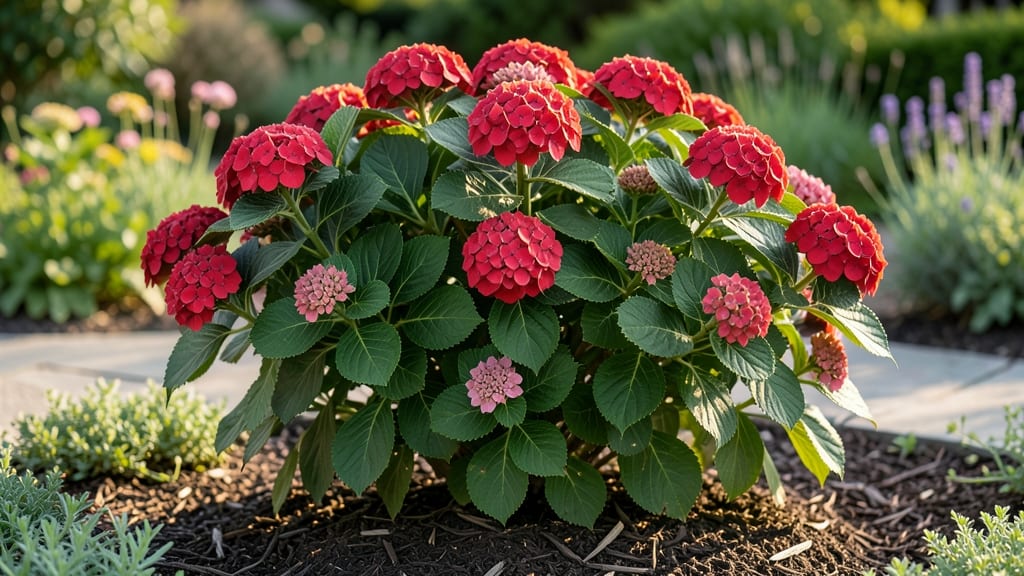
Pruning your fire hydrangea bush transforms it from a flop to a showstopper. ✨ These panicle hydrangeas (Hydrangea paniculata) reward sharp pruning with longer stems, bigger blooms, and vibrant color that lasts from summer through fall.
The key is timing—cut at the right moment, and you’ll get a bush that looks like it belongs in a nursery display, not your backyard.
Start by gathering your tools: clean, sharp pruners, gloves, and a bucket for clippings. The best time to prune is late winter or early spring before new growth emerges, but you can also do a light shaping cut in early summer after the first flush of blooms.
Fire hydrangeas are forgiving—they bloom on new wood, so you can be bold with your cuts without worrying about losing next year’s flowers.
What you’ll end up with is a bush that bursts with bold, cone-shaped blooms in shades of white, pink, or lime-green, depending on the variety. 'Limelight' reaches 6-8 feet tall with striking chartreuse blooms, while 'Little Lime' stays compact at 3-4 feet—both thrive with the same care.
The secret? Prune to open the center of the bush for better airflow and sunlight, which keeps foliage lush and blooms abundant.
This method works for new plantings or established bushes, and the results compound each year. Once you see the difference, you’ll never let a fire hydrangea go unpruned again. Ready to give it a try?
📚 In This Guide
- What you need
- Instructions
- Tips and common mistakes
- Wrapping up and next steps
What you need
- ● Pruning shears: Bypass pruners (sharp, clean, and capable of cutting 1 pair.
- ● Loppers: For thicker stems (up to 1-inch diameter) – 1 pair.
- ○ Hand pruners: For precision cuts on smaller branches – 1 pair (optional if loppers are used).
- ● Disinfectant: Rubbing alcohol (70%+) or bleach solution (1 part bleach to 9 parts water) – small bottle.
- ● Garden gloves: Cut-resistant (to protect hands from thorns) – 1 pair.
- ● Trash bags or bucket: For debris disposal – 1-2.
- ● Permanent marker: (for labeling cuts if needed) – 1.
- ● Garden hose or spray bottle: To clean tools mid-pruning.
- ● Pruning sealant: (for large cuts to prevent disease) – small tube.
- ● Fertilizer: Balanced, slow-release (e.g., 10-10-10) – 1 bag (for post-pruning care).
- ● Mulch: Organic (e.g., shredded bark) – 1-2 bags (to retain moisture).
- ● Safety glasses: (if dealing with large, thorny branches).
Step-by-step guide to pruning Fire Hydrangea for maximum blooms
Here's how to revive your Fire Hydrangea's vigor and ensure vibrant blooms year after year.
✂️ Step 1: Identify Last Year's Blooms and Dead Growth
Start by examining your Fire Hydrangea in late winter or early spring, before new growth begins. Look for last year's flower heads—these are the large, dried clusters that formed after your last bloom cycle. These should be completely removed, as they won't rebloom. Use sharp pruning shears to cut these stems back to the first set of healthy buds or leaves you see.
Next, scan for dead or diseased branches—these will be brown, brittle, or devoid of leaves. Cut these out entirely, making clean cuts at a 45-degree angle just above a leaf node. This ensures the plant directs energy toward new growth rather than struggling to heal damaged areas. I always prune these first because they're the easiest to spot and remove.
✂️ Step 2: Thin Out Overcrowded Branches for Better Airflow
Fire Hydrangeas thrive when they have good airflow around their branches. Start by removing any branches that are crossing or rubbing against each other—these create entry points for pests and diseases. Focus on the older, thicker stems first, as these can block sunlight and air from reaching the center of the plant.
Next, look for thin, spindly branches that aren't producing many blooms. These are often the result of overcrowding and compete with stronger stems for nutrients. Cut these back to the main stem or to a healthy outward-facing bud. This step is crucial for encouraging the plant to produce larger, more vibrant blooms in the coming season.
✂️ Step 3: Shape the Bush for Even Growth and Blooms
Now it's time to shape your Fire Hydrangea into a balanced, full bush. Start by stepping back to assess the overall shape—you're aiming for a rounded, open center that allows sunlight to reach all parts of the plant. Begin pruning from the outside in, cutting back branches that are growing inward or upward to create a more natural, layered look.
For each branch you prune, make your cut just above a bud that faces outward. This encourages the new growth to fill out the plant rather than creating a dense, inward-growing center. I like to leave some older wood in the center—Fire Hydrangeas often bloom on both old and new wood, so retaining a few mature stems ensures you'll still get flowers even if new growth is slow to start.
✂️ Step 4: Encourage New Growth with Strategic Cuts
To maximize blooms, focus on stimulating new growth where it matters most. Look for branches that have multiple sets of leaves or buds—these are ideal candidates for pruning back to just above the second or third set of buds. This encourages the plant to produce stronger, more vigorous shoots that will support larger flower clusters.
If your Fire Hydrangea is particularly leggy, you can lightly prune the tips of some branches to encourage branching. However, avoid cutting back more than one-third of the plant's total growth in a single season—this can stress the bush and reduce flowering. Instead, spread your pruning out over 2-3 years if needed, focusing on gradual shaping each year.
💧 Step 5: Post-Pruning Care for a Strong Recovery
After pruning, give your Fire Hydrangea a deep watering to help it recover from the stress of cutting. The roots need moisture to support new growth, especially if you've made larger cuts. Water at the base of the plant, avoiding the foliage, to prevent fungal diseases from taking hold.
Apply a balanced, slow-release fertilizer around the base of the plant to provide essential nutrients for the new growth. I prefer a 10-10-10 or 20-20-20 formula applied in early spring, just as new shoots begin to emerge. This gives the plant the energy it needs to rebound quickly and produce bold, healthy blooms by midsummer.
Tips & tricks for perfect Fire Hydrangea pruning
Transforming your Fire Hydrangea from a tangled mess to a vibrant, blooming beauty starts with these game-changing techniques. I've pruned enough of these to know exactly what makes the difference between a lackluster bush and one that steals the show.
Timing is Everything: Late winter or early spring is the sweet spot for pruning—right before new growth begins. This timing ensures you're not cutting back any potential blooms that might form on old wood. If you miss this window, wait until after flowering, but be prepared for fewer blooms that season. I always mark my calendar for late February or early March to avoid this common mistake.
The Right Tools Make All the Difference: Sharp pruning shears are non-negotiable. Dull blades crush stems instead of making clean cuts, which stresses the plant and invites disease. I invest in bypass pruners with a comfortable grip—you'll be using them for 30-45 minutes at a time. For thicker branches, use loppers, but never prune more than one-third of the plant's total growth in a single season to prevent shock.
Bud Selection Secrets: When making cuts, always look for outward-facing buds. These are the ones that will grow away from the center, creating that lush, rounded shape we want. In Step 3, when shaping your bush, I like to visualize the plant's final form—each cut should work toward that goal. If you're unsure which buds face outward, gently bend the stem until you can see the bud's orientation.
Post-Pruning Recovery Boost: After you've finished pruning, don't just walk away. The deep watering in Step 5 is crucial, but I take it a step further by adding a thick layer of mulch around the base (not touching the stems). This helps retain moisture and regulates soil temperature, giving your hydrangea the best chance to recover. I also apply a slow-release fertilizer like 10-10-10 right after pruning to give the plant a nutrient boost as it starts its new growth cycle.
Pro Tips for Fire Hydrangea Bush
- Transforming your Fire Hydrangea from a tangled mess to a vibrant, blooming beauty starts with these game-changing techniques.
- Timing is Everything: Late winter or early spring is the sweet spot for pruning—right before new growth begins.
- The Right Tools Make All the Difference: Sharp pruning shears are non-negotiable.
Frequently asked questions
Got questions about keeping your fire hydrangea bush vibrant and healthy? Here are some of the most common concerns—plus quick answers to keep your blooms popping!
When is the best time to prune my fire hydrangea?
Prune your Hydrangea paniculata (fire hydrangea) in late winter or early spring (February–March) before new growth begins. Avoid pruning in fall, as it can stimulate tender growth that may frost-damage. For shaping, light trims can happen in summer after flowering, but avoid heavy cuts.
How much can I cut back my fire hydrangea?
You can prune up to one-third of the plant’s height each year, but avoid cutting into last year’s growth (old wood). Aim to remove dead or weak stems first, then trim back remaining stems by half their height to encourage bushier, more vibrant blooms. Never remove all stems—leave at least 3-5 strong canes.
Why aren’t my fire hydrangeas blooming as much as they used to?
Fire hydrangeas bloom on new wood, so over-pruning in fall or under-pruning in winter can reduce flowers. Other culprits: poor soil drainage, lack of sunlight (they need 6+ hours of sun), or nutrient deficiencies. Test soil pH (ideal: 5.0–6.0) and fertilize lightly in spring with balanced, acid-loving plant food.
Can I grow fire hydrangeas in containers? If so, how do I prune them?
Yes! Fire hydrangeas thrive in large containers (15+ gallons) with well-draining soil. Prune container-grown plants the same way as in-ground bushes, but feed them annually with compost or slow-release fertilizer. Watch for root-bound stress—repot every 2–3 years and trim roots if overcrowded.
What pests or diseases should I watch for with fire hydrangeas?
Common issues include:
- Powdery mildew (white fungal coating): Improve airflow, avoid overhead watering, and treat with neem oil.
- Japanese beetles (skeletonized leaves): Handpick pests or use insecticidal soap.
- Leaf spot (brown spots): Remove infected leaves and prune for better air circulation.
- Root rot (yellowing leaves, mushy stems): Ensure well-draining soil and avoid waterlogging.
Wrapping up and next steps
Transforming your fire hydrangea bush into a vibrant, long-blooming powerhouse is all about timing, technique, and a little TLC! With the right pruning know-how—like cutting back in late winter or early spring and shaping for airflow—you’ll unlock stunning seasonal color and healthier growth. 🌸
Ready to see your garden glow? Grab your pruners and give it a try—your hydrangea will thank you with bold blooms all season! For extra confidence, watch a quick video tutorial or join a local gardening group to swap tips with fellow plant lovers.