
Pruning
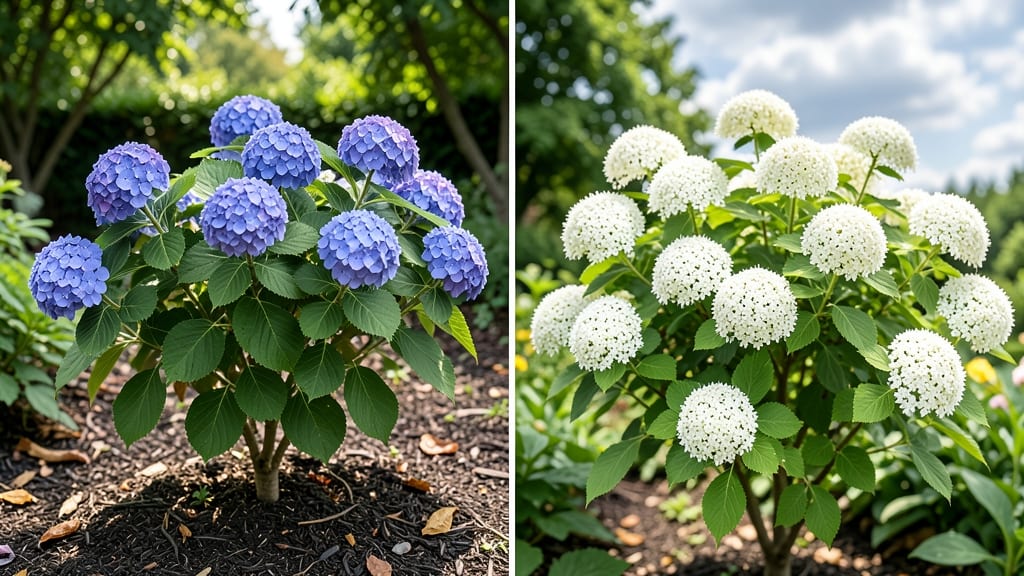
The difference between a hydrangea and a snowball bush looks shockingly subtle until you know what to watch for. 🌸 The first time I mixed them up, I nearly pruned my prized snowball bush into a shrubbery-shaped disaster—so I created this quick visual guide to save you the same panic.
Both have lush foliage and big white blooms, but their flower structure, growth habits, and seasonal timing tell the whole story.
Hydrangeas (like the classic Hydrangea macrophylla) have flat, papery blooms that cluster like a dinner plate, while snowball bushes (Viburnum opulus) sport round, pom-pom-like flowers that look like they were dipped in frosting.
One blooms in summer, the other in spring—yet both thrive in partial shade and moist soil. The foliage alone gives it away: hydrangea leaves are broad and glossy, while snowball leaves are serrated and slightly hairy.
You’ll spot the difference instantly once you know the tricks: hydrangeas change color with soil pH, while snowballs stay pure white (unless you’re growing the pink variety). Both are low-maintenance, but snowballs handle drought better, and hydrangeas reward you with longer bloom seasons.
The choice comes down to whether you want dramatic color shifts or bold, reliable structure in your garden.
For fast identification, focus on three clues: flower shape (flat vs. round), bloom time (summer vs. spring), and leaf texture. Need a foolproof way to remember? Hydrangeas are the divas—showy and mood-dependent (thanks, soil pH), while snowballs are the steady performers, blooming reliably year after year.
Pick based on what your garden needs most: color drama or structural reliability.
The first product explained
If you're looking for a stunning, low-maintenance shrub that adds a touch of elegance to your garden, the Hydrangea 'Endless Summer' is a fantastic choice! 🌸 This versatile plant is one of the most popular hydrangeas for its ability to bloom twice a year—once in spring and again in summer—making it a standout in any landscape.
📏 Specs & Features
Here’s what makes this hydrangea a must-have:
- Height: 3–5 feet (can be pruned to control size)
- Spread: 3–4 feet (compact yet lush)
- Bloom Color: Pink, blue, or purple (depending on soil pH!)
- Bloom Time: Spring to summer (reblooms with deadheading)
- Sunlight: Partial shade to full sun (morning sun + afternoon shade is ideal)
- Hardiness: Zones 3–9 (cold-resistant!)
- Growth Rate: Moderate (establishes quickly)
🎯 Target Users
This hydrangea is perfect for:
- Homeowners who love colorful, long-lasting blooms with minimal effort.
- Gardeners in cooler climates (thrives in zones 3–9).
- Those who want a reblooming variety—no need to wait until next year!
- Landscapers and DIYers looking for a versatile, pollinator-friendly plant.
💰 Price Point & Value
Priced competitively for its reliability and beauty, the Hydrangea 'Endless Summer' typically ranges from $25–$45 per plant (1–3 gallon size) at nurseries or online retailers. 🌿 While the upfront cost is modest, its low-maintenance care, repeat blooms, and adaptability make it a high-value investment for any garden.
Pro Tip: 💡 For blue blooms, amend soil with aluminum sulfate; for pink, use lime. Adjust pH to see dramatic color changes!
The second product explained
If you're looking for a bold, statement-making shrub that thrives in full sun and adds a dramatic fluff to your landscape, the Snowball Bush (Viburnum opulus) is your go-to choice!
Unlike hydrangeas, which often prefer partial shade, this hardy plant loves the sun and delivers show-stopping white blooms in spring that last well into summer. Here’s why gardeners adore it—and how it stacks up against hydrangeas.
🌿 Key Specs & Features
The Snowball Bush is a deciduous shrub that typically grows 6 to 12 feet tall (depending on the variety) and 5 to 10 feet wide.
Its glossy green leaves provide a lush backdrop for its dense, snowball-like clusters of white flowers, which can reach 4 to 6 inches in diameter. Some varieties even produce red berries in fall, adding another layer of seasonal interest! Here’s a quick breakdown:
| Feature | Details |
|---|---|
| Sunlight Needs | Full sun to partial shade (but thrives best in full sun) |
| Soil Type | Adaptable; tolerates clay, loam, or sandy soil |
| Water Needs | Moderate; drought-tolerant once established |
| Hardiness Zones | 3–8 (cold-hardy and low-maintenance!) |
| Bloom Time | Late spring to early summer (some rebloom lightly in fall) |
🎯 Who’s It For?
The Snowball Bush is perfect for:
- 🌟 Sun-loving gardeners: Unlike hydrangeas, it craves sunlight and won’t wilt in heat.
- 🏡 Homeowners seeking privacy or hedges: Its dense growth makes it ideal for screening or borders.
- 🐝 Pollinator-friendly landscapes: Bees and butterflies adore its flowers!
- 🌳 Low-maintenance gardeners: It’s disease-resistant and rarely needs pruning (though you can shape it for a neater look).
💰 Price Point
Prices vary by size and nursery, but you can expect to pay:
- Small plants (1–3 gallons): $25–$50
- Medium plants (5–15 gallons): $50–$100
- Large or mature shrubs (25+ gallons): $100–$250+
Pro tip: 💡 Buy in early spring for the best selection and lower prices! Some nurseries also offer container-grown options, which are easier to transplant.
🔥 How It Differs from Hydrangeas
While hydrangeas offer color variety and softer blooms, the Snowball Bush wins for:
- ✅ Full-sun tolerance (hydrangeas often need shade).
- ✅ Longer bloom duration (some varieties rebloom lightly).
- ✅ Year-round interest (berries in fall, exfoliating bark in winter).
- ❌ Less color flexibility (always white flowers; no blue/pink options).
Head-to-head comparison
🌸 Visual Appearance & Structure
When it comes to first impressions, hydrangeas and snowball bushes couldn’t be more different—like comparing a watercolor painting to a bold, architectural sculpture! Here’s how they stack up:
| Feature | Hydrangea | Snowball Bush |
|---|---|---|
| Leaf Shape | Oval to elliptical, smooth-edged (some varieties have serrated leaves). Leaves are often thicker and shiny. | Oval to lance-shaped, rough or slightly serrated edges. Leaves are thinner and matte. |
| Flower Clusters | Round, pom-pom-like clusters (sterile flowers) or cone-shaped (fertile flowers). Colors vary wildly—pink, blue, purple, white, or green! | Perfectly spherical clusters of tiny white flowers (no color variation). Resembles a fluffy snowball! |
| Growth Habit | Bushy, multi-stemmed shrub with a rounded or mounded shape. Can grow 3–10 feet tall depending on variety. | Upright, vase-shaped shrub with a single dominant stem (though it can branch). Typically 6–12 feet tall. |
| Foliage Color | Green (some varieties have purple or bronze leaves in fall/winter). | Bright green in spring/summer, turns yellow or bronze in fall. |
| Seasonal Interest | Flowers in summer to fall; some varieties have colorful fall foliage. | Flowers in late spring to early summer; dramatic fall color is a standout feature! |
💡 Pro Tip: If you see white, snowball-like blooms on a tall, upright shrub, it’s almost certainly a snowball bush. Hydrangeas, on the other hand, are more compact and colorful—think of them as the showstoppers of the garden!
🌿 Growth & Maintenance Requirements
Both plants are low-maintenance, but their care needs differ based on their natural habits. Here’s how they compare:
| Factor | Hydrangea | Snowball Bush |
|---|---|---|
| Sunlight Needs | Partial shade to full sun (morning sun + afternoon shade is ideal for color retention). | Full sun to partial shade (thrives in bright light but tolerates some shade). |
| Watering Needs | Keep soil consistently moist (especially for bigleaf hydrangeas). Drought-tolerant once established, but wilts easily if underwatered. | Moderately drought-tolerant once established. Water deeply 1–2 times per week in dry spells. |
| Soil Preferences | Acidic to neutral soil (pH 5.2–6.5) for best color (especially blue/pink varieties). Amend with peat moss or sulfur if needed. | Adaptable to most soil types, but prefers well-draining, slightly acidic to neutral soil. |
| Pruning Needs | Varies by type:
|
Prune immediately after flowering (late spring) to remove dead or weak branches. Can also prune in late winter for shaping. |
| Cold Hardiness | USDA Zones 4–9 (varies by variety; smooth hydrangea is the hardiest). | USDA Zones 3–8 (extremely cold-hardy, often survives below 0°F). |
✨ Pro Tip: Snowball bushes are more forgiving in harsh climates, while hydrangeas need consistent moisture to keep their blooms vibrant. If you’re in a hot, dry climate, opt for panicle hydrangeas or snowball bushes—they handle heat better!
💰 Cost & Availability
Budget and accessibility play a role in choosing between these two beauties. Here’s the breakdown:
| Factor | Hydrangea | Snowball Bush | |||||||||||||||||
|---|---|---|---|---|---|---|---|---|---|---|---|---|---|---|---|---|---|---|---|
| Price Range (Per Plant) | $15–$50 (varies by variety and size).
|
$20–$60 (often pricier due to popularity and size).
|
|||||||||||||||||
| Where to Buy |
|