
Shrubs
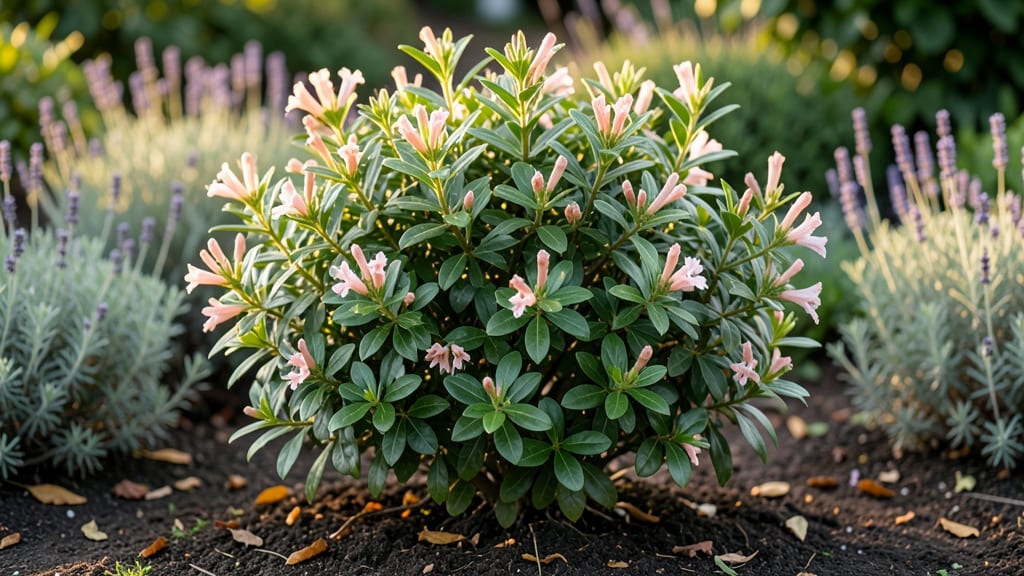
Cone-shaped bushes like arborvitae, thuja, and leyland cypress create dense vertical screens that block views and reduce wind while maintaining year-round color. Fast-growing varieties reach full height and thickness in just 3-5 years.
These evergreen shrubs grow upward in tight, columnar shapes due to their natural branching patterns and needle density. 🌲 Unlike sprawling bushes, their compact growth habit makes them perfect for tight spaces where you need height without width.
I've found that their vertical structure also creates natural wind tunnels, making them excellent for reducing wind noise and protecting outdoor spaces.
The key to their speed lies in their ability to develop dense foliage quickly—some varieties like Leyland cypress can grow 3-4 feet per year under ideal conditions. This rapid growth makes them ideal for homeowners who want privacy solutions without waiting decades.
Just be prepared for regular pruning to maintain their perfect cone shape and density.
💡 In This Article
- How Cone-Shaped Bushes Grow for Optimal Privacy
- Fastest-Growing Cone Bushes for Quick Privacy Solutions
How cone-shaped bushes grow for optimal privacy
Cone-shaped bushes achieve their vertical form through a combination of genetic growth patterns and environmental responses. Most belong to the conifer family, where their needles grow in tight spirals along upright branches, creating a natural columnar shape.
For example, arborvitae (Thuja) produce flat, scale-like leaves that grow in opposing pairs along the stem, forming dense layers that block light effectively. This needle arrangement isn't just for aesthetics—it's an evolutionary adaptation that maximizes photosynthesis while minimizing water loss in their native temperate climates.
The branching habit of these bushes is crucial for their screening capabilities.
Unlike round shrubs that grow outward, cone-shaped varieties develop strong central leaders (main stems) with lateral branches that grow upward at 45-degree angles or less. 🌿 This creates a "V" formation that funnels growth upward, resulting in bushes that can reach 10-20 feet tall while maintaining a 3-6 foot width.
The density comes from their high needle-to-branch ratio—some varieties like emerald green arborvitae have 1,000+ needles per square inch of branch surface, making them nearly impenetrable to both views and wind.
What makes these bushes particularly effective for privacy is their ability to develop a closed canopy quickly. When planted in rows with 4-6 feet between plants, their lateral branches eventually touch, creating an unbroken green wall.
The key growth mechanism here is apical dominance—the central growing point produces hormones that suppress side growth until the plant reaches a certain height, at which point lateral buds begin producing branches. This is why you'll often see cone-shaped bushes develop their characteristic form within 2-3 years of planting.
Light plays a critical role in maintaining this shape. Cone-shaped bushes are phototropic—they grow toward light sources, which is why they naturally develop their vertical form in open spaces.
In shaded conditions, they may become leggy or lose density as the plant stretches toward available light. 💡 The ideal sunlight exposure is 6-8 hours of direct sun daily, which triggers optimal photosynthesis and needle production. This is why southern exposures often produce the densest, most uniform cone shapes.
Soil conditions also influence their growth patterns. Most prefer well-draining soils with a pH between 6.0-7.5, though some like Leyland cypress tolerate slightly acidic soils. The root system develops a deep taproot combined with extensive lateral roots that spread outward, providing stability and access to moisture.
This root structure allows them to establish quickly in their first growing season, setting the foundation for rapid vertical growth in subsequent years.
Understanding these growth mechanisms helps explain why some varieties grow faster than others.
For instance, Leyland cypress combines the growth vigor of its parent species (Nootka cypress and Monterey cypress) to achieve 3-4 feet of height per year under ideal conditions, while slower-growing varieties like emerald green arborvitae might only reach 1-2 feet annually.
The choice between speed and maintenance becomes clear when considering these botanical factors.