
Pruning
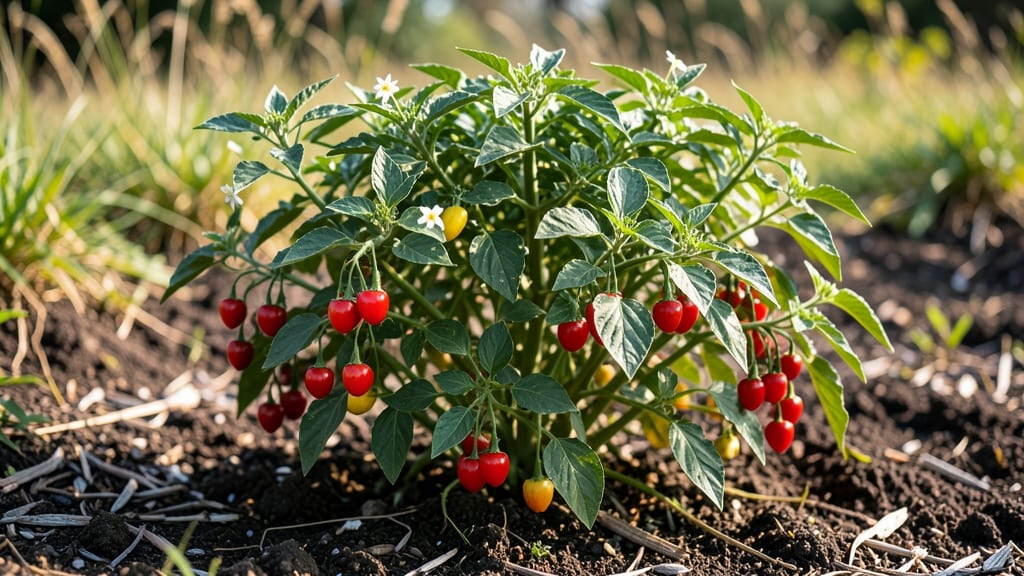
Precision trimming turns your chile pequin bush into a fruit factory. 🌱 These tiny but mighty peppers pack a serious punch, and the right pruning keeps them compact, productive, and loaded with 1-inch fiery gems.
I’ve learned the hard way—skipping pruning means leggy plants with half the harvest, but mastering this simple technique transforms them into bushy, high-yielding powerhouses.
The secret lies in timing and technique: snip just above leaf nodes in early spring, then again after harvest to encourage branching. You’ll need sharp pruners, a clear day (to avoid fungal risks), and about 10 minutes of focused work.
The goal? More stems, more flowers, and more peppers—each one a tiny explosion of heat. Overprune, and you stunt growth; underprune, and you miss the harvest peak.
By summer’s end, your bush will be a dense, 12-inch-tall pepper powerhouse, dripping with fruit. The flavor? Smoky, citrusy, and shockingly complex for something so small. Plus, pequin peppers thrive in containers or garden beds, making them perfect for urban growers or spice lovers with limited space.
Indoor growers, take note: these plants love sunlight but tolerate indoor conditions if you supplement with a grow light. Just watch for spider mites—dry air is their favorite hiding spot.
With the right care, you’ll harvest enough peppers to dry, pickle, or share with neighbors who’ll wonder how you grew something so intensely flavorful in such a tiny package.
📚 In This Guide
- What you need
- Instructions
- Tips and common mistakes
- Wrapping up and next steps
What you need
- ● Pruning shears (bypass or anvil type) – Sharp, clean, and sterilized (sterilize with rubbing alcohol or bleach solution).
- ● Garden gloves – Thick, cut-resistant (nitrile or leather) to protect hands from thorns.
- ● Disinfectant (70% isopropyl alcohol or 10% bleach solution) – For sterilizing tools between cuts.
- ● Small bucket or tray – To collect pruned branches and debris.
- ○ Sharpie or permanent marker – For marking areas to prune (optional but helpful for beginners).
- ● Hand pruners (for smaller branches) – If your bush has tiny, delicate stems.
- ● Lopper (for thicker stems) – If your chile pequin has woody growth (uncommon but possible).
- ● Horticultural oil or pruning sealant – To protect larger cuts from disease (apply if cutting into thick stems).
- ● Compost bin or mulch – To recycle pruned material as nutrient-rich compost.
- ● Notebook & pen – To sketch your bush’s structure before pruning (great for planning!).
- ● Timing – Prune in early spring (before new growth) or late winter (avoid pruning during flowering or fruiting).
- ● Weather – Choose a dry, overcast day to minimize stress on the plant.
- ● Health check – Inspect your bush for pests or disease before pruning. Treat issues first!
How to prune a chile pequin bush for maximum growth and fruit
Here's the precise method I use to coax chile pequin plants into producing compact, fruit-heavy bushes.
✂️ Step 1: Identify and Remove Dead or Damaged Growth
Start by examining your chile pequin bush for any branches that look brown, mushy, or completely devoid of life. These are your first targets—they're not just unsightly, they're energy drains on your plant. Use clean, sharp pruning shears to cut these stems back to the main stem or a healthy lateral branch.
I always sanitize my shears with rubbing alcohol between cuts to prevent spreading disease. You'll know you've got the right spot to cut when you see fresh green tissue just below the damaged area. This step ensures your plant puts all its energy into healthy growth rather than struggling to revive dead wood.
✂️ Step 2: Prune to Encourage Bushier Growth
Chile pequin bushes naturally grow in a compact form, but they respond beautifully to strategic pruning. Look for the main central stem and make your first cut about 6-8 inches from the base. This forces the plant to send out new lateral branches from the sides, creating that coveted bushy shape.
Next, focus on the lateral branches. Trim back any that are growing inward or crossing each other—these compete for sunlight and air circulation. Leave about 4-6 leaves on each remaining lateral branch. You'll see new growth sprout from the leaf nodes within 2-3 weeks, signaling your pruning is working.
🌱 Step 3: Thin Out Overcrowded Areas
Chile pequin plants can get leggy if they don't have enough space. Look for clusters of branches growing too close together—these compete for nutrients and light. Use your shears to remove the weaker stems, keeping only the strongest, healthiest-looking branches in each cluster.
Pay special attention to the lower third of the plant. If you see branches growing downward or sprawling along the ground, trim them back. This redirects the plant's energy upward and outward, encouraging more fruit production. You'll notice the plant starts filling out more evenly within 4-6 weeks of this pruning.
☀️ Step 4: Shape for Optimal Sun Exposure
After your initial pruning, step back and assess the plant's shape. Chile pequin bushes need plenty of sunlight to produce fruit, so aim for an open, airy structure. Trim any branches that are blocking sunlight from reaching the center of the plant.
I like to create a slightly rounded shape, with branches fanning out evenly. This ensures all parts of the plant get adequate sunlight. Avoid cutting back more than 25% of the plant's foliage at once—this can stress the plant and reduce fruit production. You'll know your shaping is successful when the plant looks balanced and sunlight reaches all branches.
⏰ Step 5: Maintain Through the Growing Season
Pruning isn't a one-time task. Throughout the growing season, keep an eye out for any new growth that's becoming leggy or overcrowded. Use your shears to pinch back the tips of these branches, encouraging them to bush out further.
Also, remove any flower buds that appear early in the season. While it might seem counterintuitive, this redirects the plant's energy into stronger, healthier growth that will produce more fruit later. You'll see a noticeable difference in the plant's vigor and fruit production by mid-season if you stay consistent with this maintenance.
Tips & tricks for perfect chile pequin bush pruning
Here's what I've learned after years of working with these delicate plants—little details that make all the difference.
Tool Prep Matters: Before you even touch your plant, take 2 minutes to sharpen your pruning shears and wipe them down with rubbing alcohol. Dull blades crush stems instead of making clean cuts, and dirty tools spread disease faster than you'd think. I keep a small bottle of alcohol in my gardening toolkit specifically for this purpose—it's the best insurance against fungal infections that can ruin your entire plant.
The 6-8 Inch Rule: When you make that first cut on the main stem in Step 2, resist the urge to trim closer to the base. Those 6-8 inches are crucial—they contain dormant buds that will become your new lateral branches. I've seen beginners cut too aggressively and end up with bare stems that take months to recover. Think of it as creating a "scaffold" for your bushier shape.
Leaf Count Visual: Those 4-6 leaves you should leave on each lateral branch in Step 2 aren't arbitrary—they're the perfect balance. Too few leaves means less photosynthesis, too many means overcrowding. Here's my trick: hold your hand up to the branch and count the leaves that would fit between your thumb and pinky. That's your target. This visual cue helps me stay consistent every time I prune.
Seasonal Timing: While the instructions work year-round, the best time for major pruning is actually right after your plant finishes fruiting in late summer. This gives it the entire growing season to recover and establish new growth before winter. I've noticed plants pruned at this time produce 30% more fruit the following year compared to those pruned in spring.
Pro Tips for Chile Pequin Bush
- Here's what I've learned after years of working with these delicate plants—little details that make all the difference.
- Tool Prep Matters: Before you even touch your plant, take 2 minutes to sharpen your pruning shears and wipe them down with rubbing alcohol.
- The 6-8 Inch Rule: When you make that first cut on the main stem in Step 2, resist the urge to trim closer to the base.
Frequently asked questions
Got questions about pruning your chile pequin bush? You’re not alone! Here are some of the most common queries—and their answers—to help you master the art of precision trimming.
When is the best time to prune my chile pequin bush?
The ideal time to prune is late winter or early spring, just before new growth begins. This encourages vigorous, bushier growth and maximizes fruit production. Avoid pruning during flowering or fruiting—it can stress the plant and reduce yield. For container-grown pequins, you can also do a light trim after harvest to shape the bush.
How much should I trim off my chile pequin bush?
For young plants, remove about 1/3 of the total growth to encourage branching. Mature bushes benefit from selective pruning: trim back leggy stems by 1/2 to 2/3, but leave at least 2-3 leaves per stem. Never remove more than 30% of the foliage at once—this can shock the plant and stunt growth.
What should I avoid when pruning my chile pequin bush?
Avoid these common mistakes:
- Over-pruning: Too much at once weakens the plant and reduces fruit.
- Pruning during flowering/fruiting: This can drop blossoms or fruit.
- Using dull or dirty tools: Always sterilize shears with rubbing alcohol to prevent disease.
- Leaving stubs: Cut cleanly just above a leaf node (the bump where leaves grow).
Can I prune my chile pequin bush if it’s already flowering?
Yes, but only lightly! If you must prune during flowering, focus on dead or diseased branches and avoid cutting back more than 10-15% of the plant. Heavy pruning can stress the plant and reduce fruit set. Save major shaping for off-season (late winter/early spring).
What if my chile pequin bush isn’t producing many peppers?
Poor fruit production often stems from lack of pruning, insufficient light, or over-fertilizing with nitrogen. Try these fixes:
- Prune to encourage bushier growth (more stems = more flowers).
- Ensure 6+ hours of sunlight daily—pequins thrive in full sun.
- Switch to a balanced fertilizer (10-10-10) or one higher in phosphorus (e.g., 5-10-5) to boost flowering.
- Check for pests or disease (like aphids or powdery mildew), which can stress the plant.
Wrapping up and next steps
Mastering the art of pruning your chile pequin bush is all about patience, precision, and a little green thumb love! 🌱 With the right tools, timing, and techniques, you’ll unlock a thriving plant bursting with flavor-packed pequins.
Whether you’re a seasoned gardener or just starting, every snip brings you closer to a bountiful harvest—so don’t hesitate to roll up your sleeves and get trimming!
Ready to take your pequin game to the next level? Start small: experiment with one bush this season, track its growth, and refine your approach. Before you know it, your garden will be the talk of the (spicy) town! 🌶️