
How To
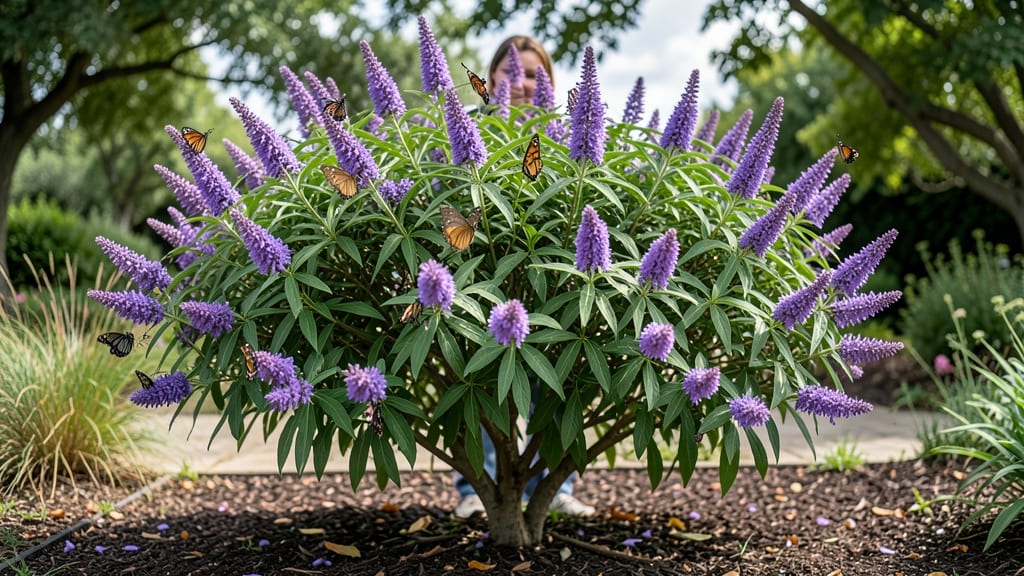
A butterfly bush can grow anywhere from 3 feet to towering 15 feet—depending on the variety—so knowing its mature size is the first step to avoiding a garden that looks more like a jungle than a curated space.
If you're dreaming of a vibrant, pollinator-friendly garden but wondering how much space to dedicate to a 🦋 butterfly bush, you’re not alone.
This fast-growing shrub can quickly outpace expectations if left unchecked, and without the right spacing, it might crowd out your prized perennials or overwhelm a small yard.
Some varieties, like the compact 'Lo & Behold', stay under 4 feet tall, making them perfect for containers or small gardens, while others, such as 'Black Knight', can reach 12 feet or more, ideal for privacy screens or large landscapes.
The key to happy plants—and happy neighbors—is choosing the right size for your space.
In this guide, I’ll break down the mature heights of popular butterfly bush varieties, how their growth habits differ, and the simple pruning tricks to keep them in check—so you can enjoy their stunning blooms without the stress of unruly growth.
Butterfly bush mature heights by popular varieties (with growth habits)
Choosing the right butterfly bush (Buddleia spp.) for your garden starts with understanding how big it will grow. These pollinator magnets vary dramatically—from compact dwarf varieties perfect for containers to towering privacy screens reaching 15 feet.
Let’s break down the mature heights, spread, and growth habits of 8+ popular cultivars so you can pick the ideal fit for your space.
Most butterfly bushes thrive in USDA Zones 5–9 and grow rapidly with full sun exposure. Their height and spread depend on the cultivar, pruning practices, and soil conditions. For example, 'Lo & Behold' stays under 3 feet tall, while 'Black Knight' can soar to 12 feet.
Knowing these details helps you avoid overcrowding or underutilized space in your landscape design.
Pro Tip: Always check the mature size label when shopping for butterfly bushes. Nursery tags often list both height and spread—critical info for small gardens or urban yards where space is limited.
| Variety | Mature Height (ft) | Mature Spread (ft) | Growth Rate | Growth Habit | Best For |
|---|---|---|---|---|---|
| 'Lo & Behold' | 3–4 ft | 3–4 ft | Slow | Compact, bushy | Containers, small gardens |
| 'Dwarf Blue' | 4–5 ft | 4–5 ft | Moderate | Upright, rounded | Borders, foundation planting |
| 'Miss Ruby' | 5–6 ft | 5–6 ft | Fast | Bushy, multi-stemmed | Pollinator gardens |
| 'Royal Purple' | 6–8 ft | 6–8 ft | Moderate | Upright, pyramidal | Hedges, privacy screens |
| 'Black Knight' | 8–12 ft | 8–10 ft | Fast | Tall, arching | Backyard focal points |
| 'Pink Micro' | 3–4 ft | 3–4 ft | Slow | Dwarf, rounded | Patio planters, balconies |