
Plants
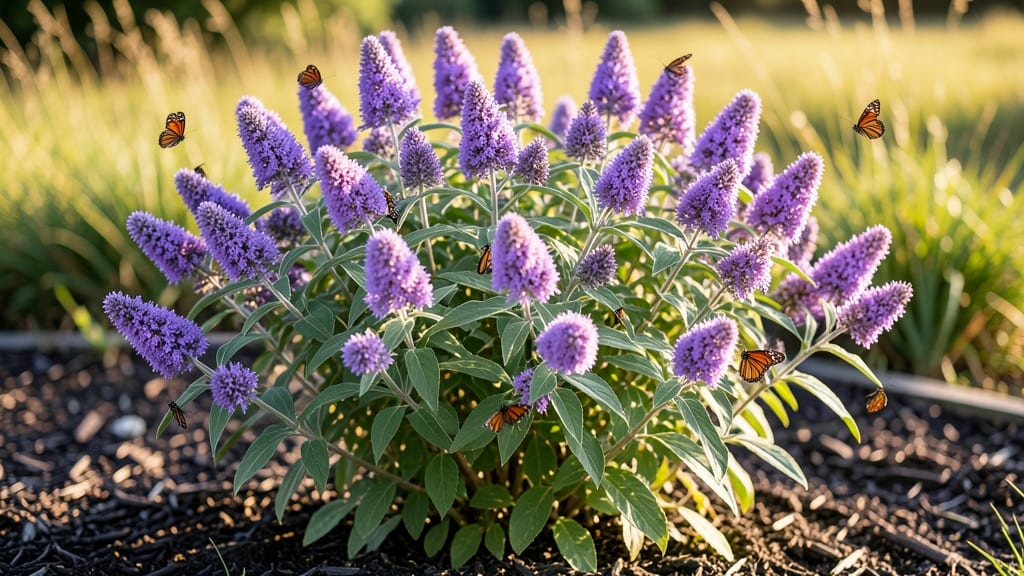
Butterfly bush hardiness zones range from 5 through 9, where mature plants withstand temperatures down to -20°F (-29°C), though younger plants in zones 5-6 often need winter protection. Some cold-hardy cultivars can even survive zone 4 conditions with proper care.
Understanding butterfly bush hardiness zones means recognizing how these plants adapt to cold stress differently at various life stages. 🌿 Young bushes are far more vulnerable to frost damage than established ones, which is why zone 5-6 gardeners often use thick mulch or frost blankets during winter.
The key difference lies in their root systems—mature plants develop deeper roots that insulate against temperature swings better than shallow-rooted seedlings.
Most butterfly bushes thrive in zones 5-9, but some newer hybrids like 'Black Adder' or 'Purple Smoke' push those boundaries further. These cold-tolerant varieties can handle zone 4 winters if given extra protection, making them excellent choices for northern gardeners.
The trade-off? They may require more frequent pruning to remove frost-damaged branches in early spring.
💡 In This Article
- Butterfly Bush Cold Tolerance by USDA Zone Breakdown
- Winterizing Butterfly Bushes in Marginal Zones
Butterfly bush cold tolerance by USDA zone breakdown
The butterfly bush's cold tolerance is determined by its ability to survive prolonged sub-freezing temperatures, with distinct differences between zones 5-9.
In zone 5, where winter lows can drop to -15°F to -20°F (-26°C to -29°C), mature bushes develop a survival mechanism: their woody stems contain natural antifreeze compounds called glycoproteins, which prevent ice crystal formation in plant cells.
This is why established plants in zone 5 often survive without protection, while younger plants (under 2 years old) lack this biochemical defense and suffer cellular dehydration from frost.
Zone 6-7 bushes face less extreme cold (-5°F to 10°F / -21°C to -12°C), but their vulnerability shifts from stem damage to root injury. The critical threshold here is 28°F (-2°C)—below this, root cells begin to rupture, cutting off water supply to the plant.
What sets zone 6 apart is the rate of temperature change: rapid drops (like 20°F in 24 hours) cause more damage than slow cooling. This explains why zone 6 gardeners often see partial dieback even when minimum temps stay above -15°F.
In warmer zones 8-9, the challenge isn't cold survival but heat stress and humidity-related diseases. While these zones rarely see freezing temps, prolonged exposure to 30°F (-1°C) or below can still cause bud mortality in susceptible cultivars.
The key difference is that zone 9 bushes prioritize heat acclimation—their leaves develop thicker cuticles to reduce water loss, while zone 5 plants focus on cold hardening by increasing sugar concentrations in their cells (a process called osmotic adjustment).
What most gardeners overlook is how maturity stage alters cold tolerance. A 3-year-old butterfly bush in zone 5 can handle -25°F (-32°C) with proper mulching, while a 1-year-old seedling may suffer fatal damage at -10°F (-23°C).
This is because mature plants develop secondary growth in their stems, creating thicker bark that insulates vascular tissue. The science here involves xylem differentiation—older stems produce more lignin, making them 3-4 times more resistant to frost cracks than young stems.
Cultivar selection makes a dramatic difference: 'Lo and Behold' series bushes (zone 4 tolerant) contain 15-20% more soluble sugars in their stems than standard varieties, acting like natural antifreeze.
These sugars depress the freezing point of cell sap by 5-8°F (3-4°C), explaining why they survive zone 4 winters with minimal protection. For comparison, a zone 5 'Pink Micro' may need 6-8 inches of mulch to match this protection level.
Understanding these mechanisms helps explain why some butterfly bushes thrive in zone 5 with no winter care while others need burlap wraps or frost blankets.
The difference often comes down to root depth: mature bushes with roots extending 24-36 inches deep can access warmer soil layers, while shallow-rooted plants in zone 6 may still suffer crown heave during freeze-thaw cycles.
This is why gardeners in marginal zones should focus on soil preparation—amending clay soils with compost creates better insulation than sandy soils.