
Fertilization
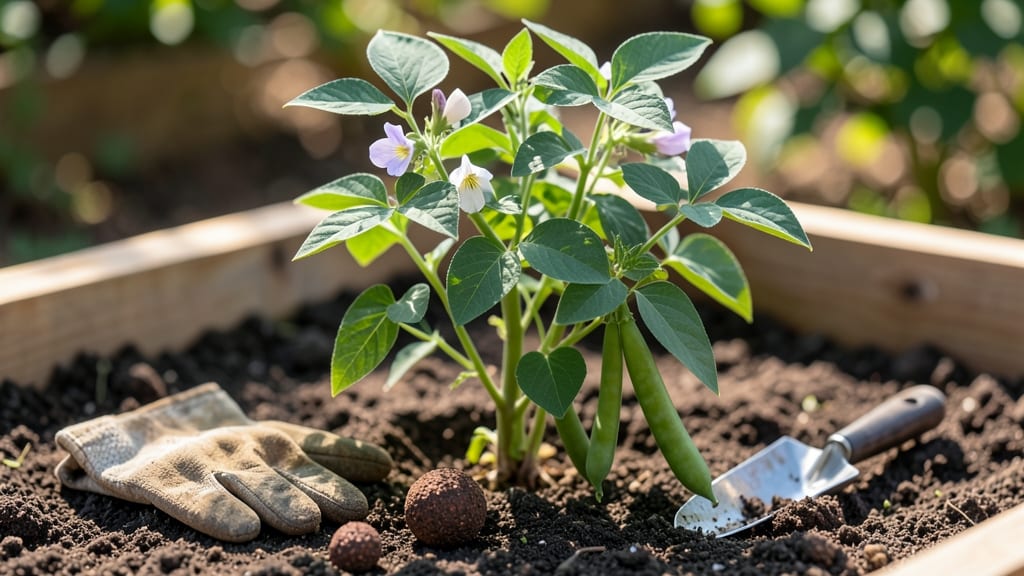
Fertilizing your bush beans 🌱 with the right bush bean fertilizer is the secret to going from a handful of pods to a garden overflowing with fresh, tender beans.
Picture this: you’ve spent weeks planting, watering, and hoping—only to end up with sparse harvests or beans that taste bland. The problem might not be your soil or even your watering habits, but the fertilizer you’re using (or not using) at the wrong time.
Bush beans need a balanced approach to nitrogen, phosphorus, and potassium, but too much nitrogen can lead to leafy growth with no beans, while too little phosphorus stunts root development. The key is timing: a light feed at planting, followed by regular doses during flowering and pod set.
In this guide, I’ll break down the best organic and synthetic fertilizers for bush beans, the ideal NPK ratios at each growth stage, and how to avoid common mistakes that waste your time and money. Ready to turn your bean patch into a high-yielding powerhouse?

Optimal NPK ratios for bush beans: what science recommends
When it comes to growing bush beans 🌱, the NPK ratio in your fertilizer is the foundation of success. Too much nitrogen leads to lush foliage but few beans, while too little phosphorus can stunt root development and flowering.
Research from the University of Georgia Extension shows that bush beans thrive with a balanced NPK approach, adjusted for their growth stages.
Bush beans have three critical growth phases: vegetative growth (leaf and stem development), flowering, and pod production. Each stage demands a slightly different nutrient mix.
For example, during vegetative growth, a higher nitrogen ratio (like 10-5-5) fuels leafy growth, but once flowers appear, you’ll want to shift to a phosphorus-heavy blend (like 5-10-5) to support root and flower development.
Here’s where many gardeners go wrong: they use a one-size-fits-all fertilizer throughout the season. This can lead to over-fertilizing with nitrogen, causing your plants to produce more leaves than beans, or under-fertilizing with potassium, leaving your plants vulnerable to disease as they mature.
The key is to match the NPK ratio to the plant’s needs at each stage.
Let’s break down why these ratios work. During the vegetative stage, bush beans need more nitrogen to build strong stems and leaves. A ratio like 10-5-5 provides the nitrogen boost without overwhelming the plant with phosphorus or potassium, which could slow early growth.
Once flowering begins, phosphorus becomes critical—it’s the nutrient that helps roots absorb water and nutrients efficiently, and it promotes flower and pod formation.
Potassium often gets overlooked, but it’s essential during the pod production stage. A ratio like 5-5-10 ensures your plants have enough potassium to strengthen cell walls, improve disease resistance, and enhance the flavor and shelf life of your beans.
Without adequate potassium, your plants may develop weak stems, yellowing leaves, or even succumb to fungal diseases like white mold.
One common mistake is assuming that more fertilizer is always better. Over-fertilizing with nitrogen can lead to excessive leaf growth at the expense of bean production, while too much phosphorus can cause stunted growth or even toxicity.
Always follow the recommended application rates on your fertilizer packaging and adjust based on your soil test results. If your soil is already rich in one nutrient, you may not need to add as much of it.
To fine-tune your approach, conduct a soil test before planting. This will reveal any deficiencies or excesses in your soil’s NPK levels, allowing you to customize your fertilizer plan.
For example, if your soil is already high in nitrogen, you might skip the nitrogen-heavy fertilizer during the vegetative stage and focus on phosphorus and potassium instead. This precision can make the difference between a mediocre harvest and a bountiful one.
Remember, bush beans are light feeders compared to heavy crops like corn or tomatoes. Overdoing it with fertilizer can burn their roots or lead to nutrient imbalances.
Stick to the recommended ratios, apply fertilizers in small, frequent doses, and always water thoroughly after application to help nutrients penetrate the soil and reach your plants’ roots.
By matching your fertilizer to your bush beans’ growth stages, you’ll encourage stronger plants, more flowers, and a higher yield of tender, flavorful pods.
And once you master the NPK ratios, you’ll be ready to explore organic options or troubleshoot common fertilizer mistakes—both of which we’ll cover in the next sections!
Best organic and synthetic fertilizers for bush beans (with ratios)
Choosing the right bush bean fertilizer can make the difference between a modest harvest and a garden bursting with beans. Bush beans thrive with a balanced approach, but their needs change from seedling to flowering to pod production.
Organic options like compost or aged manure provide slow-release nutrients, while synthetic fertilizers like 10-10-10 offer precise NPK ratios. Let’s dive into the best choices and how to use them effectively.
For home gardeners, the key is understanding NPK ratios—nitrogen (N) for leafy growth, phosphorus (P) for root development, and potassium (K) for overall plant health. Bush beans need a balanced mix, but too much nitrogen can lead to lush foliage with few beans.
Organic fertilizers improve soil structure over time, while synthetic options deliver quick results. Below, I’ve compared the top options to help you decide what works best for your garden.
| Type | NPK Ratio | Best For | Application Rate | Cost-Effectiveness |
|---|---|---|---|---|
| Compost | Variable (0.5-1-0.5 avg) | Soil health, slow release | 1-2 inches mixed into soil | High (long-term) |
| Aged Manure | 0.5-0.5-0.7 avg | Early growth, nutrient boost | 1-2 cups per plant | Medium (short-term) |
| Bone Meal | 3-15-0 | Root development, flowering | 1 tbsp per plant | Medium (targeted use) |
| 10-10-10 Synthetic | 10-10-10 | Balanced growth, all stages | 1 tbsp per plant | High (precise dosing) |
| 5-10-10 Synthetic | 5-10-10 | Flowering, pod set | 1 tbsp per plant | Medium (higher P) |
Organic fertilizers like compost and aged manure are my go-to choices for bush beans because they improve soil structure and provide a steady supply of nutrients. Compost, with its variable NPK ratio, is perfect for amending soil before planting, while aged manure adds a gentle boost during early growth.
For a quick fix, bone meal is ideal during flowering to support root and pod development, thanks to its high phosphorus content.
Synthetic fertilizers like 10-10-10 offer a balanced NPK ratio that’s easy to apply and works well for all growth stages. If you notice your beans struggling to flower or set pods, switch to a 5-10-10 blend to give them the extra phosphorus they need.
The key is to avoid over-fertilizing, especially with nitrogen, which can lead to excessive leaf growth at the expense of bean production.
For cost-effectiveness, organic options like compost are the best long-term investment, as they improve soil health year after year. Synthetic fertilizers, however, provide immediate results and are easier to measure, making them ideal for gardeners who want precise control.
My recommendation? Start with compost at planting, then supplement with a balanced synthetic fertilizer like 10-10-10 every 4-6 weeks during the growing season.
Remember, the goal is to feed your bush beans without overwhelming them. Too much fertilizer can burn roots and lead to poor yields, so always follow the recommended rates. With the right blend, your bush beans will reward you with a bountiful harvest all season long. Happy gardening! 🌱