
Advice
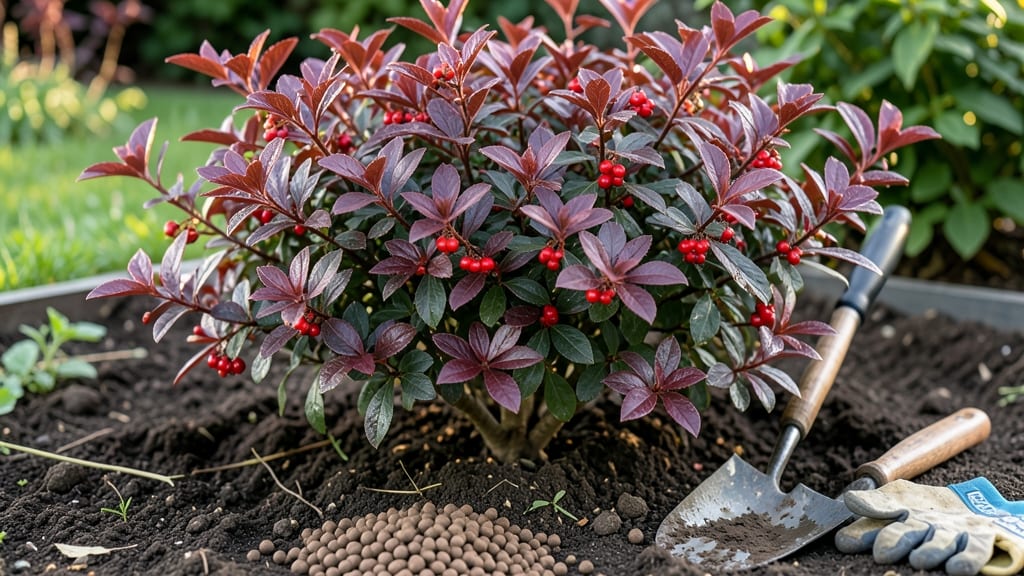
For barberry bush fertilizer, choose a balanced organic blend that maintains soil acidity (pH 5.5-6.5) and avoids excessive nitrogen, which can stunt berry production. Spring and mid-summer applications of compost, bone meal, or a 10-10-10 formula work best.
Barberries need acidic soil to absorb nutrients efficiently, and their growth responds best to slow-release fertilizers that won't burn delicate roots. 🌱 I've found that organic options like worm castings or fish emulsion provide steady nutrition without the risk of overfeeding.
The key is timing—feeding in early spring kickstarts growth, while mid-summer applications support berry development before the plant enters dormancy.
What often trips up gardeners is the nitrogen balance—too much encourages leafy growth at the expense of fruit. A 10-10-10 ratio ensures your barberry gets equal parts nitrogen, phosphorus, and potassium, which promotes both foliage and berry production.
For a natural boost, mix in 1-2 inches of compost around the base in spring, then top with mulch to retain moisture and regulate soil temperature.
💡 In This Article
- Optimal Soil pH and Nutrient Needs for Barberry Bushes
- Best Organic Fertilizers and Feeding Schedule for Barberry Shrubs
Optimal soil pH and nutrient needs for barberry bushes
Barberry bushes demand acidic soil because their root systems struggle to absorb essential nutrients like iron, manganese, and zinc when the pH climbs above 6.5.
At higher pH levels, these micronutrients become chemically locked in the soil, leading to a condition called iron chlorosis—where leaves turn yellow between the veins while new growth remains pale. 🌱 This is especially critical for varieties like Berberis thunbergii, which rely on steady iron uptake for vibrant foliage and berry development.
The ideal 5.5-6.5 pH range ensures these nutrients remain soluble, allowing roots to access them efficiently.
Organic matter plays a dual role here: it naturally lowers soil pH over time while improving soil structure. Compost or well-rotted leaf mold breaks down to release humic acids, which gently acidify the soil while also enhancing microbial activity.
These beneficial microbes help decompose organic material, releasing nutrients in forms barberry roots can absorb. For example, a 2-inch layer of compost worked into the top 6 inches of soil in spring can maintain pH levels while reducing the risk of soil compaction, which restricts root growth.
Micronutrient deficiencies often appear as subtle but telling signs. Zinc deficiency, for instance, causes stunted growth and small, distorted leaves, while magnesium shortages lead to interveinal chlorosis (yellowing between veins).
To prevent these issues, incorporate 1 tablespoon of Epsom salt (magnesium sulfate) per 10 square feet annually, or use a chelated iron supplement if chlorosis appears. These targeted amendments ensure your barberry gets the precise nutrients it needs without overwhelming the soil.
Another key factor is phosphorus availability, which barberries need for strong root development and berry formation. Organic sources like bone meal release phosphorus slowly, matching the plant's uptake rate. Unlike synthetic fertilizers, which can cause phosphorus runoff, organic options keep nutrients cycling within the soil ecosystem.
For container-grown barberries, use a 5-10-10 fertilizer (higher phosphorus) to compensate for limited root space, applying it just below the soil surface to avoid leaching.
What most gardeners overlook is the role of mycorrhizal fungi—beneficial soil organisms that form symbiotic relationships with barberry roots. These fungi extend the root system's reach by up to 10 times, making it easier for the plant to access water and nutrients.
To encourage their growth, avoid disturbing the soil around established plants and mulch with wood chips or pine needles, which create an acidic microclimate perfect for these fungi. 💫
Finally, remember that barberries are shallow-rooted, so focus on maintaining a 6-inch-deep layer of fertile, acidic soil. Regular soil tests (every 2-3 years) reveal pH shifts caused by rainfall, organic matter decomposition, or neighboring plants.
Adjustments like sulfur applications (for high-pH soils) or lime (for overly acidic conditions) keep your barberry thriving without chemical imbalances.