
Size
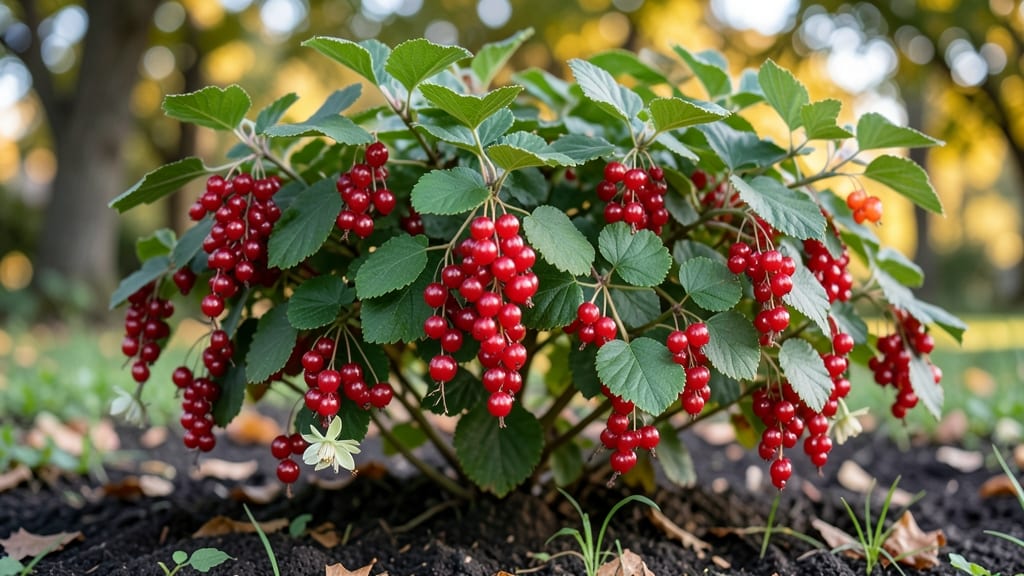
A red currant bush size can swing wildly from 3 feet to over 6 feet tall, depending on the variety and how you prune it 🫐. If you’re planning a garden with these berry bushes, knowing their mature size isn’t just about aesthetics—it’s about maximizing yield, airflow, and long-term health.
Picture this: a compact 'Mascotte' variety fits snugly in a small backyard, while a sprawling 'Red Lake' needs room to breathe. The wrong spacing leads to crowded branches, fewer berries, and diseases creeping in.
Yet many gardeners guess their spacing, only to realize too late that their bushes are fighting for space—or worse, blocking sunlight from other plants.
In this guide, I’ll break down the exact mature heights and spreads of popular red currant varieties, so you can pick the perfect fit for your garden.
You’ll also learn how spacing, pruning, and soil all play a role in keeping your bushes healthy—and how to train them to stay within bounds if they get too big.
By the end, you’ll know exactly how much room to leave between plants, when to prune for optimal size, and even how to work with dwarf varieties if space is tight. Let’s get started!


Red currant bush size by variety: mature height and spread chart
Choosing the right red currant variety depends heavily on understanding their mature bush size. Compact varieties like 'Mascotte' fit small gardens, while larger types like 'Red Lake' thrive in spacious plots.
The height and spread directly impact yield, airflow, and ease of harvest. For example, a 6-foot-tall bush needs more space than a 4-foot dwarf—yet both produce delicious fruit!
I’ve grown red currants for years, and the biggest mistake I see is planting bushes too closely. Overcrowding leads to fungal diseases, poor fruit quality, and stunted growth. The key is matching the variety’s mature dimensions to your garden layout.
Below, I’ve compiled a comparison chart of popular red currant varieties, including their height, spread, and growth habits.
Use this chart to visualize how each variety will look in your space. For instance, 'Jonker’s Red' stays compact at 4-5 feet tall, making it ideal for container gardening or small yards. Meanwhile, 'Red Lake' can reach 6 feet, requiring more room but offering higher yields.
Always check your USDA hardiness zone—some varieties thrive in Zone 3, while others need Zone 5 or warmer.
When selecting a variety, consider your garden’s layout. A 6-foot-tall bush like 'Red Lake' needs at least 5 feet of space between plants for proper airflow.
In contrast, 'Mascotte', with its 3–4 foot height, can be planted just 3–4 feet apart—perfect for hedgerows or small yards.
Another factor is pruning requirements. Larger varieties like 'Consort' benefit from annual pruning to control height, while dwarf types like 'Mascotte' need minimal pruning. I recommend late winter pruning to shape bushes and remove dead wood, regardless of variety. This keeps the plant healthy and maximizes fruit production.
If you’re growing red currants in containers, opt for dwarf varieties like 'Jonker’s Red' or 'Mascotte'. A 15–20 gallon pot works well, with well-draining soil to prevent root rot. Container-grown bushes may need more frequent watering and balanced fertilizer to compensate for limited root space.
For cold climates, varieties like 'Red Lake' and 'Consort' handle frost well, while 'Mascotte' is better suited for warmer zones (Zone 5+). Always check the USDA zone recommendations for your chosen variety to avoid winter damage.
In my Zone 5 garden, I’ve found 'Jonker’s Red' to be the most reliable for consistent harvests.
Pro tip: If space is limited, try espalier training for taller varieties
Optimal spacing and pruning tips for red currant bushes by size
Red currant bushes thrive when given the right space to grow, but their mature size varies dramatically by variety. Compact varieties like 'Mascotte' stay under 4 feet tall, while standard types like 'Red Lake' can reach 6 feet or more.
Proper spacing ensures airflow, reduces disease risk, and maximizes fruit production—critical for a healthy harvest. Without it, your bushes may struggle with overcrowding, leading to smaller berries and fungal issues.
Pruning plays an equally vital role in controlling growth and shaping your bushes. For compact varieties, light pruning keeps them manageable, while larger bushes need more aggressive trimming to maintain structure.
The key is timing: prune in late winter or early spring before new growth begins. This ensures you remove dead wood while encouraging strong, productive branches for the season ahead.
🌿 Key Tips for Spacing & Pruning by Size
- 📏 Compact varieties (3-4 ft): Space 3-4 feet apart to allow airflow and easy harvesting. Prune lightly to maintain shape.
- 🌳 Standard varieties (5-6 ft): Space 5-6 feet apart for full growth. Prune aggressively to remove old wood and encourage new fruiting branches.
- ✂️ Prune in late winter: Remove dead or crossing branches first, then thin out overcrowded stems to improve light penetration.
- 🌱 Renewal pruning: Every 3-4 years, cut back older stems to ground level to rejuvenate the bush and boost fruit production.
- 💧 Post-pruning care: Water deeply after pruning to help the plant recover and reduce stress.
For compact varieties, like 'Jonker's Red', focus on horizontal growth. These bushes spread wider than they grow tall, so spacing them 4 feet apart in a row or 5 feet apart in a hedge works best.
Prune to encourage a low, bushy habit, which makes harvesting easier and reduces the risk of bird damage to the berries.
Larger varieties, such as 'Red Lake', need more room to avoid shading and disease. Plant them 6 feet apart in rows or 8 feet apart if growing in a single row.
These bushes benefit from open-center pruning, where you remove branches from the center to improve airflow and sunlight exposure. This technique also makes it easier to spot pests or fungal issues early.
One common mistake is over-pruning young bushes. While it might seem tempting to shape them early, wait until they’re established (after 2-3 years) before aggressive pruning. Focus on removing only dead or diseased wood in the first few years.
This gives the plant time to develop a strong root system and fruit-bearing branches.
Finally, don’t forget about mulching. A 2-3 inch layer of mulch around your red currant bushes helps retain moisture, suppress weeds, and regulate soil temperature—especially important for larger varieties with deeper root systems.
Use organic mulch like straw or wood chips, and keep it 6 inches away from the stem to prevent rot.